What TikTok Actually Shipped
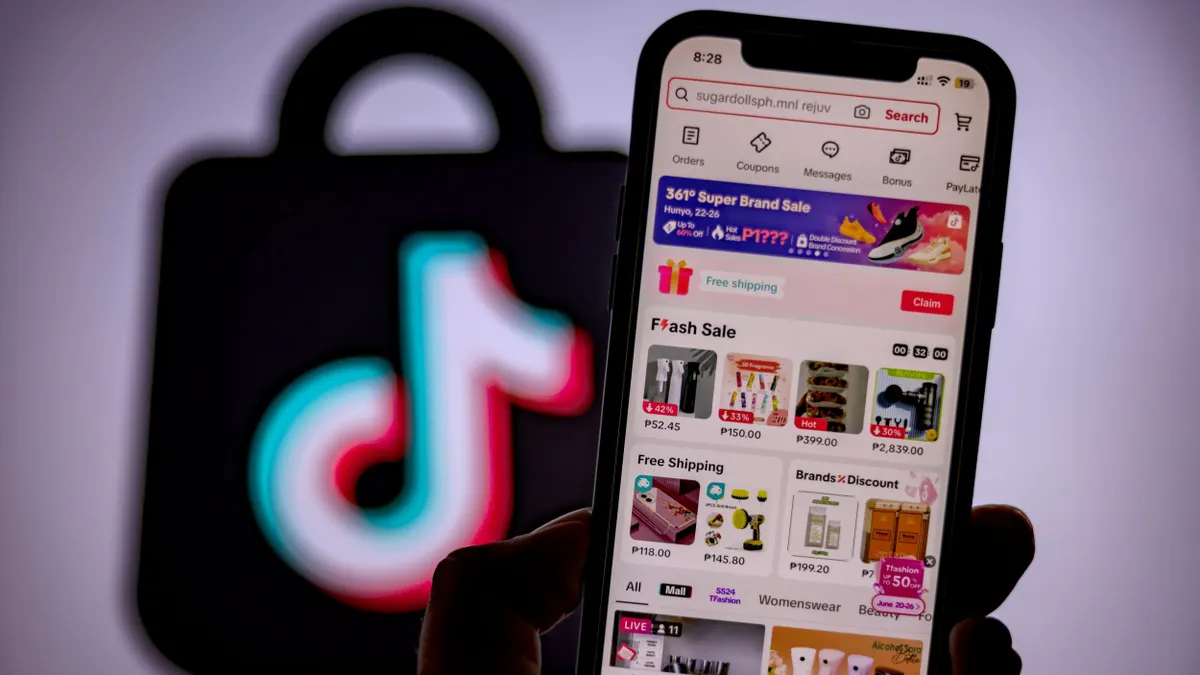
TikTok announced this week that it is building an agentic AI shopping experience designed to keep discovery and purchase inside its own app rather than sending users elsewhere. Shopping Assistant is the conversational layer: a chat-based agent that remembers what a user has told it about their needs across a session and can answer follow-up questions about product details, shipping timelines, sizing, and current availability. Buy Direct is the transactional layer, letting a shopper complete a purchase from a brand with a single tap directly from the For You feed, without opening a separate checkout flow or leaving the app.
The two features work together to close a gap TikTok has had for years: strong product discovery, but a meaningful share of viewers who research on TikTok and then buy somewhere else, often directly from a brand's own site or through Amazon. TikTok cited internal and third-party research showing that 55% of its users say the platform helped them make more informed purchasing decisions, and that an estimated 54 million U.S. consumers have bought a product after watching a TikTok video. Shopping Assistant and Buy Direct are built to capture more of that intent before it leaves the platform.
The Attribution Problem This Is Meant to Solve
For retailers, the core risk TikTok is addressing from its own side of the table is attribution. When a shopper discovers a product on TikTok and later buys it through a brand's website, a retail media budget spent on TikTok shows weak direct return even though it generated the demand. Retail Dive's reporting on this launch notes that experts expect retailers to get stuck with the blame when an agentic shopping experience on a third-party platform produces a bad outcome, such as a wrong size or a late shipment, even though the retailer had limited visibility into how the recommendation was made.
That dynamic puts retail technology leaders in an uncomfortable position. TikTok's own Retail AI Council, which includes McDonald's, Best Buy, and Whole Foods Market, formed a Shopper Context Protocol Working Group last year specifically to work through how data and accountability should flow between a platform's agent and a retailer's systems when something goes wrong post-purchase. That work is still in progress, and retailers joining Buy Direct today are doing so before those answers are fully settled.
Established Retailers Are Not Waiting
Best Buy will launch on TikTok Shop in late October with nearly 10,000 products from brands including Microsoft, Dyson, Bose, and Oura, with Best Buy fulfilling every order and accepting eligible returns in stores or by mail. Jonathan Greer, Best Buy's vice president of e-commerce, framed the move as meeting customers at the moment of discovery and making it easy to shop from there, rather than asking them to make a second trip to a different site entirely. Jason Bonfig, who becomes Best Buy's CEO in November, has described the company's direction as reaching well beyond its traditional retailer identity. TikTok Shop accounted for nearly a fifth of U.S. social commerce in 2025 according to eMarketer, and projections put its sales above $20 billion this year and $30 billion by 2028.
Best Buy's decision to fulfill orders itself and accept in-store returns is the detail worth copying. It keeps the post-purchase relationship, including the return and any warranty conversation, inside Best Buy's own operation rather than ceding it to TikTok. Retailers evaluating a similar launch should treat fulfillment and returns ownership as a non-negotiable term of entry, not a detail to work out after the integration ships. That structure also preserves a direct service channel to the customer, which matters most for the warranty-heavy electronics categories Best Buy is putting on the platform first, where a bad return experience does lasting damage to a brand relationship that a single discovery sale cannot offset.
What This Means for Your Retail Media Budget
If Shopping Assistant and Buy Direct perform the way TikTok expects, the platform becomes less of a discovery funnel that feeds other channels and more of a closed loop that keeps both the browsing and the transaction. That is good for TikTok's ad business and genuinely convenient for shoppers, but it reduces the first-party data a retailer collects about its own customer, since TikTok owns the session, the agent interaction, and increasingly the checkout. A retailer that leans into Buy Direct is trading some customer data ownership for reduced friction and a larger addressable audience inside TikTok's funnel.
The decision every retail CTO should make deliberately, rather than let TikTok's rollout schedule make for them, is how much of that trade they are willing to accept for which product categories. High-consideration or warranty-heavy categories, the kind Best Buy sells, may be worth keeping fulfillment and returns in-house as Best Buy has done. Lower-consideration, impulse categories may be better suited to a fuller handoff to TikTok's agent, where the convenience gain outweighs the data loss. Treat this as a category-by-category decision, not a single yes or no answer for the whole catalog.
Setting Terms Before the Working Group Finishes
TikTok's Shopper Context Protocol Working Group, formed under its Retail AI Council, is still building the rules for how liability and data move between the platform's agent and a retailer's own systems when an order goes wrong. Joining Buy Direct or TikTok Shop now means operating ahead of that framework, which gives early movers influence over how the standard gets written but also exposes them to resolving disputes on an ad hoc basis in the meantime. A retailer with real leverage, through scale or brand value, should use that leverage now to negotiate specific contractual terms on liability and data access rather than wait for the working group to publish a default.
For a mid-sized retailer without that leverage, the safer posture is to start small, with a limited product set and a clear internal owner for the TikTok relationship, before expanding exposure. Either way, the operational lesson from Best Buy's launch holds: whatever terms a retailer accepts today around fulfillment, returns, and data sharing will likely become the template other platforms and partners point to when they ask for similar access tomorrow. Negotiate the first deal as if it will set the pattern, because it probably will.