The numbers enterprise buyers should actually compare
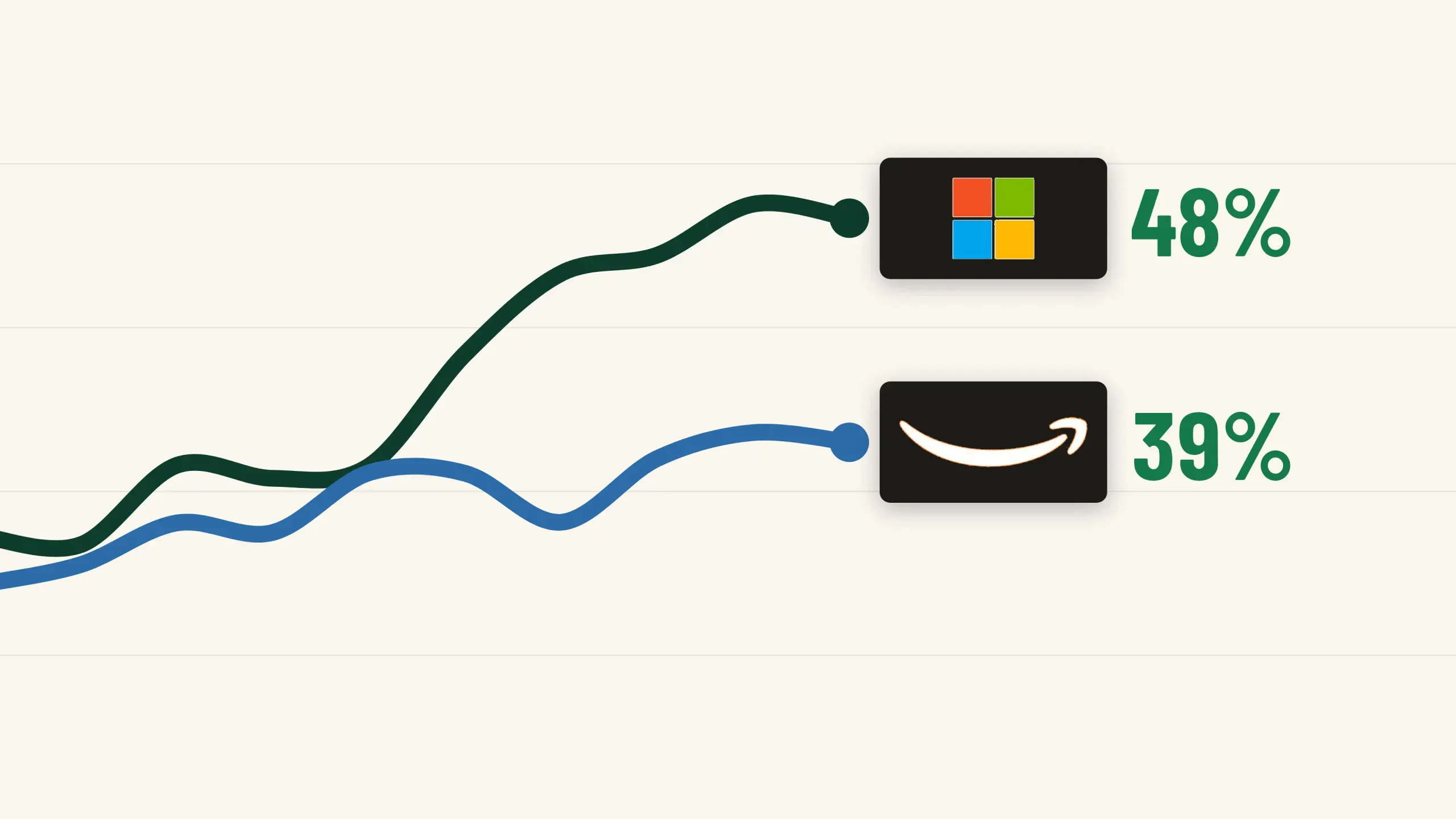
AWS reported 45.98 billion dollars in quarterly revenue, up 39 percent year over year, which Amazon chief executive Andy Jassy called the sixth straight quarter of accelerating growth. Microsoft's Azure business grew faster in percentage terms, up 48 percent to 33.17 billion dollars, beating the 45 percent growth analysts had modeled. Google Cloud outpaced both, growing 103 percent to 30.7 billion dollars, with an operating margin of roughly 36 percent on 11.12 billion dollars of operating income.
Raw growth rates flatter the smaller base, and AWS remains the largest provider by revenue by a wide margin. But the direction of travel matters to anyone deciding where to place new AI workloads: Google Cloud's run rate is now annualizing above 120 billion dollars, up from a much smaller starting point just two years ago, while AWS's 184 billion dollar run rate is growing off a base that makes 39 percent growth mathematically harder to repeat.
What is actually filling the backlog
Backlog figures tell a more durable story than any single quarter's revenue. Microsoft's company wide remaining performance obligations reached 677 billion dollars, and Google's climbed to roughly 561 billion dollars from 514 billion dollars just three months earlier. AWS reported signed backlog of 578 billion dollars. All three numbers represent contracted future revenue that customers have already committed to, which matters more to infrastructure planners than a single quarter's top line because it signals how long current capacity constraints are likely to persist.
The composition inside those numbers is shifting toward AI-specific services. Amazon said Bedrock token volume grew nearly 17 times year over year. Microsoft said its Foundry platform now has more than 120,000 customers and that daily active users of Copilot grew more than fivefold. Those are usage metrics, not just sales figures, and they suggest the backlog growth is tied to workloads that are actually running in production rather than contracts signed and left on a shelf.
Margins did not break the way skeptics expected
The conventional worry about the AI infrastructure buildout has been that chasing growth would wreck margins, forcing providers to subsidize capacity nobody was yet paying full price for. That has not played out uniformly. AWS held operating margin at 38.7 percent even while growing revenue sharply, and Google Cloud's roughly 36 percent margin on its fastest ever growth rate undercuts the idea that a smaller provider has to buy growth with unprofitable pricing.
Microsoft is the partial exception. Its Microsoft Cloud gross margin slipped to 66 percent, a sign that the capital intensity of AI infrastructure is pressuring even the most established cloud businesses. Chief financial officer Amy Hood described the dynamic plainly, saying "customer demand continues to exceed available supply," which is corporate language for a backlog that is growing because the company physically cannot provision capacity fast enough to convert signed deals into billed revenue.
The chip angle nobody can avoid anymore
Custom silicon is now showing up directly in cloud providers' earnings narratives rather than staying a background engineering detail. Amazon said customers running workloads on its own chips saved more than 2 billion dollars in the quarter compared with equivalent third party hardware, a number large enough to function as a pricing argument against Nvidia-based instances. That kind of figure did not appear in cloud earnings commentary two years ago.
Satya Nadella made a related point about Microsoft's portfolio breadth, saying the advantage from spanning infrastructure, models, and applications "compounds when we work them across" the stack. The subtext across all three earnings calls is that providers increasingly compete on total system economics, chips, power, and software bundled together, rather than on compute price per hour alone, which changes how procurement teams should be comparing quotes.
Where this leaves enterprise negotiating leverage
Backlog growth this large, concentrated at all three major providers simultaneously, is not a sign that capacity pressure is easing soon. If anything, it confirms that demand is still outrunning supply broadly enough that no single hyperscaler can undercut the others into a price war to win share. Enterprise buyers negotiating new commitments should expect limited room on price and should instead focus leverage on committed capacity windows, migration support, and credits tied to usage ramps.
The growth rate divergence does offer one practical lever: a provider growing off a smaller base, like Google Cloud at 103 percent, has more incentive to win large logos for reference value than a provider already carrying the largest market share. That asymmetry is worth testing in any competitive procurement process this quarter, particularly for workloads that are portable enough to credibly threaten a multi cloud split.
The capacity constraint nobody solved this quarter
Every provider described the same underlying problem using different language: demand for AI infrastructure is still outrunning the physical build. Hood's comment about demand exceeding supply, Jassy's description of a sixth straight quarter of accelerating growth off an already massive base, and Google's jump to a 36 percent operating margin while growing revenue 103 percent all point to the same conclusion, which is that none of the three companies has caught up to its own order book.
For technology leaders building multi year infrastructure plans, the practical takeaway is that capacity allocation, not sticker price, remains the real constraint on AI deployment timelines. Earnings season confirmed that the three largest cloud providers are all growing their backlogs faster than they can physically provision against them, which means the lead time between signing a capacity commitment and actually getting access to it is likely to stay stretched well into next year.