A Coffee Company Decides to Become a Software Company
Starbucks is doing something that would have sounded absurd two years ago. According to an internal presentation reported this week, the company is using generative AI to build its own replacements for enterprise applications it currently licenses from Microsoft and IBM, starting with a Dynamics 365 inventory tracking system and an IBM TRIRIGA maintenance management platform. The rationale is not novelty for its own sake. Starbucks spends around 400 million dollars a year on software across the enterprise, and CTO Anand Varadarajan told colleagues there are clear opportunities to reduce that spend. In our reading, this is less a technology story than a procurement story wearing an AI costume.
What makes the move notable is that Starbucks is not a hyperscaler or a frontier lab. It is a retailer with nearly 40,000 stores and a decidedly operational IT problem: counting inventory, scheduling equipment maintenance, and running point of sale. For years the accepted wisdom was that building those systems in house was foolish when mature vendors already solved them. Starbucks is now betting that AI assisted development has moved the line between build and buy far enough that the calculus has flipped, at least for the workflows it understands better than any vendor does.
The Numbers Behind the Bet
The financial framing is modest in the near term and aggressive in ambition. Starbucks expects to trim roughly 10 million dollars of software spending in the fiscal year ending in September, part of about 30 million dollars in broader enterprise technology cuts, all nested inside a 2 billion dollar company wide cost reduction program under CEO Brian Niccol. Those are small figures against 400 million dollars of annual software cost, but they are a proof of concept. If a homegrown maintenance tool can retire a TRIRIGA contract, the same playbook can be pointed at the next line item, and the next.
Timing matters here. Starbucks says some of the internally developed applications could begin rolling out by the end of 2027 if testing succeeds. That is a long runway, and it signals that the company is not naive about the difficulty of replacing production systems that touch cash, inventory, and store operations. The honest read is that this is a multi year migration with real execution risk, not a switch that flips. But the direction of travel is unambiguous, and the fact that AI assisted coding materially helped build the IBM replacement is the detail vendors should not ignore.
AI as the Lever, Not the Product
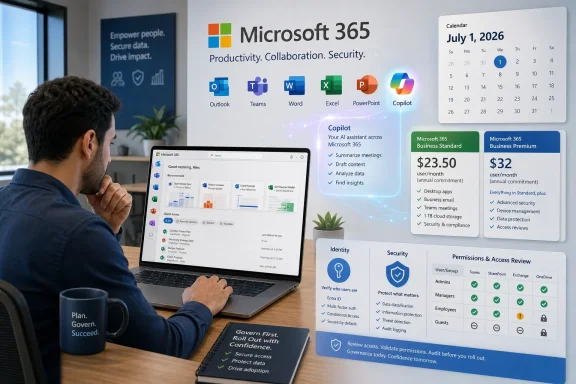
The mechanism that makes this credible is generative coding. Starbucks has been incentivizing its engineers to use AI tools by factoring that usage into performance bonuses, a blunt but effective way to change developer behavior. The company is also testing Green Dot Assist, a barista facing assistant built on Microsoft's Azure OpenAI service that helps store staff pull drink recipes, troubleshoot equipment, and find ingredient substitutions. That last detail is worth pausing on: Starbucks is happy to consume Microsoft's models as a platform while simultaneously building applications that displace Microsoft's application revenue.
This is the strategic distinction that too many enterprises blur. Buying intelligence as a utility and buying finished software as a product are now separate decisions. Starbucks appears to have concluded that the model layer is worth renting and the application layer, where its operational knowledge lives, is worth owning. For CIOs watching, the lesson is that AI does not simply make existing software better. It changes which parts of the stack you should pay someone else to build at all.
What the Vendors Have to Worry About
Investors noticed. Microsoft and IBM shares dipped on the report, a small reaction that nonetheless captures a real anxiety. The moat around application software has always been that rebuilding it is expensive, slow, and risky. If a retailer can use AI to reverse that math for even a handful of systems, the threat is not that Starbucks alone defects. It is that Starbucks becomes a reference case, and every large enterprise with a big software bill starts asking its own engineering leaders the uncomfortable question of what could be built instead of bought.
We would temper the alarm. Enterprise software vendors sell far more than code; they sell support, compliance, integration, and the assurance that someone else is accountable when a system fails at 2 a.m. Those are not trivial to replicate, and many companies will decide the savings are not worth the operational exposure. But the vendors that thrive will be the ones that move up the stack faster than their customers can build down it, embedding agents and outcomes that are genuinely hard to reproduce rather than defending features that AI can now generate cheaply.
The Cautionary History Inside Starbucks
Starbucks has been here before, and not always happily. Earlier in 2026 the company retired its Automated Counting inventory system, developed with NomadGo, less than a year after rolling it out across North America. That failure is a useful counterweight to the optimism. Building operational technology that survives contact with 40,000 stores and hundreds of thousands of partners is genuinely hard, and enthusiasm for a new approach does not guarantee it will stick. The graveyard of retail IT is full of promising pilots that never scaled.
The difference this time is the tooling and the incentive structure. AI assisted development lowers the cost of iteration, which means Starbucks can afford to try, fail, and rebuild faster than it could when every system was hand written. That does not make success certain, but it does change the risk profile. A cheaper build is a build you can walk away from without having sunk a fortune, and that optionality is itself a strategic asset.
The Signal for Every Enterprise IT Leader
Strip away the Starbucks specifics and a broader thesis emerges. The enterprise software market has spent two decades convincing buyers that undifferentiated internal systems should always be outsourced to specialists. AI is quietly eroding the premise, not by making vendors worse but by making in house alternatives cheaper and faster to stand up. The companies most exposed are those selling application level products for workflows their customers understand intimately and could, with modern tooling, choose to own.
For technology executives, the takeaway is not to fire the vendors and start coding. It is to reprice the build versus buy decision across the portfolio with current assumptions rather than 2022 ones. Some systems will remain firmly in the buy column because the risk and maintenance burden are real. Others, the ones close to a company's operational core, may now be worth building and owning. Starbucks has decided to run that experiment in public. The results, good or bad, will inform boardroom conversations well beyond the coffee business.