Shinsegae's retail personalization research lands at ICML
On July 23, 2026, South Korea's Shinsegae Department Store said the AI-based hyper-personalized customer analysis technology it developed with Seoul National University's Graduate School of Data Science had been accepted as a paper at the International Conference on Machine Learning, one of the most selective venues in the field. Shinsegae called it the first time a Korean department store's industry-academia collaboration reached ICML. The partnership dates to a memorandum signed in January 2025, and the accepted work centers on turning the retailer's shopping data into machine-learning-ready inputs for personalization. For retail technology leaders, the headline is less the prize and more what it took to earn it.
A company official framed the effort in strategic terms. "Shinsegae Department Store will continue enhancing the customer experience through AI while strengthening data-driven decision-making to create a new retail paradigm," the official said. The claim to an ICML acceptance signals that Shinsegae is investing in genuine research rather than assembling off-the-shelf models, and it is doing so in partnership with a university data science program. That structure, a retailer supplying proprietary data and a lab supplying method, is one enterprises increasingly use to build defensible AI capabilities without hiring an entire research team, and Shinsegae's result offers a public proof point that it can produce publishable work.
AI Ready Data turns 200 million transactions into training fuel
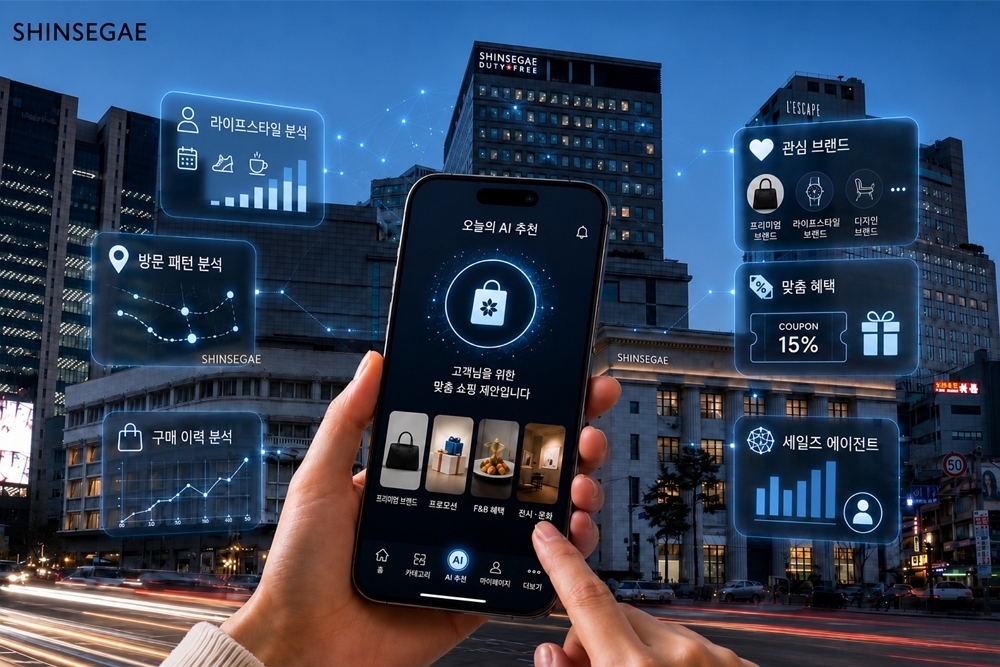
The core artifact is a model Shinsegae calls AI Ready Data, which converts roughly 200 million online and offline shopping transactions into data optimized for machine learning. That description sounds mundane, and it is exactly the point. The hard part of applied retail AI is rarely the model architecture; it is transforming years of messy, inconsistent transaction records from multiple channels into clean, structured inputs that a model can learn from without absorbing noise and bias. By naming this the centerpiece of its research, Shinsegae is publicly conceding that data preparation is where the differentiated value sits in retail personalization.
The technology analyzes customer shopping behavior and brand preferences across those transactions to drive personalization and product recommendations. Unifying online and offline purchases into one dataset is significant on its own, because most retailers still struggle to resolve the same customer across a store visit, an app session, and a web order. A department store that can stitch those touchpoints into a coherent behavioral record gains targeting precision that fragmented competitors cannot match. For technology leaders, AI Ready Data is a reminder that the model everyone wants to deploy depends entirely on a data foundation that takes years of unglamorous engineering to build.
The 46 percent order-value lift is a simulation, not a shipped result
The number drawing attention is a simulation finding: in tests based on the research, Shinsegae's AI-driven recommendation model increased average order value by as much as 46 percent. That figure is large enough to reshape a retailer's economics if it holds, and it explains the enthusiasm around the project. It is also, by Shinsegae's own account, a simulation result rather than a live production outcome, and the gap between the two is where most retail AI programs lose their projected returns. Simulations run on curated historical data rarely survive contact with real shoppers, seasonality, inventory constraints, and the messiness of live operations.
That distinction is worth holding onto because it governs how leaders should budget and communicate AI value. A 46 percent lift in simulation is a promising signal that justifies further investment, and it is not a number to write into next year's revenue plan. The disciplined path is to run controlled experiments in production, measure incremental lift against a real holdout group, and expect the deployed effect to land well below the simulated ceiling. Shinsegae's own timeline, with a production agent still months away, implicitly acknowledges this. Retail technology leaders should treat headline simulation figures as hypotheses to validate before they are results to bank.
Data readiness is the real bottleneck for retail AI
The most useful lesson in Shinsegae's announcement is where it places the difficulty. By elevating AI Ready Data to the level of publishable research, the company reframes the retail AI challenge around data engineering rather than model selection. Industry surveys keep showing that the overwhelming majority of retailers now use or evaluate AI, yet a much smaller share report meaningful returns, and the gap almost always traces back to fragmented, low-quality data. A department store that solves identity resolution and channel unification has done the expensive, durable work that generic models cannot substitute for.
For CTOs and CIOs, this reorders the roadmap. The instinct to start with a flashy model or a vendor demo skips the foundation that determines whether any model performs, and the retailers pulling ahead are the ones investing first in clean, unified, machine-ready data. That work is slow and hard to demo to a board, which is precisely why it becomes a durable advantage once built. Shinsegae's academic collaboration is one way to fund the method behind that foundation, and its willingness to publish suggests confidence that the moat is the data pipeline, which competitors cannot copy from a paper.
From accepted paper to a working AI Sales Agent
Shinsegae's stated next step is an AI Sales Agent slated for early 2027, designed to analyze store data in real time and support merchandising and promotional decisions. That framing is telling: the first production target is an internal decision-support tool for merchants rather than a consumer-facing shopping bot. Pointing the technology at merchandising and promotions puts AI where it can improve margin and inventory decisions with human operators in the loop, a lower-risk deployment than autonomous customer interactions. The company also plans to extend the platform into travel, culture, and lifestyle services, signaling ambitions beyond the department store floor.
The sequencing from research to internal agent to broader platform is a sensible production path, and it sets a realistic clock. An ICML paper in mid-2026 and a production agent in early 2027 implies a deliberate gap for the engineering, testing, and governance that separate a promising model from a reliable tool. Retail leaders should read that cadence as normal and resist pressure to compress it. The organizations that ship durable retail AI treat the research result as the starting line, then spend the following months on data pipelines, monitoring, and human oversight before letting a model touch real merchandising or customer decisions.
What retail technology leaders should take from Shinsegae
The strategic takeaway is that competitive retail AI is being won at the data layer, and Shinsegae's ICML acceptance is a public marker of that shift. Leaders should audit their own ability to resolve customers across channels and turn transaction history into clean training data, because that capability gates everything downstream. Partnering with a university lab, as Shinsegae did, is one credible way to build the method without standing up a full research organization, and it comes with the recruiting and credibility benefits of published work. The model matters less than the pipeline that feeds it.
The second takeaway is discipline about claims. A 46 percent simulated lift and an ICML paper are strong signals, and neither is a shipped outcome, so the leaders who benefit will pair ambition with rigorous production measurement and a realistic timeline from research to deployment. Shinsegae's own plan, moving from an accepted paper to an internal merchandising agent in 2027 before any broad consumer rollout, models that discipline. For enterprises trying to get AI from pilot to production, the message is to invest in the unglamorous data foundation, validate lift with controlled experiments, and treat the impressive numbers as hypotheses until real customers confirm them.