Autonomy Is Easy, Trust Is Hard
The enterprise agent conversation has a credibility problem. Demos of agents booking travel or writing code are abundant; deployments of agents with real authority over production systems are rare. The gap is trust. At ServiceNow Knowledge 2026, ServiceNow and NVIDIA addressed that gap head on with Project Arc, a long running, self evolving autonomous desktop agent for knowledge workers, including developers, IT teams, and administrators. The pitch was not that Arc is smarter than rival agents. It was that Arc is governable.
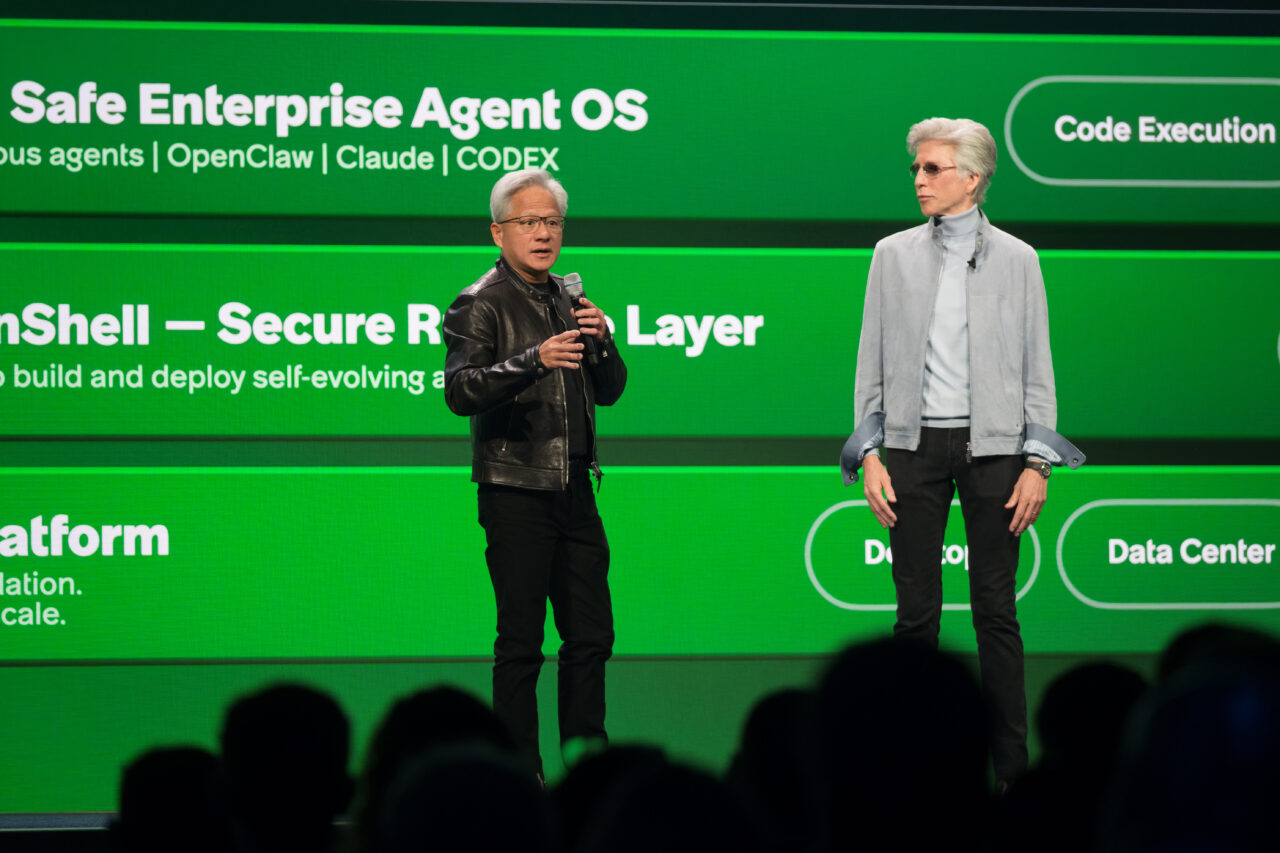
That emphasis is the strategic insight. NVIDIA founder and CEO Jensen Huang joined ServiceNow chairman and CEO Bill McDermott on the opening keynote stage to frame the next phase of enterprise AI, and the recurring word was not intelligence but control. Project Arc accesses local file systems, terminals, and applications, exactly the kind of broad authority that makes security teams nervous, and the entire architecture is designed to make that authority auditable and constrained. The companies are betting the market will reward the agent you can supervise over the agent that simply does more.
Inside Project Arc
Project Arc is positioned as a desktop agent that lives where knowledge work actually happens, on the machine, with access to the tools and files an employee uses. Unlike a chatbot that answers questions, Arc executes multi step work over long horizons and evolves as it goes. As Jon Sigler, senior vice president and general manager of the AI Platform at ServiceNow, put it, Project Arc represents the next step in the collaboration with NVIDIA, bringing autonomous execution to the desktop. The word execution is doing heavy lifting: this is an agent built to act, not advise.
What separates Arc from a standalone desktop agent is its native connection to the ServiceNow AI Platform through Action Fabric. That linkage means every action the agent takes inherits workflow context, governance, and intelligence from the platform rather than operating as an isolated, unaccountable process. In practice, an enterprise gets an autonomous worker whose decisions are tied back into the same system of record that governs its human workflows. That continuity between human and machine work is the part incumbents like ServiceNow can offer that pure play agent startups cannot.
OpenShell and the Containment Model
The technical heart of the trust story is NVIDIA OpenShell, an open source secure runtime for developing and deploying autonomous agents in sandboxed, policy governed environments. With OpenShell, enterprises can define what an agent can see, which tools it can use, and how each action is contained. This is the right mental model for enterprise autonomy: not a free roaming intelligence, but a bounded process whose permissions are declared, enforced, and reviewable. The agent operates inside a cage the organization designs.
We think the choice to make OpenShell open source is shrewd. Security teams are rightly skeptical of black box autonomy, and an open runtime they can inspect lowers the barrier to approval. It also nudges the industry toward a shared substrate for agent containment, much as containers standardized application isolation. If OpenShell or something like it becomes the default sandbox for enterprise agents, the messy question of how to constrain autonomous software gets a common answer, and that benefits everyone trying to deploy agents responsibly.
Governance as the Product
Containment at the runtime is only half the story; the other half is oversight at scale. ServiceNow AI Control Tower integrates with NVIDIA's Enterprise AI Factory validated design to extend governance and observability across large scale AI workloads, with agent observability that lets organizations monitor behavior in real time and manage AI systems across their full lifecycle, from deployment to optimization. The result is a control plane for a fleet of agents, not just a leash on a single one.
This is where the partnership's logic becomes clear. ServiceNow brings the workflow context and the governance layer enterprises already trust for managing IT, HR, and operations; NVIDIA brings the compute, the open runtime, and the accelerated infrastructure. Together they are assembling the unglamorous but essential machinery, identity, policy, audit trails, real time monitoring, that turns agent pilots into production systems. The companies are betting that the enterprise agent market will not be won by the flashiest demo but by the vendor that makes autonomy safe enough for a risk committee to approve.
Where Arc Fits the Bigger Picture
Project Arc lands in a crowded field. Microsoft is grounding agents in workplace data, Google is building an agent lifecycle platform, and Databricks and Snowflake are racing to be the data layer agents run on. ServiceNow's differentiated angle is the system of action: it already sits in the middle of enterprise workflows, orchestrating the cross functional processes that agents need to plug into. An agent that can file a ticket, provision access, and update a record through the same governed platform humans use is more immediately useful than a clever but disconnected assistant.
For digital transformation leaders, that distinction is the practical takeaway. The bottleneck on agent adoption is rarely model quality anymore; it is integration and governance. An autonomous agent that cannot safely touch the systems of record is a science project. By anchoring Arc in Action Fabric and AI Control Tower, ServiceNow is selling agents that connect to the workflows enterprises already run, with the guardrails already in place. That is a more honest, and more sellable, proposition than autonomy for its own sake.
The Verdict
Project Arc, currently available as an early preview, is less a product launch than a thesis statement. The thesis is that the next phase of enterprise AI will be defined by trust rather than capability, and that trust is built from containment, governance, and observability rather than from ever larger models. We find that thesis persuasive, because it matches what actually stalls enterprise deployments in the field: not a shortage of intelligence, but a shortage of accountability.
The caution is that early preview is doing real work in that sentence. The architecture is sound and the framing is right, but the proof will be in production deployments where agents take consequential actions and the governance has to hold under pressure. If ServiceNow and NVIDIA can show that a fleet of Arc agents can be supervised, audited, and trusted at scale, they will have answered the question holding the entire market back. Until then, the bet is credible but unproven, and the enterprises kicking the tires should treat it that way.
.jpg)