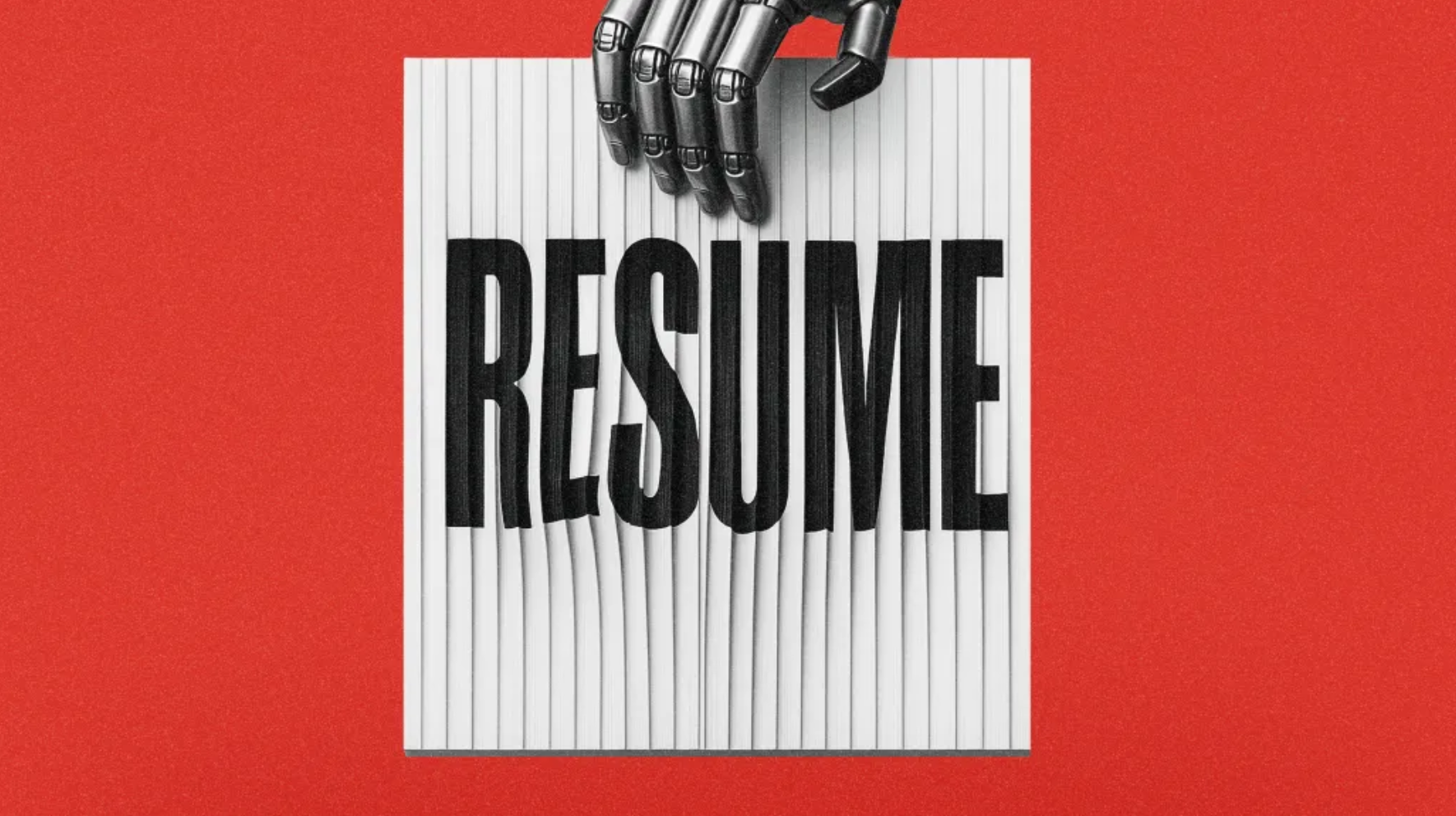
The quiet part employers are now saying out loud
Modern Retail's reporting captures something that has mostly stayed a private conversation until now: retail and marketing employers openly acknowledging they have pulled back on hiring new college graduates for entry-level roles. One performance marketing agency owner stated it without much hedging at all: 'We haven't hired college-level grads in some time, and I don't anticipate that we will.' The follow-up line is the one that matters most for anyone assuming this is a one-off individual preference: 'It's not like I don't like college grads. I do... it's just a business issue.'
That framing, describing a business issue rather than a hiring philosophy or a personal bias, is the real tell here. Entry-level marketing and retail roles have historically existed to absorb a specific set of repeatable, junior tasks: drafting copy variants, building basic performance reports, executing routine campaign setup work. Those are precisely the tasks generative AI tools now handle directly and reliably, which means the underlying business case for hiring a junior employee to perform them has genuinely weakened across the industry, not merely shifted in employer sentiment or preference.
The anxiety has data behind it, not just vibes
The reporting cites Pew Research survey data from September 2026 showing people aged 18 to 34 across multiple countries express significantly greater concern about AI-driven job loss than older adult cohorts express about their own careers. That detail matters because it means the entry-level workforce most directly exposed to this hiring pullback is also the cohort most acutely aware of the underlying risk in real time, rather than being caught off guard by a slow-moving trend playing out invisibly above their heads for years.
For employers, that heightened awareness changes the recruiting conversation in a concrete way. Graduates entering retail and marketing fields now reasonably expect interviewers to ask how they actually use AI tools day to day, rather than simply whether they can perform tasks AI has already automated away entirely. An organization that has not updated its entry-level job descriptions and interview process to reflect that shift is effectively filtering candidates against a job description that no longer exists in its original form, and is likely losing exactly the AI-fluent graduates it most needs to a competitor whose posting already reflects the work as it is actually done today.
Why this is framed as a training problem, not a technology problem
The industry voices quoted in the reporting consistently push back against treating this purely as an AI-adoption story with no organizational fix available. One framing that recurs across multiple sources: 'It seems like a learning and development challenge, not a technology challenge.' That distinction genuinely matters, because it puts the responsibility for a solution squarely back on employers themselves, rather than treating the disruption as an inevitable, unmanageable byproduct of the technology arriving on its own timeline.
The fixes proposed in the reporting are organizational in nature rather than purely technical: mentorship programs, formal learning and development investment at scale, and deliberate intergenerational knowledge-sharing between experienced staff and junior hires who now enter the workforce with a genuinely different skill baseline than graduates had even two years ago. One line captures the leadership obligation directly and without much room for interpretation: 'The nature of work has to change, and I think as leaders, we have to be part of finding that right talent.'
The warning that applies above entry level too
The sharpest line anywhere in the reporting is not really about new graduates at all: 'AI isn't coming to replace your job. Someone who knows AI and has your experience is coming to replace your job.' That single line reframes the entry-level hiring pullback as the visible edge of a much broader talent-market shift rather than an isolated early-career problem, and it is a warning every mid-career retail and marketing professional reading this should be taking genuinely seriously right now, not dismissing as a junior-staff issue.
For a CHRO or CMO, the practical read is that the skills gap opening up across the organization runs along an AI-fluent versus non-AI-fluent line at every level of the org chart simultaneously, not along a simple junior-versus-senior divide. Retail and marketing leaders who treat this purely as a recruiting pipeline problem confined to the bottom of the organization are missing that the same displacement pressure is already building wherever a specific task, rather than an entire title or role, has become genuinely automatable at scale, and that includes plenty of mid-career specialists whose day-to-day work has quietly become AI-replicable over the past year.
What retail and marketing leaders should actually change
The concrete recommendation implicit across this reporting is to stop hiring against the old entry-level job description entirely and start hiring against a genuinely redesigned one: junior roles built explicitly around directing, checking and improving AI output, with formal structured training built in from day one rather than left to happen through informal osmosis on the job over months. 'Meet them where they're at' is the shorthand used repeatedly across the sources, and it is a genuinely useful test for whether your current entry-level program still makes practical sense.
The organizations that navigate this well will be the ones treating entry-level redesign as a genuine talent strategy investment rather than a cost-cutting opportunity simply dressed up in AI language for the board. The organizations that quietly stop hiring junior staff altogether without building any replacement pipeline are effectively eliminating their own future senior bench years in advance, and that particular bill comes due on a much longer timeline than any single hiring cycle makes visible today. Boards asking their retail and marketing leadership for AI efficiency gains this year should be asking the follow-up question too: what does the org chart look like in five years if this pipeline stays closed the whole time.