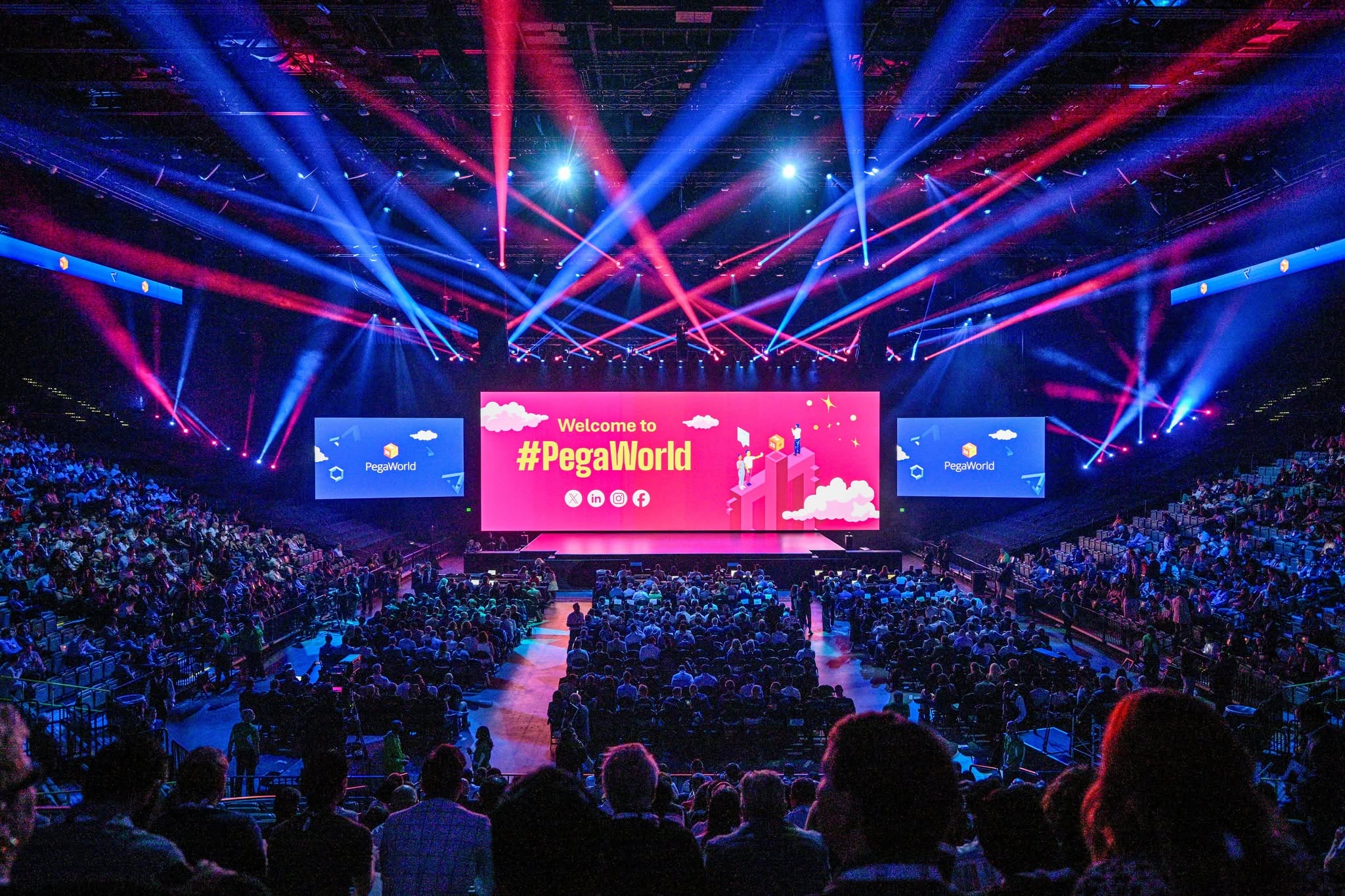
Pega Prices Agents by Outcome, Not by Token
As Pega Infinity 26 reaches general availability this quarter, Pegasystems is making a pointed move in the fight over how enterprises pay for AI. Clients pay a single flat price per completed case, a task run start to finish, regardless of how many tokens the platform's AI consumes behind the scenes. Changing an existing order through an agent counts as one case at one fixed price. The release pairs that model with agentic automation and built-in governance, and it lands as CIOs grow wary of consumption meters that make AI budgets impossible to forecast from one month to the next.
"Enterprises are quickly waking up to the fact that tokenmaxxing is ridiculous: it can only lead to unsustainable costs and unpredictable results," said Alan Trefler, founder and CEO of Pega. "AI best creates value when it delivers reliable outcomes at scale. That's why we don't charge clients based on how many tokens they use, but by the meaningful work they accomplish." The framing is aggressive, and it is aimed squarely at the usage-based pricing that dominates the current agent market. Pega is betting predictability sells better than raw capability once AI hits production budgets and a CFO's desk.
The Pricing War Gartner Warned About Is Now Live
This arrives weeks after Gartner put $234 billion of enterprise application spend at risk as agents rewrite how software is priced and consumed. Pega's answer is to decouple the bill from model usage entirely and tie it to business outcomes. Liz Miller, VP and principal analyst at Constellation Research, framed the stakes plainly: "Solutions that consume tokens with high efficiency and intention will provide organizations with a key competitive advantage." Efficiency, in other words, becomes a product feature, and vendors that pass runaway inference costs to customers will feel growing pressure to justify every meter.
We see this as the first serious vendor attempt to turn pricing into a differentiator. Usage meters made sense when AI was experimental and low-volume. At production scale, a finance leader cannot approve a system whose monthly cost swings with prompt length and model choice. Pega's per-case model converts an unpredictable variable into a fixed unit economics line, which is precisely what CFOs need to fund AI beyond pilots. Expect competitors to face hard questions in every renewal about why their pricing still tracks tokens consumed while the work delivered stays invisible on the invoice.
Governance Comes From Doing the Thinking at Design Time
The pricing story rests on an architectural choice. Pega applies AI reasoning at design time through Blueprint AI and Infinity Studio, so runtime agents follow pre-approved workflows consistently instead of improvising with expensive model calls on every request. A lightweight semantic mode and bounded LLM instructions handle specific steps like document parsing. The effect is fewer tokens burned at runtime and more predictable behavior, which is exactly why Pega can afford to charge by the case. For regulated industries, that consistency is as valuable as the cost control it delivers.
This is a meaningful position in the governance debate now topping CIO agendas. Agents that reason freely at runtime are hard to audit and harder to bound, which is why 97% of enterprises run agents while only a fraction have centralized control. Pega's design-time approach trades some flexibility for repeatability and traceability, a bargain most regulated businesses will happily take. We would still test the claims against real workloads, because tightly bounded agents can underperform on genuinely novel tasks. For high-volume, compliance-sensitive processes, though, predictable and governed beats clever every single time.
Predictable Cost Changes What CIOs Can Actually Deploy
The buyer implication is concrete. A flat per-case price lets a transformation leader model the cost of automating a process before committing, and defend that number to finance. It removes the single biggest blocker we hear about in agent rollouts: nobody will approve production scale when the bill is unknowable. If Pega can hold the line on per-case economics as volumes climb, it gives CIOs a template to demand from every AI vendor, and a benchmark to price internal builds against when they weigh insourcing.
The caution is to read the fine print on what counts as a case. Outcome-based pricing lives or dies on definitions, and vendors have every incentive to draw case boundaries in their favor. Leaders should stress-test the model against their highest-volume, most variable processes before assuming savings. Done honestly, per-case pricing aligns vendor and customer incentives around completed work rather than raw consumption, an alignment enterprise software has lacked since agents arrived. That alignment, more than any single feature, is what makes this launch worth a CIO's attention this month.
The Takeaway: Make Pricing a Selection Criterion
Pega's move should change how CIOs run AI procurement. Pricing model now belongs on the evaluation scorecard next to capability, security and governance. Ask every agent vendor to show total cost at your real volumes, not a per-token rate that looks cheap in a demo and balloons in production. Pega has handed the market a concrete alternative, and even buyers who never touch Infinity 26 can use it as leverage to push incumbents toward predictable, outcome-linked terms in their next contract cycle.
The broader shift is that AI is entering the phase where unit economics decide winners. Capability is table stakes now, and the vendors who thrive will be the ones whose costs stay legible as usage scales. We expect outcome-based and flat-rate models to spread quickly, because finance teams will insist on them. For transformation leaders, the action this quarter is simple: fold pricing predictability into your governance framework, and treat any vendor still selling pure consumption as a budget risk to be managed with open eyes.