A 9.8 in the Payments Module
CVE-2026-46817 carries a CVSS score of 9.8 and lives in the File Transmission piece of Oracle Payments, a module inside the sprawling Oracle E-Business Suite. Oracle describes it as an improper privilege management and authentication weakness, and the practical translation is grim: an unauthenticated attacker reaching the application over HTTP can take control of a vulnerable instance through a low-complexity request. It requires no credentials, no user interaction, and no multi-step chain. The flaw affects E-Business Suite versions 12.2.3 through 12.2.15, a range that covers most of the actively deployed base. Oracle shipped a fix in its May 2026 Critical Patch Update, roughly six weeks before public exploitation began.
The severity flows from what E-Business Suite actually runs. It is the general ledger, accounts payable, procurement, order management, and payroll backbone for a large slice of the Global 2000, and it frequently holds banking details, supplier records, and tax data. A pre-authentication takeover on that platform gives an intruder a direct line to financial operations and sensitive records. Researchers report that the exploit abuses an endpoint tied to file transmission to invoke an internal Java routine and read arbitrary files such as the server password file, a textbook demonstration that unauthenticated access has been achieved. From that foothold, escalation to code execution and data theft is a short step, which is why defenders treated the disclosure as urgent.
Exploitation Arrived Before the Proof-of-Concept
What unsettled researchers was the sequence. Threat intelligence firm Defused reported that its Oracle E-Business honeypots recorded live exploitation over a weekend at the end of June, before any public proof-of-concept code existed. In the firm's words, the vulnerability had no known previous exploitation and no public PoC. That combination points to an actor who either reverse-engineered the May patch or held private knowledge of the bug, and who moved quickly to weaponize it against exposed instances. Exploitation ahead of public tooling usually signals a capable adversary, often an initial access broker building an inventory of footholds to sell onward to extortion groups.
The pattern echoes how enterprise application flaws now get monetized. Sophisticated crews quietly harvest access from internet-facing business systems, then rent or resell that access to ransomware operators. Oracle's platforms have been a favored hunting ground for exactly this. The Clop gang spent much of late 2025 exploiting a separate E-Business Suite flaw, CVE-2025-61882, against universities and enterprises, and the ShinyHunters collective has been draining Oracle-adjacent systems in parallel campaigns. CVE-2026-46817 slots neatly into that market, and the absence of a public exploit early on suggests the value was being captured privately before commodity attackers piled in behind them.
Roughly 950 Instances Sitting in the Open
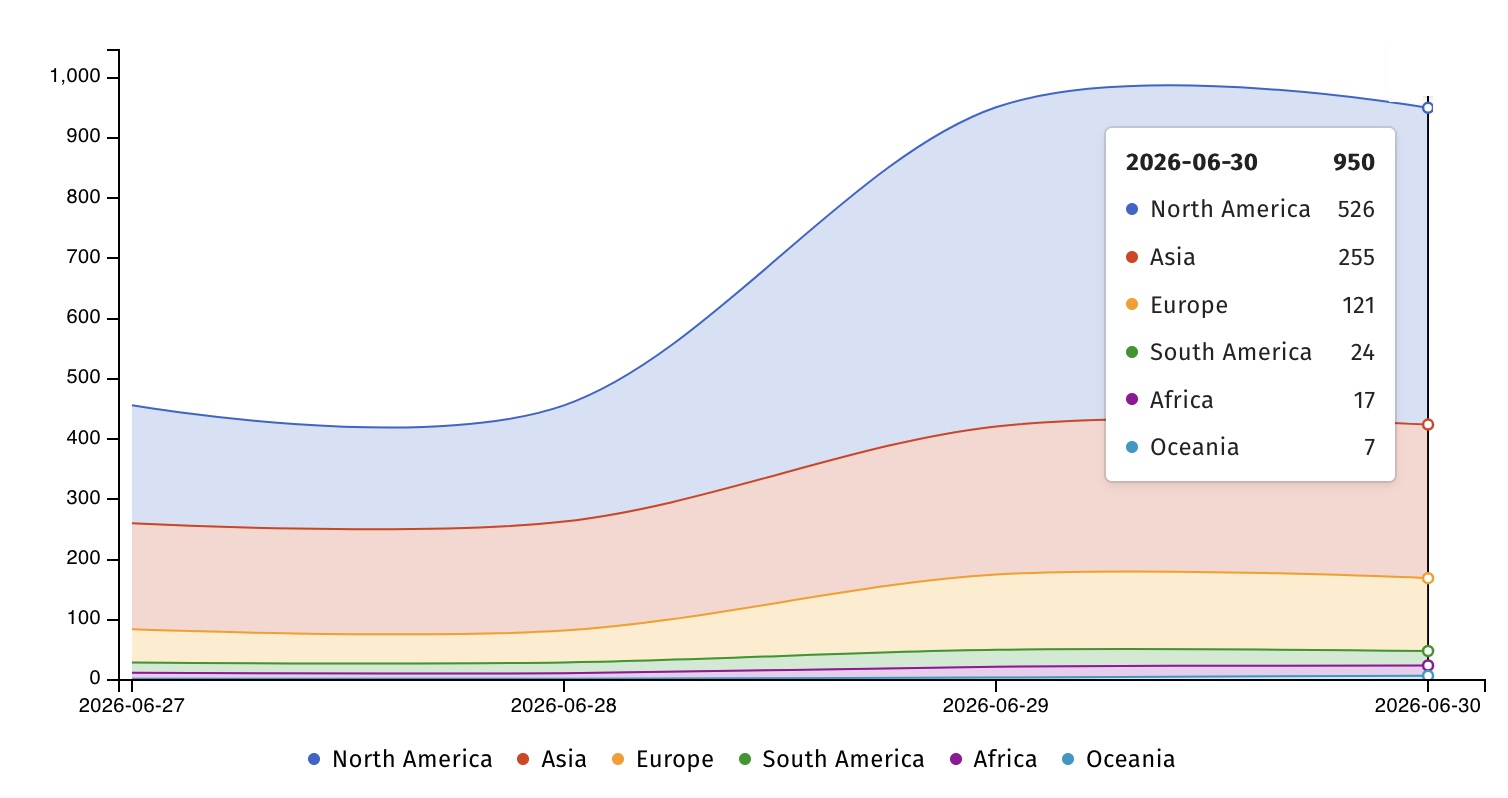
Scale turns a serious bug into a systemic problem. The Shadowserver Foundation, which scans the internet for exposed systems, counted around 950 Oracle E-Business Suite instances reachable online in late June, though it could not determine how many were patched. That number is small relative to the total install base, because most enterprises keep E-Business Suite behind VPNs or internal networks. The instances that sit directly on the public internet are the immediate concern, since the flaw needs no authentication to trigger. Every unpatched, exposed instance is effectively a pre-broken door, and attackers scanning for CVE-2026-46817 can find them with routine reconnaissance.
The exposure figure also understates the real attack surface. Plenty of E-Business Suite deployments are reachable from partner networks, third-party integrations, or misconfigured perimeter devices that Shadowserver's internet scans never see. An organization that believes its instance is internal only may still be reachable through a supplier connection or a forgotten load balancer. That is the recurring failure mode with enterprise resource planning systems: they are assumed to be safely tucked behind the firewall right up until someone finds a path in. For CVE-2026-46817, the safe assumption is that any instance running an affected version is a target, whether or not it shows up in a public scan.
CISA Set a July 18 Federal Deadline
The federal government treated the flaw as an active emergency. CISA added CVE-2026-46817 to its Known Exploited Vulnerabilities catalog on July 15 and ordered civilian federal agencies to patch or disable affected instances by July 18. A three-day remediation window is aggressive by CISA's standards and signals confidence that exploitation is real and ongoing. The KEV listing carries weight well beyond government, because many enterprises and their insurers treat the catalog as an authoritative priority queue. An entry with a compressed deadline is CISA's way of saying this belongs at the top of the patch list this week, ahead of routine maintenance.
For private-sector CIOs, the KEV entry removes any ambiguity about urgency. The catalog exists precisely to cut through internal debate about whether a given CVE warrants an out-of-cycle change, and a flaw exploited before its PoC went public clears that bar easily. The May 2026 patch is the fix, so organizations that applied the Critical Patch Update on schedule are already protected. The exposed population is the set that deferred it, and deferral is common with E-Business Suite because upgrades are heavy and disruptive. That operational friction is exactly what attackers count on, and it is why a three-month-old patch still leaves hundreds of instances vulnerable.
A Rough Stretch for Oracle's Enterprise Stack
CVE-2026-46817 arrives during a punishing run for Oracle's on-premises enterprise software. Clop's campaign against CVE-2025-61882 in E-Business Suite ran for months and hit named institutions. In June, a separate zero-day in Oracle PeopleSoft, CVE-2026-35273, was exploited by ShinyHunters to breach payroll and human resources data across more than 300 instances at roughly 100 organizations, with Nissan among the confirmed victims. Taken together, the incidents show attackers systematically working through Oracle's business-application portfolio, which concentrates sensitive financial and personnel data in a handful of widely deployed, hard-to-patch products. That concentration is the strategic prize: one reliable exploit against a common platform unlocks the crown-jewel data of hundreds of organizations at once.
The cluster raises a governance question for boards, not just security teams. Enterprises standardized on Oracle's suite for good reasons, and that standardization now means a single vendor's patch cadence and code quality sit on the critical path for financial and payroll continuity. When three high-severity, actively exploited flaws hit the same portfolio inside a year, concentration risk stops being theoretical. The answer is rarely to rip out the ERP, since migrations are multi-year efforts. It is to treat these platforms as tier-zero assets: aggressive patching, strict network isolation, continuous monitoring of the application layer, and tested response plans for the day a pre-auth flaw lands with no warning.
The Move for CIOs This Week
The immediate action is unambiguous. Inventory every Oracle E-Business Suite instance, confirm the version, and verify that the May 2026 Critical Patch Update is applied, prioritizing anything reachable from the internet or partner networks. Where patching cannot happen immediately, pull affected instances off public exposure and put them behind access controls until the update lands. Given that exploitation predated the public PoC, treat any exposed, unpatched instance as potentially already compromised and hunt for signs of unauthorized file access, anomalous outbound connections, and new accounts or scheduled tasks around the Payments module. Log review going back to late June is warranted, since the earliest in-the-wild activity started then.
Beyond the fire drill, this incident is a prompt to reclassify enterprise resource planning as frontline infrastructure. Many organizations still patch ERP on a slow, change-controlled schedule that assumes the systems are safely internal, an assumption that CVE-2026-46817 and its Oracle siblings keep disproving. Building a faster lane for out-of-cycle security patches on these platforms, and rehearsing it, is the durable fix. The firms that came through this week unscathed are the ones that applied the May update on time and kept their instances off the open internet. That combination, current patches and disciplined exposure management, remains the whole game for internet-adjacent enterprise software.