What Oracle announced
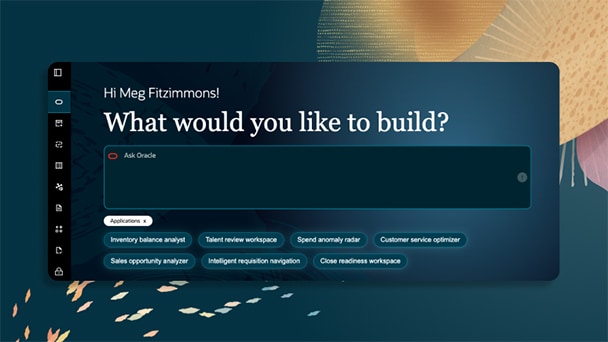
On July 14, Oracle announced that it is opening Fusion Agentic Applications and its AI Agent Studio to professional developers and the coding agents they already use. Until now, the tooling targeted no-code and low-code builders inside customer organizations. Natalia Rachelson, senior vice president of applications development, described the shift directly, saying these are no-code to low-code people, and the company is now going after what it calls pro-code people. The expansion lets developers build agents with familiar tools, VS Code, Git, and the command line, and generate Fusion artifacts by describing the business outcome they want. It is a deliberate reach toward the engineers who ship enterprise software.
The agents built through this runtime operate on transactional data inside Fusion Cloud Applications with real-time access, wrapped in a governance model that includes secure access controls, audit trails, and identity management. That combination is the point. Oracle is positioning Fusion as a place where agents do meaningful work against the systems of record that run finance, HR, and supply chain, under the controls that regulated enterprises require. For CIOs who have watched agentic pilots stall on governance and data access, the announcement addresses two of the hardest blockers head-on, and it does so inside a platform many of them already run.
Why pro-code matters
The move from no-code to pro-code matters more than it first appears. No-code agent builders are useful for business analysts assembling simple automations, and they rarely satisfy the engineers responsible for production systems. Serious agentic applications need version control, testing, code review, and the ability to reason about complex logic, all of which live in professional developer workflows. By meeting engineers in VS Code and Git, Oracle acknowledges that the durable agentic applications will be built by software teams applying real engineering discipline. That is a more credible path to production than the low-code demos that dominated the past year of enterprise AI marketing.
For enterprise technology leaders, the practical implication concerns skills and ownership. Agentic applications built by professional developers can be tested, governed, and maintained like any other production software, which fits how mature IT organizations already operate. Agents assembled in no-code tools by business users often become shadow IT that nobody can audit or support. Oracle's pro-code path gives CIOs a way to bring agent development inside the same governance perimeter as the rest of their engineering, and we think that alignment with existing software practice will matter more to adoption than the novelty of any single agent capability.
The open coding-agent bet
The most surprising element is Oracle's support for third-party coding agents, including Anthropic's Claude Code, OpenAI's Codex, and Google's Gemini. Oracle has historically favored a tightly controlled stack, and inviting rival AI vendors' tools into its development runtime marks a pragmatic shift. The company is betting that developer preference will drive platform adoption, and that meeting engineers where they already work matters more than steering them onto Oracle's own AI. For a firm known for lock-in, that is a meaningful concession to how software actually gets built in 2026, and it lowers the friction of choosing Fusion as an agentic platform.
We read this openness as a competitive necessity ahead of pure generosity. Developers have made clear they will use the coding agents they prefer, and any platform that blocks those tools loses mindshare fast. By supporting Claude Code, Codex, and Gemini, Oracle removes a reason for engineers to look elsewhere and keeps agent development anchored to Fusion data and governance. The strategic prize is the runtime and the data, ahead of the coding assistant. Oracle appears willing to cede the assistant layer to keep control of the layer that matters, the governed connection between agents and the enterprise systems of record.
Agents on transactional data
Letting agents operate on live transactional data is where the ambition and the risk both concentrate. Most agentic pilots have run against copies, sandboxes, or read-only extracts precisely because touching production financial and operational data carries severe consequences when an agent misbehaves. Oracle is offering real-time access to the systems that post journal entries, process orders, and manage inventory, which is exactly where enterprises want agents to eventually work and exactly where they are most cautious about letting them. The governance model, with audit trails and scoped identity, is the mechanism meant to make that access safe enough for production.
The credibility of those controls will decide adoption. An audit trail that captures every agent action, identity management that scopes what each agent may touch, and access controls that enforce least privilege are the minimum for a regulated enterprise to let agents near its ledger. CIOs should test these claims rigorously before trusting agents with write access to financial data. We would advise starting with tightly scoped, reversible actions under human approval, then expanding autonomy only as the audit and control tooling proves itself. The governance framework is the product here, and it deserves the same scrutiny as the agent capabilities themselves.
The platform war context
Oracle's announcement lands in the middle of an escalating contest to own the agentic control plane for enterprise operations. SAP is building agentic capability into S/4HANA and its data cloud, Workday is opening its platform to external agents while guarding payroll and the ledger, and ServiceNow is positioning governance and its control tower as the differentiator. Each vendor is racing to become the trusted place where agents act on enterprise data. Oracle's pro-code opening and support for rival coding agents is its move to stay central to that architecture, and the competitive intensity benefits customers who can now demand more.
For CIOs, the consolidation pressure is the real story. Vendors are converging on a model where applications, agents, and governance live in one platform, and that convergence pushes enterprises toward deeper commitments to fewer suppliers. The upside is coherence, a single governed environment for agentic work. The risk is concentration, more dependence on a vendor that already runs mission-critical systems. Technology leaders should enter these platform decisions deliberately, because standardizing on an agentic control plane is a multi-year commitment that shapes cost, flexibility, and negotiating leverage well beyond the initial agent projects that justify it.
What CIOs should weigh
We would weigh three factors before betting on Fusion Agentic Applications. The first is the maturity of the governance tooling under real workloads, because audit trails and identity controls that work in a demo must hold up against thousands of agents touching production data. The second is genuine portability, whether agents and their logic can move if the enterprise later changes platforms, or whether this deepens Oracle lock-in. The third is total cost, since agentic runtimes that consume compute and tokens against transactional systems can generate unpredictable bills that undermine the efficiency case that justified the investment.
The strategic takeaway for enterprise leaders is that agentic ERP has moved from vision to buildable reality, and the decision criteria are shifting accordingly. The decisive question has become which platform lets agents act on enterprise data with controls a regulator and an audit committee will accept. Oracle has made a serious entry with pro-code development, open coding-agent support, and governed transactional access. CIOs should evaluate it against SAP, Workday, and ServiceNow on governance depth and exit flexibility first, and treat agent-building convenience as a secondary concern that follows those fundamentals.