A Backlog That Strains Belief
When Oracle reports its fiscal fourth quarter results on June 10 after the market closes, the headline number is already known and almost difficult to comprehend. The company ended its prior quarter with roughly 553 billion dollars in remaining performance obligations, a measure of contracted revenue not yet recognized, up an extraordinary 325 percent year over year. That figure dwarfs Oracle's annual revenue many times over and represents one of the largest forward order books ever assembled by an enterprise software company. It is the financial signature of the AI infrastructure boom landing on a single balance sheet.
The backlog is the product of a strategic pivot that once looked improbable. Oracle, long viewed as a database incumbent late to cloud, has positioned its Cloud Infrastructure unit as a preferred home for AI training and inference, winning enormous capacity commitments from the companies building frontier models. Cloud Infrastructure revenue grew 84 percent to 4.9 billion dollars in the most recent quarter, and the order book implies far more growth to come. The demand, in other words, is not in doubt. What the June 10 report must address is whether Oracle can actually deliver against it.
The Capacity Race
Converting a backlog into revenue requires physical capacity, and that is where Oracle's challenge becomes concrete. Through partnerships the company has secured more than 10 gigawatts of power and data center capacity coming online over the next three years, an amount of electricity that rivals the consumption of small nations. In the most recent quarter it handed over roughly 400 megawatts of capacity and delivered about 50 percent more GPU capacity than the quarter before. These are staggering build rates, and they still trail the demand the backlog represents.
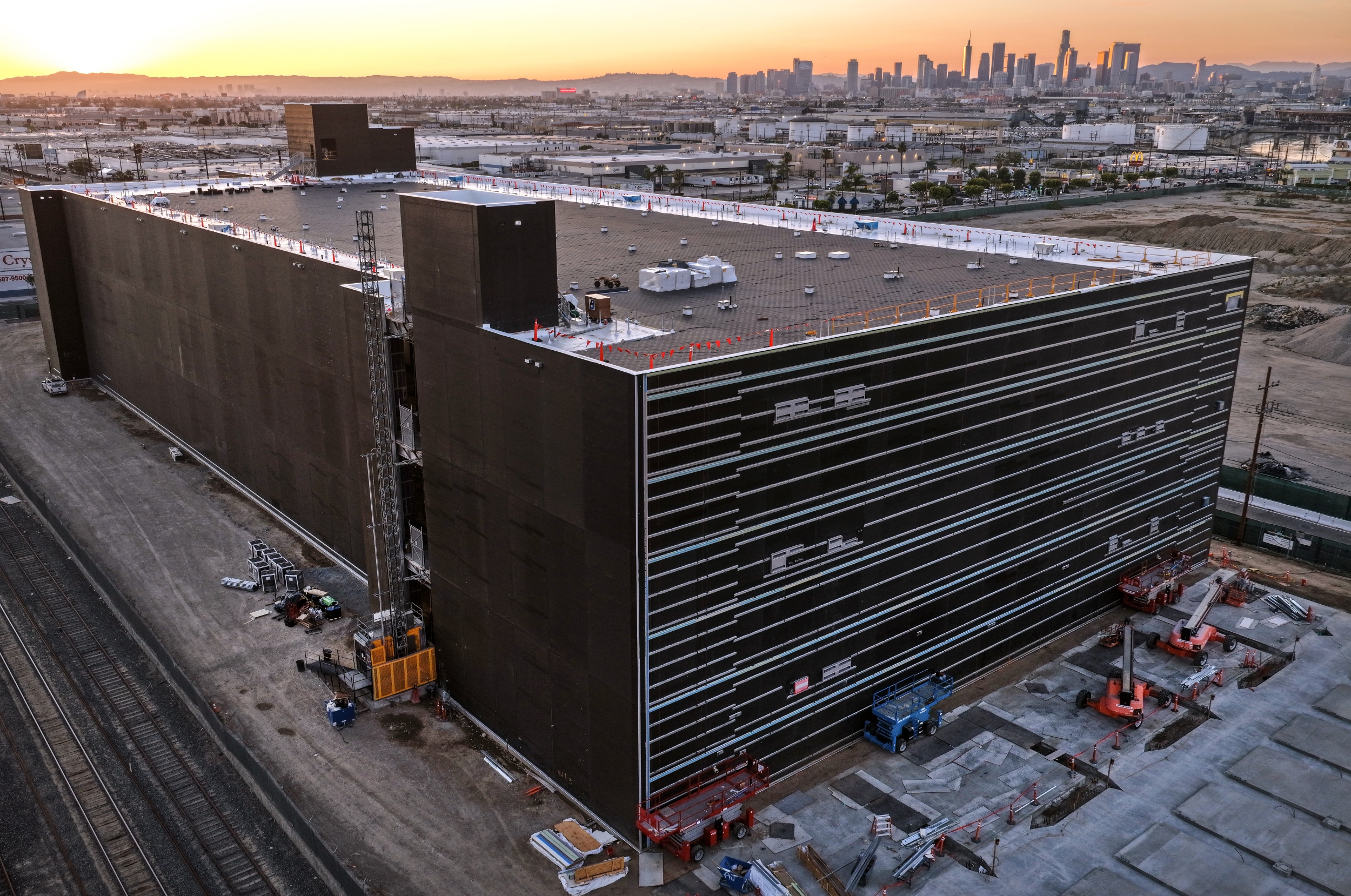
The flagship of this buildout is The Barn, a massive AI data center campus in Michigan developed with OpenAI and partners, emblematic of the gigawatt scale projects now defining the sector. Industry estimates put total hyperscaler AI spending near 720 billion dollars in 2026, and Oracle is straining to claim its share of the compute that money will buy. The constraint is no longer customer interest. It is power, land, chips, and construction timelines, the unglamorous physical inputs that determine how fast contracted revenue can actually be turned on.
The Capital Question
Building at this pace is ferociously expensive, and financing it is the real test the market is watching. Oracle has guided to roughly 50 billion dollars of capital expenditure in fiscal 2026, a sum that turns the company into one of the largest infrastructure spenders on earth. Analysts estimate the multiyear capital requirement to service the backlog at well over 80 billion dollars. That spending is front loaded while the revenue it unlocks arrives over years, which creates a punishing cash flow profile in the near term even as the long term picture brightens.
The arithmetic explains why some projections do not see Oracle turning consistently free cash flow positive until around 2029, despite revenue that could approach 90 billion dollars in fiscal 2027 under the company's raised guidance. Investors are being asked to fund an enormous build today on faith that the contracted demand converts cleanly tomorrow. The question that has come to dominate the Oracle story is no longer whether the demand is real but whether the company can finance the capacity to capture it without overborrowing, overbuilding, or quietly compressing the cloud margins that justify the whole effort.
What Could Go Wrong
The bull case is straightforward: a 553 billion dollar backlog converting into recognized revenue would transform Oracle's scale and standing. The bear case is equally clear and worth taking seriously. Backlogs are commitments, not cash, and commitments made in a frenzy can be renegotiated, delayed, or canceled if the AI economics that underpin them soften. A meaningful share of the backlog is concentrated in a handful of model builders whose own finances are unproven, which means Oracle's order book inherits its customers' risk.
There is also the overbuilding hazard that haunts every capacity boom. If Oracle commits tens of billions to data centers and power contracts on the assumption of relentless demand, and that demand plateaus, it will be left servicing debt against underused assets. The history of infrastructure cycles is littered with companies that mistook a spike for a plateau. Oracle's bet is that AI compute demand is structural and durable. The June 10 report will not settle that question, but the commentary around delivery pace and customer health will offer clues about how the company itself is hedging.
The Broader Signal for Cloud
Oracle's situation is a sharp illustration of a dynamic reshaping the entire cloud industry. The constraint on growth has moved from software and sales to electricity and construction. Every hyperscaler is now also an energy company and a real estate developer, racing to line up power, secure chips, and pour concrete fast enough to meet AI demand. Oracle's 10 gigawatt scramble and its Michigan campus are not outliers; they are the new shape of competition, and they are why datacenter power deals now make headlines once reserved for product launches.
This is also why the politics of the buildout are intensifying, from datacenter moratoriums to fights over grid capacity and water. The companies winning the AI infrastructure race are doing so by mobilizing physical resources at a scale that increasingly collides with communities and regulators. Oracle's earnings will be read by investors as a referendum on whether the capital intensity of this moment is sustainable. Whatever the numbers say on June 10, the larger truth is already visible: the cloud has become a heavy industry, and the winners will be those who can finance and build the physical world, not just the software running on it.