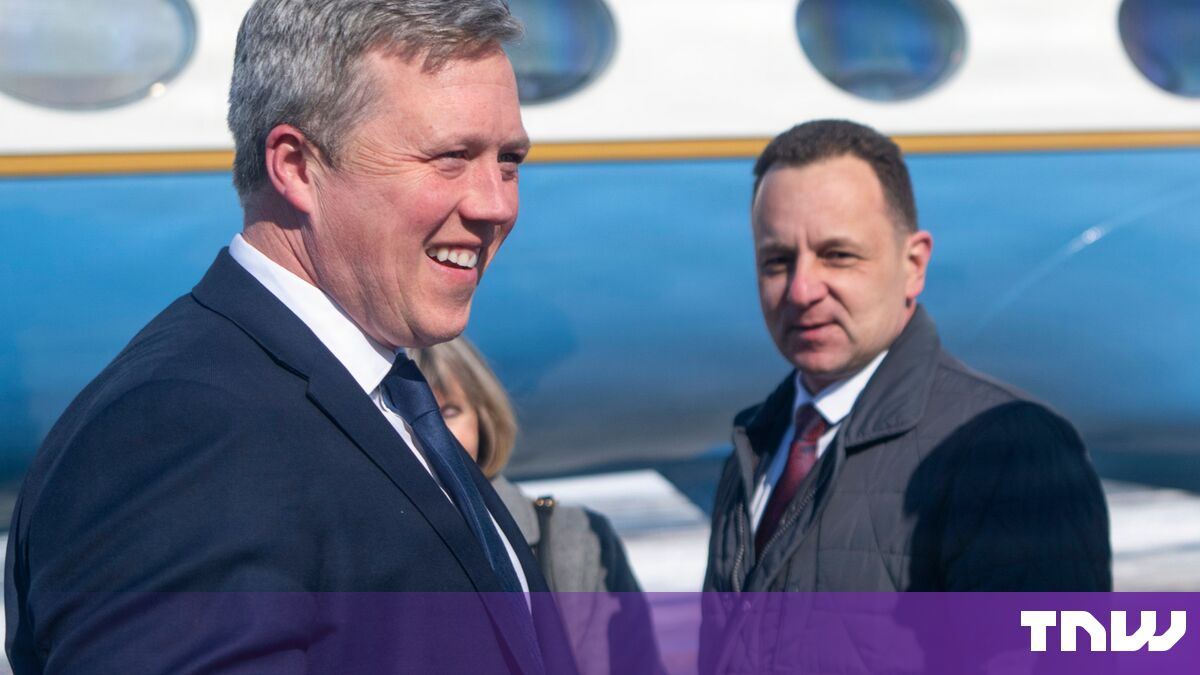
What OpenAI announced
OpenAI named Dan Driscoll, who served as the 26th Secretary of the United States Army until September 2026, to a new role titled Senior Counselor for National Security Modernization, effective November 2, 2026. The company's announcement frames the position around advising senior OpenAI leadership and allied government partners on using AI to strengthen national and cyber security, with explicit emphasis on working alongside democratic allies rather than operating unilaterally in ways that could alarm partner governments or domestic regulators watching the AI industry closely.
Driscoll brings a specific résumé to the role that OpenAI is clearly paying for deliberately. He oversaw operations, modernization, and resourcing for nearly one million soldiers and more than 265,000 Army civilians during his tenure, and separately served as acting director of the ATF. Sam Altman's quote accompanying the announcement, that the US has an opportunity to work with other countries to spread the adoption of democratic AI, places the hire inside OpenAI's broader geopolitical positioning rather than treating it as a narrow policy staffing decision confined to government affairs.
Why this is a product signal, not just a policy one
The announcement explicitly ties Driscoll's mandate to Daybreak, OpenAI's existing cyber resilience program built with allied governments and already extended to Ukraine and pitched separately to US utilities facing their own infrastructure security pressures. That connection is the real tell here. Daybreak is not a government relations initiative sitting apart from OpenAI's core product line; it is a packaging of the same underlying model capabilities enterprise customers already use, aimed specifically at critical infrastructure operators and defense-adjacent buyers with different procurement rules.
Driscoll's own framing reinforces this reading directly. He described national security requirements as changing faster than at any point in the past fifty years, and pointed specifically at AI's ability to cut paperwork, process large volumes of information, and route the right answers to the right people faster inside large bureaucratic organizations. That is functionally the same pitch OpenAI makes to enterprise operations and compliance teams every day. The audience is different; the underlying capability claim being sold is not.
The competitive read
A former cabinet-level defense official joining an AI lab's advisory ranks is no longer the novelty it might have seemed two years ago. It follows a broader pattern of AI labs recruiting former senior government and military officials specifically to build credibility with public-sector and critical-infrastructure buyers, a segment with procurement cycles, security clearance requirements, and risk tolerances that ordinary commercial sales teams are simply not built or trained to navigate alone, no matter how strong the underlying product is.
For a PE-backed SaaS or retail technology buyer reading this, the direct relevance is indirect but still real and worth tracking. Vendors who can close large public-sector and defense-adjacent deals gain revenue stability and compliance credibility that eventually filters down into their commercial product roadmap, their security certifications, and ultimately their pricing power in every market they serve. A rival AI vendor without an equivalent government relations bench is not just missing out on one contract category; it is ceding an entire tier of credibility-driven enterprise sales to a better-positioned competitor by default.
What regulated buyers should watch for
If your organization operates in a regulated sector, healthcare, financial services, or critical retail infrastructure among them, expect OpenAI's compliance posture, data handling commitments, and security certifications to increasingly reflect requirements shaped by government and defense use cases rather than purely commercial negotiation leverage you bring to the table. That shift can genuinely cut in your favor: government-grade security controls built for Daybreak-style programs tend to exceed what commercial contracts alone would ever demand from a vendor negotiating only with enterprise buyers.
It can also mean slower, more bureaucratic change on OpenAI's side as national security considerations enter product decisions that used to be purely commercial calls made on a normal enterprise sales timeline. Model behavior changes, export control responses, and data residency commitments may increasingly trace back to government relationships you have no visibility into as a customer. Build that uncertainty into your own vendor risk assessment rather than assuming OpenAI's product roadmap answers only to its paying enterprise customers going forward.
The decision this creates for your own AI vendor strategy
Treat this hire as one data point in a larger trend worth watching across the industry: AI vendors are increasingly differentiating on government and defense credibility as much as on model benchmarks and raw technical capability. When evaluating AI vendors for your own roadmap, ask directly about their government relations bench strength and how it has shaped past product and policy decisions, not as a compliance checkbox to tick but as a genuine predictor of how the vendor will behave under future regulatory pressure in your own market.
The practical takeaway is not that Driscoll's hire changes anything about OpenAI's products this quarter, because it almost certainly does not in any immediate, visible way. It is that the company is positioning itself for a future where national security credibility and enterprise product trust function as the same underlying asset, and competitors who continue treating them as separate, unrelated concerns will find themselves answering harder questions in procurement reviews than they currently expect to face.