The raise
Firmus, an Australian AI infrastructure company, announced a fully subscribed $2 billion strategic equity investment on August 7, with Blackstone Tactical Opportunities and other Blackstone vehicles joining as new investors alongside follow-on commitments from Coatue, Nvidia, and Jane Street. The round pushes Firmus's post-money valuation above $10.5 billion and brings its total capital raised over the past twelve months to more than $3 billion, a pace of fundraising that puts it in the same conversation as the best-capitalized US neoclouds despite operating out of a much smaller domestic market than its American peers.
Co-Chief Executive Officer Oliver Curtis said the capital lets the company move on multiple fronts simultaneously rather than sequencing its growth plans one region at a time. "This investment allows us to move on multiple fronts at once. We're scaling across Australia while fast-tracking our capacity to expand into the wider Asia-Pacific region," he said. The funding will accelerate Project Southgate, the company's flagship AI factory buildout in Australia, and seed early expansion into markets including Indonesia, where Firmus will now compete directly with better-capitalized neoclouds also racing to lock in local capacity.
What makes Firmus different
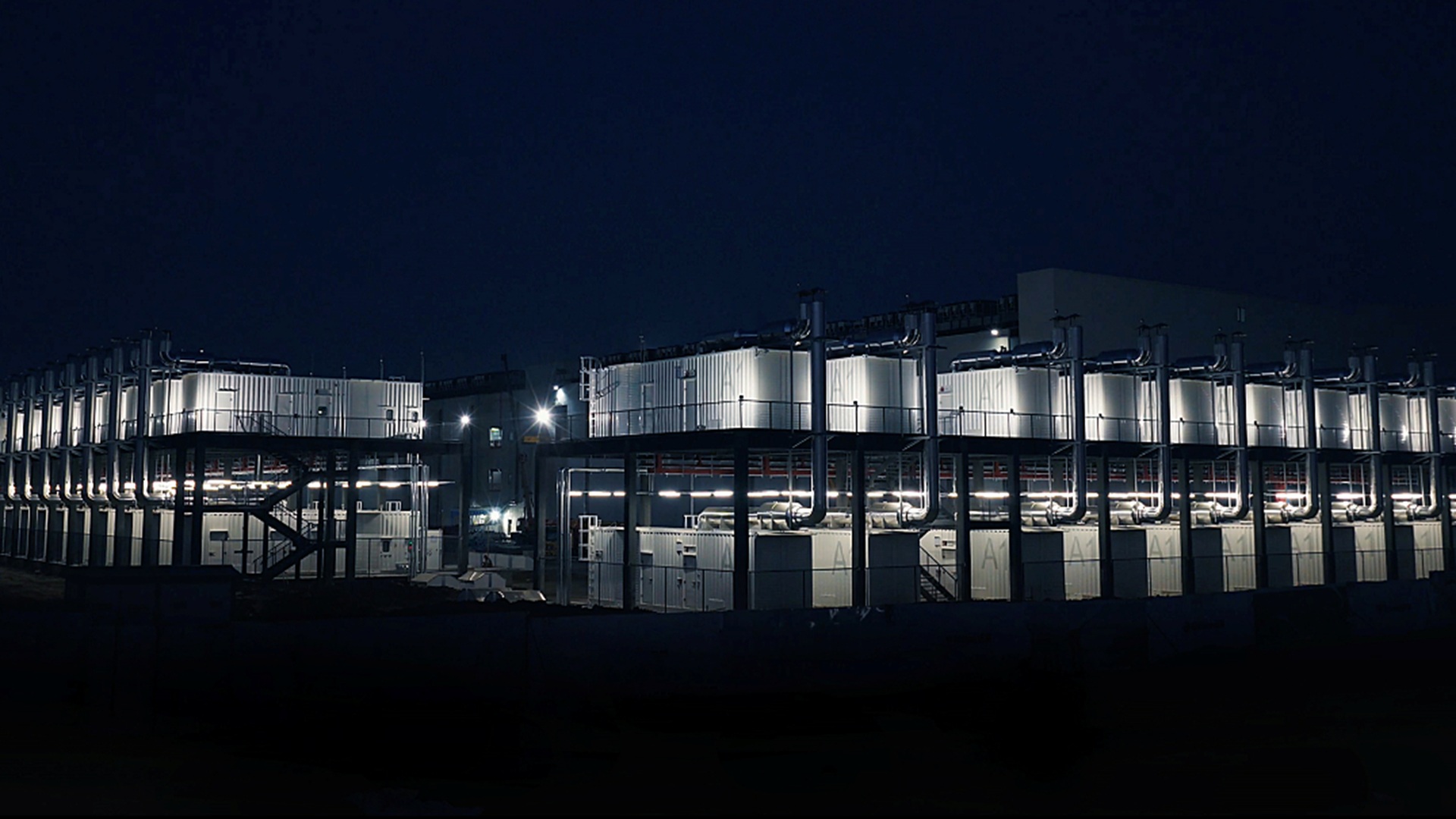
Most companies chasing AI infrastructure capital are building or leasing conventional data center shells and filling them with GPUs sourced through standard supply agreements. Firmus builds to Nvidia's DSX AI Factory Reference Architecture and manufactures its own HyperCube platform, a modular system paired with grid-aware software designed to manage power draw dynamically rather than treat electricity as a fixed input to be provisioned once and forgotten. That manufacturing layer, built and owned in-house rather than outsourced, is what investors keep pointing to as the actual differentiator behind the valuation.
Coatue general partner Robert Yin put it directly: "Firmus represents a differentiated approach to AI infrastructure. Its proprietary IP, manufacturing innovation and repeatable deployment model create a compelling platform." A repeatable deployment model matters more than it sounds. Every AI factory built to a standardized design deploys faster and more predictably than a bespoke data center, which is the difference between capacity arriving on a hyperscaler's timeline and capacity arriving on a customer's.
Why Blackstone and Jane Street care
Blackstone Tactical Opportunities entering as a new investor is notable because that arm of Blackstone specializes in structured, thematic bets rather than passive infrastructure holdings. Senior Managing Director John Watson framed the sector broadly: "AI infrastructure will be a foundational driver of global growth and is among our highest conviction investment themes." That is institutional capital treating AI infrastructure manufacturing as a durable category, not a cycle to trade in and out of.
Jane Street's involvement points at a different motivation: securing compute access for its own operations rather than purely financial return. Daniel Pontecorvo, the firm's head of physical engineering, said, "As AI models become larger and more capable, access to reliable, high-performance compute becomes increasingly important." A quantitative trading firm taking an equity stake in an AI factory builder, rather than simply signing a cloud contract, is a sign that compute scarcity is now a strategic risk large financial institutions are willing to hedge with direct capital deployed years ahead of when they will actually need the capacity.
The Asia-Pacific land grab
Firmus's push into Indonesia lands in the same week CoreWeave announced its own first Asia-Pacific data centers in the same country. That is not a coincidence so much as a signal: Southeast Asia's underbuilt AI infrastructure market is now attracting both hyperscaler-adjacent neoclouds and manufacturing-led builders like Firmus at roughly the same time, each betting local capacity gaps close faster than the region's existing data center operators can fill them alone.
For Firmus specifically, an Australian manufacturing base gives it a cost and logistics advantage moving into nearby Southeast Asian markets that a US-based competitor building the same equipment stateside simply does not have access to. Building HyperCube units domestically and shipping them regionally is a materially different, and materially shorter, supply chain than shipping heavy equipment from North America across the Pacific. That regional proximity is likely to matter even more as tariff and export control friction on AI hardware continues to shift unpredictably between the US and Asian markets over the next several years.
What this means for infrastructure buyers
Enterprises evaluating APAC compute options now have a third category to weigh beyond hyperscaler regions and colocation leases: manufacturing-led AI factory builders offering standardized, faster-to-deploy capacity built on a repeatable design rather than a bespoke one. Firmus remains a relatively unfamiliar name for procurement teams outside Australia today, yet a $10.5 billion valuation backed by Nvidia, Blackstone, and Jane Street is a strong enough signal on its own to warrant a line item in next year's vendor evaluation process, particularly for teams already looking at Southeast Asian or Australian sites.
The deeper pattern is that capital is now flowing to companies that manufacture AI infrastructure at scale, not just to those who lease or operate someone else's finished facility. If that trend holds, expect more of these manufacturing-led builders to emerge in other underbuilt regions over the next 18 months, each offering a faster and potentially cheaper path to capacity than waiting for a hyperscaler's regional buildout to eventually reach your market on its own timeline and at its own negotiated price.