The push for data centers to pay their share
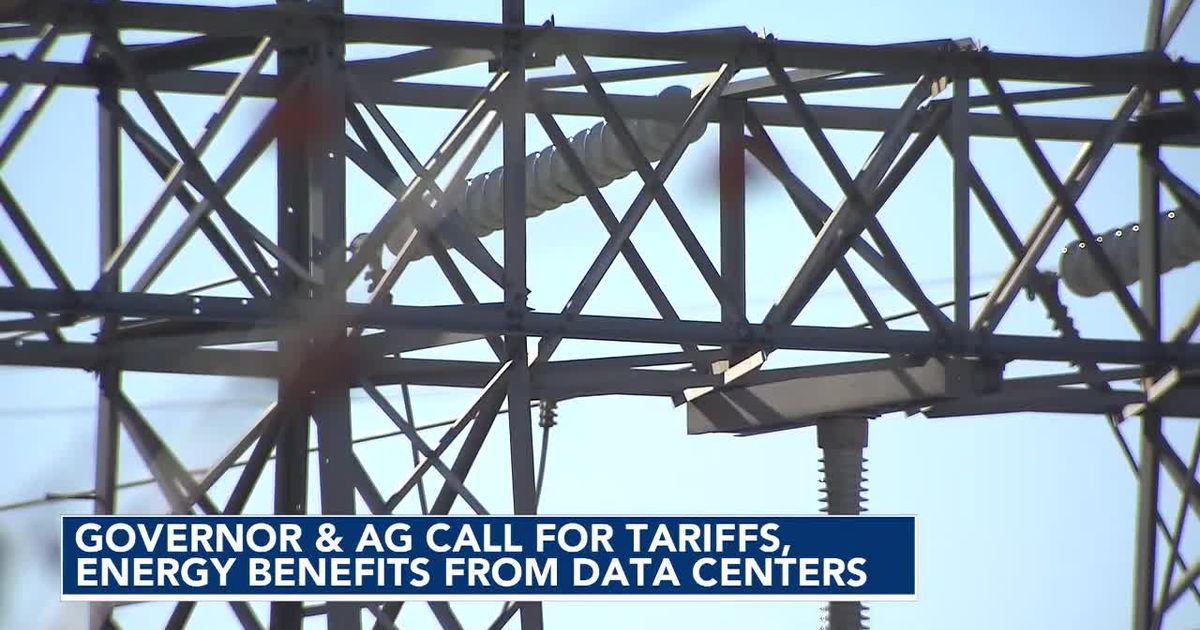
North Carolina Governor Josh Stein is calling on the state Utilities Commission to adopt large load tariffs, a mechanism that would require companies operating data centers to pay more for the electricity they draw from the grid. His argument is straightforward: data centers consume enormous amounts of power relative to typical commercial or residential customers, and the largest technology companies operating them can afford to cover the generation and transmission costs their demand places on the system.
Stein is also pushing the commission to go further than a currently proposed settlement with Duke Energy by requiring data center companies to provide clean energy as a condition of their grid access. He has pointed specifically to Minnesota, Indiana, and Ohio as states that have already secured these kinds of clean energy commitments from data center operators, framing North Carolina as behind its peers on this specific policy question.
What the current settlement does and does not cover
Duke Energy has been negotiating with major data center customers including Amazon, Google, Microsoft, and Nucor on clean energy agreements, and Duke spokesperson Bill Norton said meeting growing demand at the lowest possible cost requires a balanced, diverse set of energy sources, adding that Duke looks forward to working with Stein and the commission on the issue. That response signals Duke is open to engagement without committing to the specific tariff structure Stein wants.
Attorney General Jeff Jackson raised a more pointed concern about the existing settlement: it covers some grid upgrades, such as transmission line improvements, but leaves unclear who will pay for others, including new power plant capacity. That ambiguity is exactly the kind of gap that, left unresolved, tends to shift costs onto residential ratepayers by default, since someone has to pay for new generation capacity and the settlement does not specify who.
Why this fight is happening now
The timing is not coincidental. Data center electricity demand tied to AI infrastructure has grown fast enough in 2026 that state utility regulators across the country are being forced to confront a question that did not require urgent answers five years ago: who pays for the grid capacity new hyperscaler facilities require. North Carolina has become a significant data center market, which puts real financial stakes behind what might otherwise be an abstract regulatory debate.
Critics of large data center power consumption argue that without tariffs specifically targeting these large loads, the cost of new generation and transmission capacity gets socialized across all ratepayers, including households and small businesses that see none of the direct economic benefit data center investment can bring to a region. Stein's proposal is explicitly designed to prevent that cost shifting by targeting the tariff structure at the specific customer class driving the new demand.
The limits of Stein's actual authority here
Stein's position is more about public pressure than binding authority. The article notes that the North Carolina legislature previously stripped the governor's office of direct power over the Utilities Commission, meaning Stein cannot simply order the tariff structure he wants into existence. His approach instead relies on public advocacy, aligning with the attorney general's concerns, and pushing the commission to act through the normal regulatory process rather than executive directive.
That limitation matters for how seriously data center operators and utilities should weigh this intervention. A governor without direct authority over the regulator can still shift the political and public narrative around a pending settlement, and commissions do weigh public comment and elected officials' positions even when those officials lack formal veto power, but the ultimate decision sits with the commission itself.
The broader pattern across states
North Carolina joins a growing list of states actively debating how to structure electricity costs for data center operators, following Minnesota, Indiana, and Ohio, which Stein cited as having already reached comparable agreements. This suggests a template is emerging nationally: large load tariffs paired with clean energy procurement requirements as the standard mechanism states use to balance data center economic development against grid cost concerns.
Enterprise technology leaders operating or planning data center capacity in any state should expect this pattern to keep spreading rather than remaining isolated to a handful of early movers. States watching North Carolina's fight will have a clearer regulatory template to borrow from if Stein's push succeeds, and states watching it fail will have a cautionary example of how limited a governor's leverage can be against an entrenched utility settlement process.
What this means for data center site selection
For any enterprise evaluating new data center locations or renewing existing capacity agreements, state level tariff and clean energy policy is becoming as material to total cost of ownership as land cost, tax incentives, or fiber connectivity used to be. A state that adopts large load tariffs without matching clean energy sourcing options could become meaningfully more expensive to operate in than a neighboring state that has not.
The practical move for technology leaders with data center footprints in North Carolina, or any state actively debating similar tariffs, is to engage directly in the regulatory comment process now rather than waiting for a final settlement. Utilities Commissions generally do accept input from the companies whose rates are being decided, and the current uncertainty over who pays for new generation capacity is exactly the kind of open question where early engagement can still shape the outcome.