What shipped in the app
Nordstrom's mobile app update for the holiday season centers on three additions. An in-store mode adds an interactive map meant to help shoppers physically navigate stores and locate specific items, a wayfinding feature aimed squarely at reducing the friction of large-format department store browsing during the season's highest foot-traffic weeks. A gift edit feature highlights expert commentary across the holiday catalog, which returns this year with more than a thousand gift items and improved filtering tools to help shoppers narrow a large assortment quickly.
The third addition, Request a Look, is the one with the clearest AI architecture: it generates personalized recommendations for shoppers, but explicitly offers the option of one-on-one styling support from an actual stylist alongside the automated suggestions. That pairing, AI-generated recommendations plus a live human escalation path, is a deliberate design choice rather than an oversight, and it stands out against the pattern of retailers building AI shopping tools as a way to reduce the volume of customer interactions that require paid staff time.
The AI-plus-human design choice
Most retail AI shopping tools launched this year, across apparel, grocery, and general merchandise, are explicitly built to reduce reliance on human staff: chatbots that answer questions a sales associate used to field, recommendation engines that replace a stylist's judgment, virtual try-on tools that eliminate a fitting room visit. Request a Look takes the opposite structural bet, using AI to generate a starting recommendation and then routing the shopper toward a human stylist rather than away from one.
For a retailer the size of Nordstrom, that is a meaningful cost decision as much as a product decision. Keeping human stylists in the loop for a feature marketed at scale means Nordstrom is not treating stylist labor as a cost to eliminate through automation, at least not for this flagship holiday feature. Whether that holds as a durable strategy or gets quietly automated away in future versions once the AI recommendation quality improves is the detail worth watching over the next several quarters of app updates.
Same-day beauty delivery expands past the pilot stage
Same-day beauty delivery starts this month across more than 15 major US markets, including Los Angeles, New York, Chicago, San Francisco, and Miami, a meaningful expansion beyond a limited pilot footprint. Beauty is a category particularly well suited to same-day delivery economics: high margin, low shipping weight and volume, and a customer base accustomed to urgency around replenishment purchases that run out unexpectedly, like a foundation shade or a fragrance gift running low before an event.
Launching this specific capability ahead of the holiday season, rather than waiting until after, is a clear signal Nordstrom expects beauty gifting and last-minute replenishment purchases to be a meaningful share of holiday volume. The market list, anchored by the largest US metros, suggests Nordstrom built this on top of existing dense urban delivery infrastructure rather than standing up new logistics specifically for beauty, which is the more capital-efficient way to expand a same-day category without the overhead of a dedicated delivery network. It also means the rollout's success will depend heavily on how well Nordstrom's existing courier partnerships handle the specific packaging and temperature needs of fragrance and skincare products, a different operational challenge than the apparel same-day delivery most department stores already run.
The FAO Schwarz expansion as a parallel bet
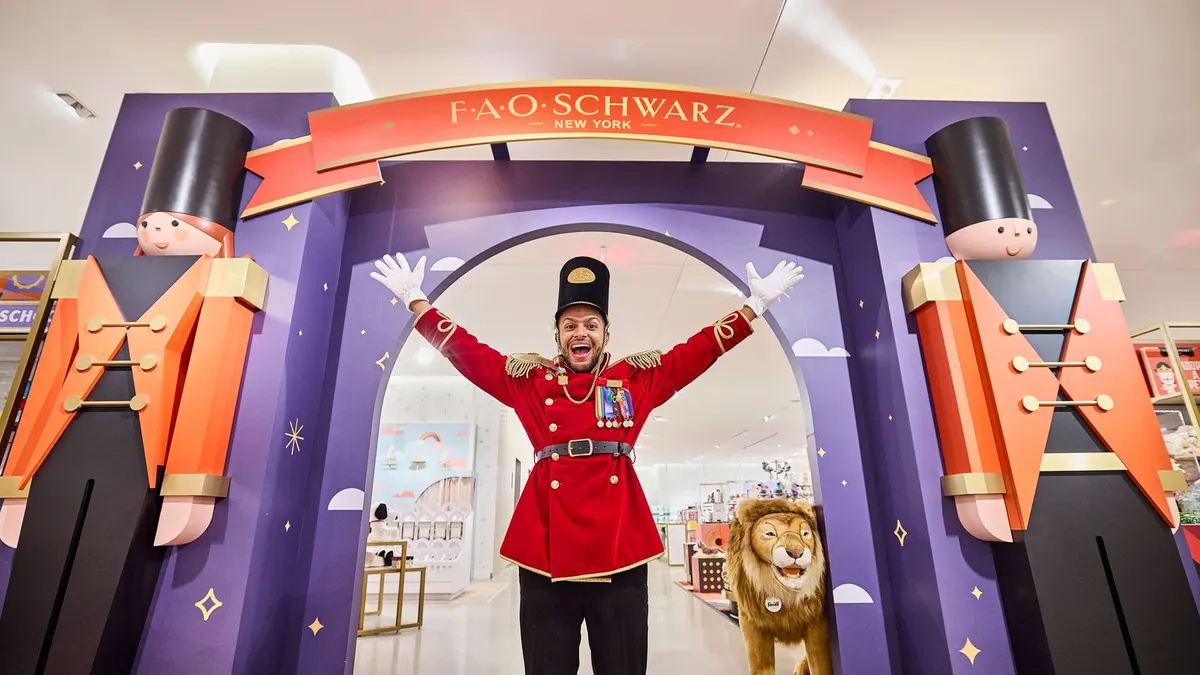
Alongside the app and delivery updates, Nordstrom is expanding its FAO Schwarz toy partnership, first announced in June, to feature the brand at every Nordstrom location for the holidays, following an initial rollout limited to shop-in-shops at select stores and a smaller online assortment. That expansion runs in parallel to, and independent of, FAO Schwarz's own push onto Amazon, where the toy brand opened a storefront and is running a pop-up at its New York flagship featuring items from Amazon's 2026 top toy list.
That dual-channel strategy, FAO Schwarz expanding simultaneously through Nordstrom's physical footprint and Amazon's marketplace reach, shows the toy brand hedging its holiday distribution across a department store partner and a marketplace giant rather than betting exclusively on either. For Nordstrom, the full-store FAO Schwarz rollout is a bet that toy gifting drives incremental holiday store traffic broad enough to justify giving every location shelf space, not just flagship or high-traffic stores. It also gives Nordstrom a reason for families to visit stores in person during a season when digital channels could otherwise absorb an increasing share of gift-buying traffic on their own.
What CTOs should take from the sequencing
Nordstrom shipped wayfinding, AI recommendations with human backup, same-day delivery expansion, and a toy partnership rollout all within roughly the same announcement window, timed deliberately ahead of peak holiday shopping rather than spread across the quarter. That bundling itself is a lesson in rollout sequencing: shipping multiple customer-facing improvements together, right before the highest-traffic weeks of the year, maximizes the number of shoppers who encounter the new features during the window when habit formation and loyalty signals matter most.
The more durable signal is the AI-plus-human design in Request a Look. As more retailers face pressure to show AI adoption in customer-facing features, Nordstrom's choice to pair automation with an explicit human escalation path, rather than quietly reducing stylist headcount, is worth tracking as a model for retailers in categories where trust and personal judgment remain a real part of the purchase decision. Apparel and luxury gifting are exactly the categories where that judgment carries real revenue weight, which may explain why Nordstrom chose to preserve it here even while leaning into automation everywhere else in the app.