A remarkable five days for infrastructure failures
Between November 12 and November 17, a remarkable list of organizations each suffered a significant outage: the Federal Aviation Administration issued a nationwide ground stop, Workday's HR and payroll platform went down across two data centers for roughly eighteen hours, United Airlines delayed departures for an hour and a half, JPMorgan Chase disclosed a software bug in on-premise hardware, Charles Schwab's website went down for some users, the NSA's internal classified communications network degraded, Apple suffered outages across sixteen services after an internal update, and Equinor confirmed an active cyberattack against certain IT systems.
Homeland Security Secretary Markwayne Mullin's characterization of the incidents as individually unrelated appears to hold up. There is no evidence of a shared vendor, a common attacker, or a single upstream cause connecting most of these events. Reports that Wall Street executives and the NSA told Congress the outages stemmed from efforts to fix AI-identified vulnerabilities remain unconfirmed by any named organization, and no outlet has tied a specific patch to a specific outage. Coincidence in timing is not the same thing as a shared cause, and the honest read here is that it mostly was not one.
The FAA's router is the one worth understanding in detail
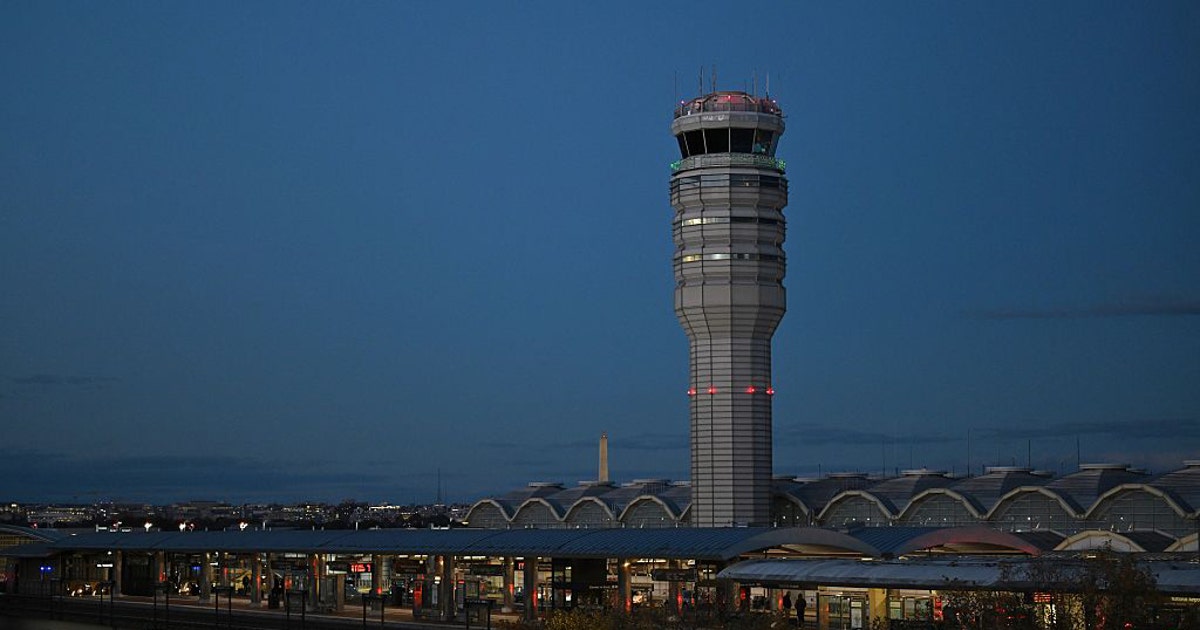
The FAA incident was the most severe and, usefully, the best explained. Investigators traced the ground stop to a router at a radio communications facility in El Dorado, Arkansas, that was in the middle of being upgraded from copper wiring to fiber optics by the FAA's network service provider, L3Harris. The faulty router flooded the agency's network with connection attempts at a rate of roughly one thousand every four to five seconds, which the FAA says caused instability across aircraft communications and radar feeds. More than half of the FAA's 22 Air Route Traffic Control Centers were affected, more than 12,000 flights were canceled, and the ground stop lasted over four hours before L3Harris blocked traffic from the affected facilities and the network stabilized.
FAA Administrator Bryan Bedford's own framing is the part that should stick with any technology leader: the agency said the surge may have overwhelmed aging equipment that was never designed to absorb that kind of traffic spike from a single malfunctioning component. In response, the FAA disabled a specific broadcasting function on roughly 60 similar routers across its network, which is an admission that the exposure was not limited to the one unit that failed. A routine fiber upgrade, the kind of maintenance work that happens constantly across every large network, became a nationwide event because the surrounding infrastructure had no isolation between one router's failure and the entire system's stability.
Workday and JPMorgan show the same pattern at smaller scale
Workday's outage ran roughly eighteen hours across two data centers before service was restored, and the company was explicit that it was not a cybersecurity incident, which leaves an operational or infrastructure failure as the likely explanation even without full technical detail disclosed. For an HR and payroll platform, an eighteen-hour outage is not a minor inconvenience. It is a direct hit on payroll runs, benefits enrollment, and every downstream HR process that assumes the system of record is reachable when it is needed.
JPMorgan Chase's incident, a software bug in on-premise hardware systems lasting roughly eight and a half hours, is the pattern in miniature: a legacy, on-premise component failing in a way that modern cloud-native redundancy is specifically designed to prevent. Both incidents point toward the same underlying issue the FAA's router exposed at national scale, systems built on infrastructure old enough that a single component's bad day cascades further than current architecture standards would allow.
Equinor is the exception that proves the rule
Of the nine incidents, only Equinor's involved an actual adversary. The Norwegian energy company confirmed an ongoing cyberattack against certain IT systems while stating that operations and production were not affected, a containment claim that, if accurate, suggests the attack was caught before it reached operational technology. Everything else in this five-day cluster, the FAA, Workday, United, JPMorgan, Schwab, the NSA's degraded network, and Apple, was attributed to technical faults, maintenance activity, or unconfirmed causes rather than attackers.
That ratio, eight operational failures to one attack, is worth sitting with for a moment, because it cuts directly against the instinct many security teams have to assume the worst explanation first. The infrastructure risk enterprises actually face day to day is overwhelmingly about aging components, insufficiently isolated failure domains, and maintenance work gone wrong, not nation-state attackers. Budget and attention allocated as though the opposite were true is budget and attention misallocated relative to where incidents are actually originating.
The isolation failure is the real lesson, not the coincidence
The most useful single fact in this entire cluster is the FAA's decision to disable a broadcasting function on 60 other routers after the incident. That is not a company fixing the one thing that broke. That is a company discovering, after the fact, that dozens of other components shared the same latent failure mode and had simply not been triggered yet. Any technology leader reading this should ask the uncomfortable version of that question about their own network: how many components in your own infrastructure share a failure mode with something that has not failed yet, and would you know before it did or only after.
The broader takeaway is not that infrastructure is becoming less reliable. It is that the gap between normal maintenance work and catastrophic failure keeps turning out to be thinner than architecture reviews assumed, across sectors as different as aviation, HR software, and banking. A fiber upgrade should not be able to ground 12,000 flights. The fact that it did is the actual headline here, far more than the coincidence of nine outages landing in the same calendar week.