A city writes its own AI law
New York City Council Speaker Julie Menin unveiled a package of AI regulation bills on Friday, September 25, ahead of an October 5 Committee of the Whole hearing. The bills apply broadly to any business selling or deploying AI systems within city limits, not just to companies holding city contracts. That scope is the detail worth pausing on: this reads as a general-purpose AI statute covering the entire local market, written by a city government while Washington continues to debate whether it wants a federal framework at all.
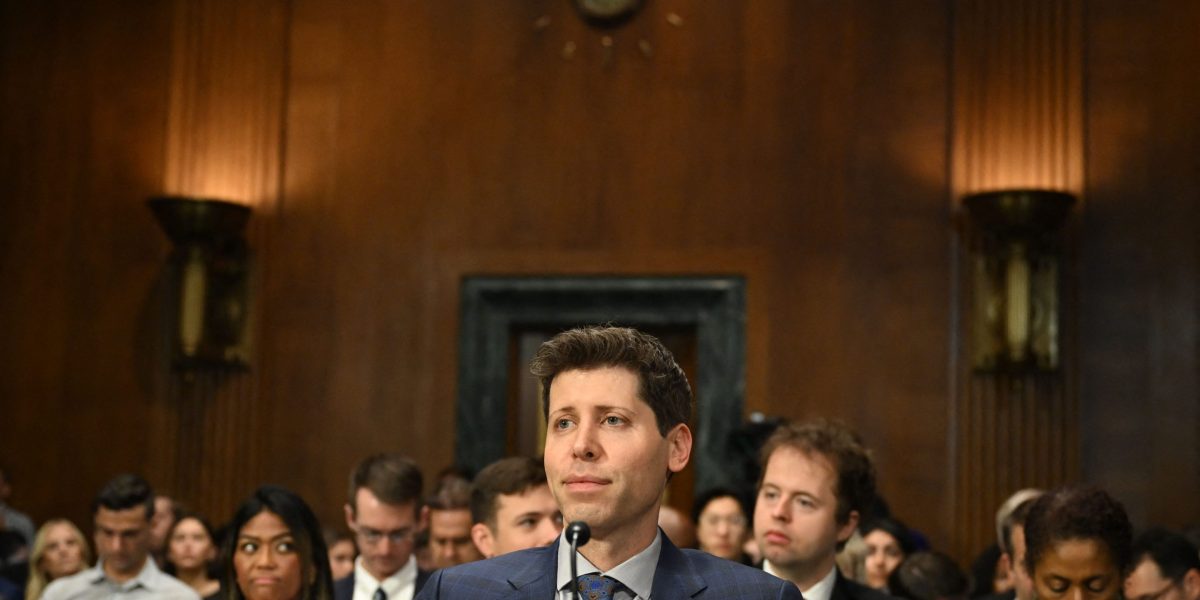
Menin framed the effort as protecting the city's position in the industry rather than driving business away from it. "We want to ensure that New York stays the AI capital of the world, but with that comes responsibility," she said. The council invited Sam Altman, Dario Amodei, Sundar Pichai, Elon Musk and Mark Zuckerberg to testify at the October 5 hearing, though reporting suggests none of them are likely to show up. Their absence would not slow the bill down, since New York does not need a lab's cooperation to pass a local law.
What the bills actually require
The package has four operative pieces. AI systems must pass external validation for data quality, bias, privacy and security against city-defined standards. Every system needs a human override capability, effectively a mandated kill switch. City contractors must report AI safety incidents within 24 hours of discovery. And whistleblowers, including city employees who report AI-related threats, get formal protection along with a share of any fines recovered from reporting violations. Together the four pieces read less like a single rule and more like a compliance framework, closer in spirit to a financial services audit regime than to the lighter AI guidance most enterprises have gotten used to from state legislatures so far.
The package also creates a private right of action, letting consumers sue when a jailbroken AI tool causes foreseeable harm and the deploying company's safeguards were inadequate. That is the provision most likely to change vendor behavior fastest, since it moves enforcement out of a city agency's hands and into the courts, where plaintiffs' attorneys do not need to wait for a regulator's limited enforcement budget to act. Violations carry fines of $25,000 per instance, which sounds modest until it is multiplied across every affected user in a mass-market deployment.
Why a city can do this at all
New York City is not writing AI law in a vacuum. It is following a pattern the city itself set with Local Law 144, its 2023 statute requiring bias audits for automated hiring tools, which became a de facto national standard because so many employers hire in New York regardless of where they are headquartered. The same mechanism applies here: a company does not need a New York office to trigger this law, only a customer or a deployment that touches the city.
That is precisely why city-level AI law matters more than its geographic scope suggests. Federal AI policy remains unsettled, and state legislatures move at different speeds with different priorities, but a company that sells software or services to any New York-based customer, employer, or consumer inherits the city's rules the moment it deploys AI into that relationship. Treating this as a niche municipal issue is the mistake that catches compliance teams off guard eighteen months from now.
The kill switch requirement is the hard part
Of the four provisions, the mandatory human override capability is the one that will cost the most engineering time to satisfy honestly. A real kill switch is not a pause button on a dashboard, it requires a system that can halt an AI agent's actions mid-task, roll back or contain whatever it already did, and hand control back to a human without losing the state of the work in progress. Most production agentic systems shipped in the last two years were not built with that as a first-class requirement.
If your organization runs agents that take actions in production systems, whether that is customer service, code deployment, or financial transactions, audit whether you can actually demonstrate a working override today, not just a theoretical one described in an architecture diagram. The gap between what your team believes exists and what would survive a regulator's or plaintiff's attorney's scrutiny is usually wider than engineering leadership assumes until someone actually tests it under pressure.
The private right of action changes the calculus
Government enforcement of AI rules has been slow and thinly resourced almost everywhere, which is part of why so many companies have treated AI compliance as a lower priority than other regulatory obligations. A private right of action removes that buffer. Once consumers can sue directly over harm from an inadequately safeguarded AI tool, enforcement scales with the number of plaintiffs' firms willing to take the case, not with a city agency's headcount.
This is the provision your general counsel should flag to the board before the October 5 hearing even happens, regardless of whether your company is invited to testify. Litigation risk from AI incidents has mostly lived in theoretical risk memos until now. A city ordinance that hands consumers a direct cause of action turns that theoretical exposure into an actuarial one, and insurers will start pricing it accordingly whether or not the bill passes in its current form.
What to do before October 5
Do not wait for the bill to pass to start the compliance review. Map every AI system that touches a New York-based customer, employee, or user, and check each one against the four requirements: external validation readiness, a demonstrable override mechanism, an incident reporting process that can hit a 24-hour window, and documentation your legal team could defend if a private lawsuit arrived. Most organizations will find gaps in at least two of those four.
Treat this bill the way smart compliance teams treated Local Law 144: as an early signal of where AI regulation is heading nationally, not as a local curiosity to monitor from a distance. Cities move faster than Congress, and New York in particular has a track record of turning local AI rules into the standard everyone else quietly adopts. Get ahead of this one before it becomes the template other cities and states copy wholesale, because retrofitting kill switches under a compliance deadline is far more expensive than building them in from the start.