The pricing problem nobody wanted to name
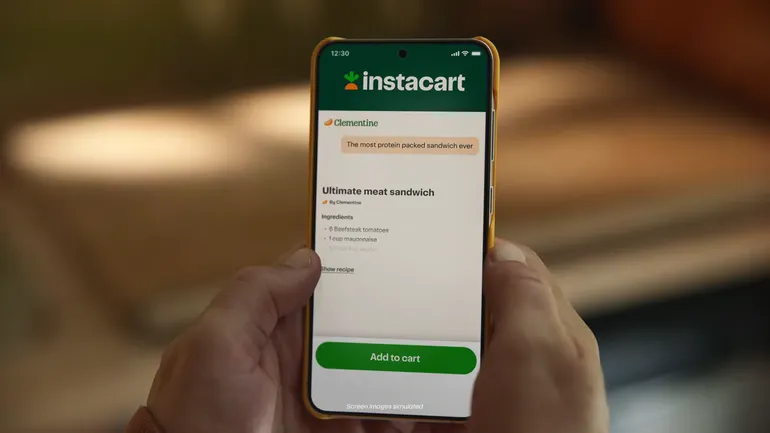
Instacart and DoorDash both published new data on September 24 making the same uncomfortable argument to their retailer partners: online grocery markups are actively costing sales rather than protecting the margin they were designed to protect. Instacart CEO Chris Rogers put it bluntly, calling affordability the number one reason people churn off online grocery, ahead of selection, delivery speed, or any of the usual explanations retailers reach for first when a customer stops ordering. That is a direct challenge to a pricing practice most grocery retailers adopted specifically to offset the cost of picking, packing, and delivering online orders profitably.
The data behind the claim is specific rather than anecdotal: retailers offering price parity between online and in-store, meaning no markup at all on delivered orders, see online sales grow 10 percentage points faster than retailers that maintain a markup on the same items. Instacart says 90% of US consumers now have access to at least one no-markup retailer somewhere on its platform, which functionally means markup retailers are now competing for the same customer against options that customer can see side by side, on the same app, priced meaningfully lower for identical products.
Rogers's real argument is about switching cost, not price sensitivity
The more pointed version of Rogers's argument is about competitive dynamics rather than pure consumer price sensitivity: the cost of losing sales and share over time to major digital players might already exceed the cost of removing markups today. That reframes markup removal from a margin sacrifice into a defensive necessity, given that Walmart and Amazon are both scaling proprietary grocery delivery without the third-party markup structure that marketplace grocery has historically relied on to fund its delivery economics.
This is a genuinely uncomfortable position for grocery retailers to find themselves in, because it implies the markup was never really sustainable pricing to begin with, it was a subsidy for slower-moving retailers that competitors without the same legacy cost structure are now actively exploiting. Retailers that resist removing markups are effectively betting that customer inertia will outlast a visible, side by side price gap, a bet that gets measurably harder to win every quarter Walmart and Amazon expand their own delivery footprint at parity pricing against the same customer base.
DoorDash is running the same play through benefits access
DoorDash's contribution to this data set targets a different lever on the same underlying affordability problem: government benefits access rather than markup removal directly. The company reports 4.5 million SNAP and EBT shoppers have added their cards to the platform, with 75,000 stores now accepting SNAP benefits through DoorDash's checkout flow. The more striking number in that data set is that 85% of those SNAP benefit users were shopping at a specific store for the first time, meaning benefits access functioned as genuine new customer acquisition, not merely a service extension layered onto existing, already-loyal shoppers.
DoorDash VP of Grocery and Retail Partnerships Mike Goldblatt described the retailer negotiation around this as a two-way conversation, finding a path that solves profitability concerns while still getting prices down for the shopper. That framing acknowledges what Rogers's data implies without saying it quite as directly: removing markups or expanding benefits access carries a real margin cost, and both platforms are actively negotiating with retailers over who ultimately absorbs that cost, rather than simply mandating the change unilaterally from the top.
Membership and loyalty tools are the pressure valve
Neither Instacart nor DoorDash is asking retailers to simply absorb the margin loss from parity pricing with no offsetting mechanism. Both platforms are positioning membership programs and targeted promotional tools as the pressure valve that makes markup removal financially workable for retailers rather than purely a cost. A retailer that pairs parity pricing with a paid membership tier, or with promotional funding negotiated jointly with CPG partners along the lines DemandTec has been pitching this same week, has more room to absorb the delivery cost gap than one attempting parity pricing with no offsetting revenue mechanism at all.
That layering is worth noting because it means the markup decision is not actually a binary choice between full margin protection and full parity. Retailers have a genuine middle path available: negotiate delivery cost support through membership economics or supplier co-funding first, and treat markup removal as the last lever pulled once those other mechanisms are already in place, rather than the first and only response to competitive pressure from Walmart and Amazon.
The margin decision every grocery CFO now has to make explicit
For grocery and multi-category retail leaders, this data set forces a decision that has mostly been avoided by inertia up to this point: whether online markup is still a defensible margin protection tool or has quietly become a customer acquisition liability disguised as one. The 10-point sales growth gap between parity and markup retailers is large enough that the revenue upside from matching in-store pricing plausibly exceeds the margin given up on existing volume, especially once fulfillment costs are amortized across a meaningfully larger order base.
The roadmap implication is to model this explicitly rather than continue deferring it another quarter. Run the actual unit economics of removing online markup against the 10-point growth differential Instacart is reporting, using your own order volume and delivery cost structure rather than treating the markup as a fixed assumption inherited from when online grocery first launched years ago. Retailers still treating markup as untouchable pricing policy are, per Rogers's own framing, making a bet against Walmart and Amazon's cost structure that gets more expensive to lose with every quarter it goes unexamined.