Two of the largest districts in the country, moving the same direction
New York City's Department of Education and Los Angeles Unified School District each announced AI restrictions within days of each other in early September 2026, covering well over a million students combined between NYC's roughly 913,000 public school enrollment and LAUSD's approximately 378,000 students. Neither district coordinated publicly with the other, which makes the near-simultaneous timing more notable rather than less, two of the country's largest districts arriving independently at a similar restrictive conclusion.
For any edtech vendor or enterprise AI company selling into K-12, that independent convergence is a stronger signal than either district's policy would be alone. A single large district restricting generative AI could reflect local political dynamics specific to that city. Two major districts doing it within the same week suggests something closer to a genuine shift in how school administrators nationally are currently weighing the tradeoffs.
NYC's reversal from a permissive draft to an explicit K-8 ban
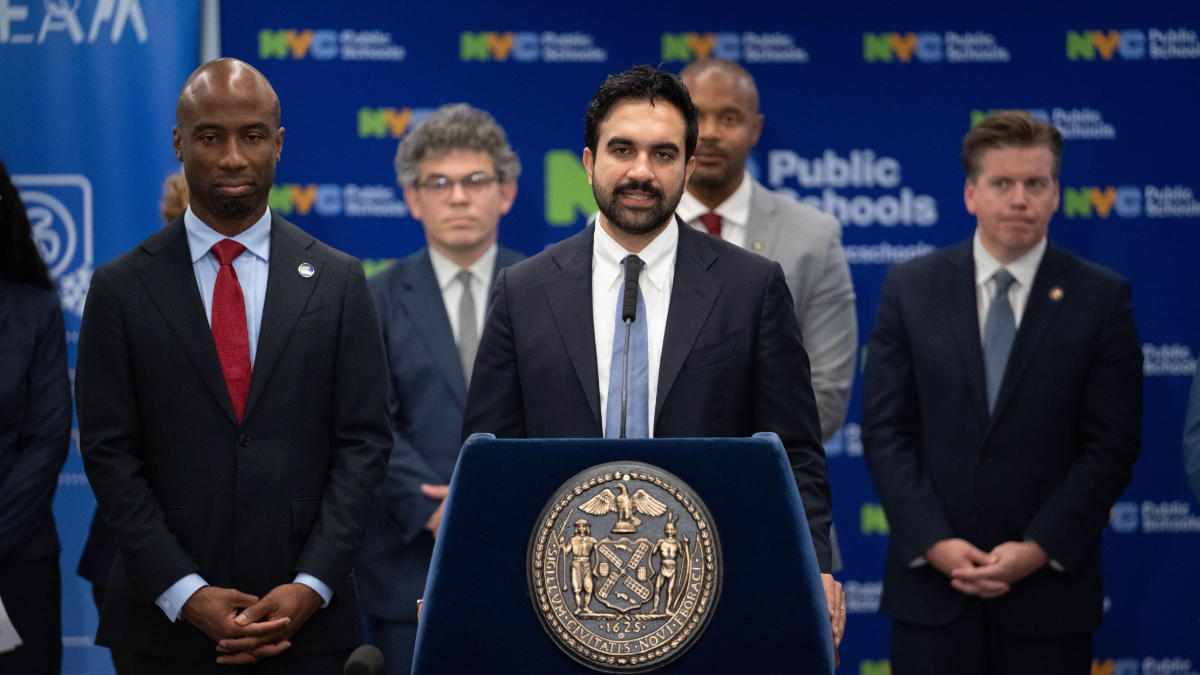
NYC's policy is notable partly for what it replaced. A March 2026 draft would have left most decisions about student AI use to individual teachers, a relatively permissive, decentralized approach. That draft drew sufficient parent and teacher backlash that Chancellor Kamar Samuels publicly said it 'missed the mark,' and the district moved instead to an explicit ban on student-facing generative AI across all K-8 classrooms, while carving out a limited, approved set of tools for high schoolers.
That reversal matters because it shows the policy outcome was not simply an administrator's initial preference. It was a correction made in direct response to stakeholder pushback against a more permissive starting position, which suggests the eventual longer-term policy NYC develops over its one-year window is also likely to be shaped heavily by ongoing parent and teacher input rather than settled internally in advance.
LAUSD's moratorium arrived with less apparent internal preparation
LAUSD's one-year moratorium on generative AI use on district devices came with less visible policy groundwork than NYC's reversal. The district had previously passed screen time restrictions but had not issued specific AI rules before this moratorium, and reporting describes the announcement as having caught even some school district officials by surprise.
That contrast in process, NYC's publicly debated reversal versus LAUSD's more abrupt announcement, is worth watching for what it predicts about each district's next policy iteration. A district that arrived at restriction through visible public debate may be better positioned to build a durable longer-term policy than one whose moratorium appears to have moved faster than its own internal planning.
A one-year clock on both moratoriums
Both NYC's K-8 ban and LAUSD's broader device-level moratorium are explicitly framed as temporary, giving each district roughly a year to develop more durable, longer-term AI policy. That framing matters for how vendors and other districts should read these restrictions: neither city has concluded generative AI has no place in K-12 education permanently, both are buying time to develop policy more carefully than their initial, more permissive attempts allowed.
That one-year window is also a concrete planning horizon other large districts watching NYC and LAUSD should track directly. Whatever longer-term policy either district lands on next year is likely to become a reference point other administrators cite when building their own policy, given these are two of the largest and most closely watched districts in the country.
What edtech vendors and enterprise AI companies should take from this
For vendors selling generative AI tools into K-12, the practical lesson from these two moratoriums is that selling to an individual school or even an individual district's procurement office no longer guarantees durable access, policy can move quickly and restrictively even after a more permissive initial approach has already been adopted and used. Vendors should expect this kind of reversal risk specifically in large, politically visible districts rather than treating any single district's current policy as a stable baseline for revenue planning.
District and school IT leaders elsewhere should also treat NYC's and LAUSD's experience as a preview of the same pressure they are likely to face themselves: parent and teacher stakeholder backlash against permissive AI policy is now demonstrably capable of reversing administrative decisions even after they have been publicly announced and partially implemented, which argues for building stakeholder input into AI policy development earlier rather than treating it as a formality after the policy is already set.