A workshop built around a supply problem
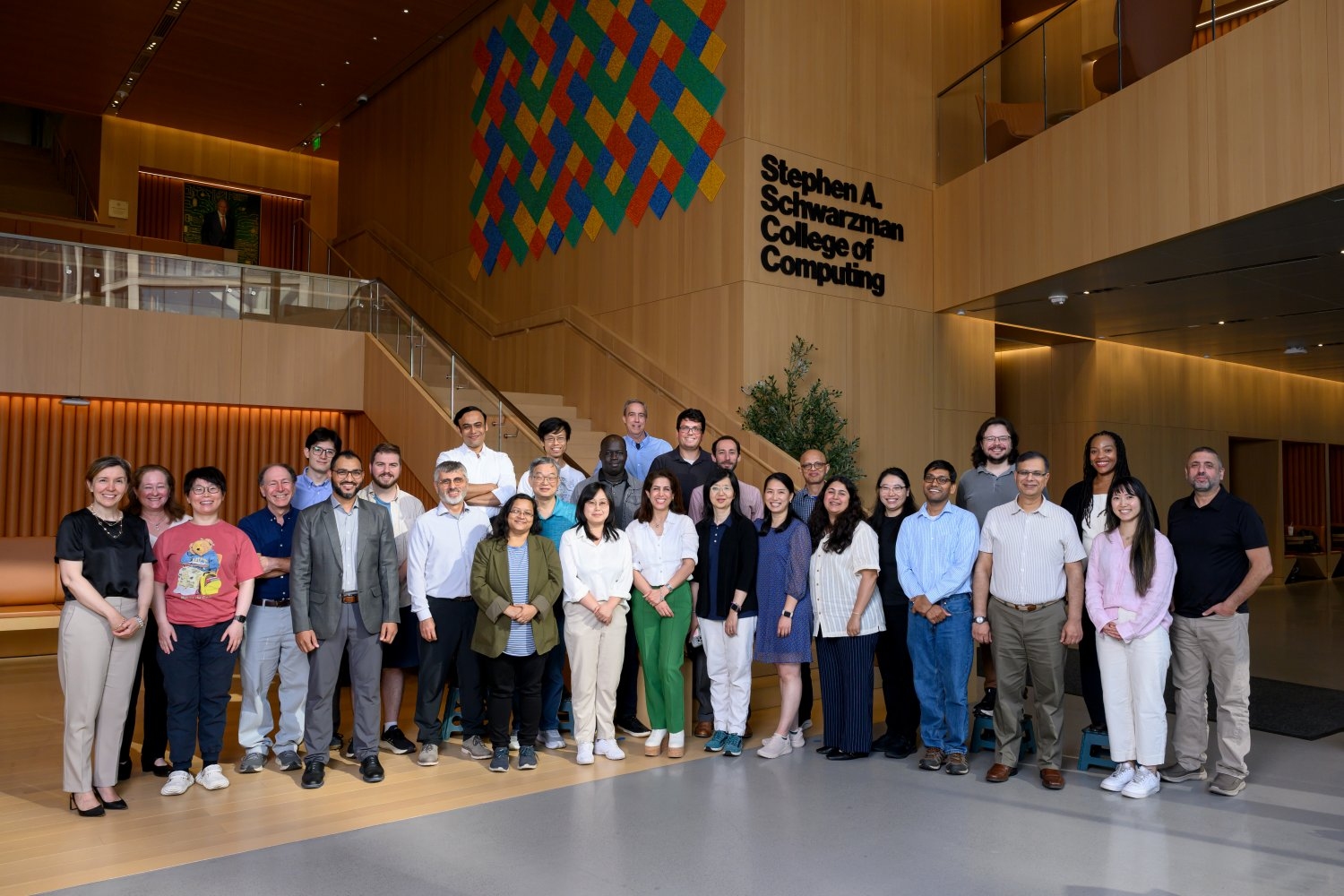
MIT's Schwarzman College of Computing ran its first AI Educators Pilot in July 2026, bringing together 19 educators from seven institutions spanning Greater Boston, South Carolina, West Virginia, and Texas for a weeklong workshop on campus. Participating schools included Allen University, Babson College, Brandeis University, Marshall University, UMass Lowell, University of North Texas, and Wentworth Institute of Technology, a deliberately varied mix spanning small liberal arts colleges, a historically Black university, business schools, and technical institutes rather than a cohort drawn from peer research universities.
The instructors who attended came from finance, computer science, sustainability, and other fields outside computing proper, which reflects the program's actual thesis: AI competency needs to spread across disciplines rather than stay contained within computer science departments. A finance professor who understands how a large language model can hallucinate a plausible-looking but false citation is positioned to teach that risk far more credibly to finance students than a computer science professor brought in as a guest lecturer for one class period, and MIT built the pilot around training discipline-specific instructors rather than centralizing all AI instruction in one department.
The bottleneck is people, not content
Saurabh Amin, the program's faculty director and a professor in civil engineering, put the underlying problem plainly: what is scarce is educators prepared to teach AI as more than a fixed body of concepts and tools. That framing matters because most institutional AI investment over the past two years has gone toward licensing tools, drafting acceptable use policies, and building detection or disclosure requirements, categories of spending that do nothing to solve a shortage of faculty who can teach the underlying concepts with enough depth to be credible to skeptical students and colleagues.
Dean Dan Huttenlocher described the broader goal as expanding AI education to more students by investing in training for instructors, which is a meaningfully different strategy than the tool-procurement approach most institutions have defaulted to. Training an instructor scales differently than licensing a product. A single trained faculty member teaches new cohorts of students every semester for the rest of their career, compounding the initial training investment in a way that a software license renewal never does, and MIT's bet is that this compounding effect makes instructor training the higher-leverage investment over a multi-year horizon.
What actually transferred
The workshop centered on adapting MIT's own Modeling with Machine Learning course, developed through the university's Common Ground for computing and AI education initiative, for use in classrooms with very different student populations and institutional resources than MIT's own. EECS lecturer Shen Shen led instruction, walking participants through both the technical content and the pedagogical adjustments needed to teach it credibly to students who may not arrive with MIT's baseline mathematical preparation, a nontrivial translation problem that explains why the workshop ran a full week rather than a single-day training session.
Deputy dean Asu Ozdaglar described the intended outcome as students who become critical thinkers about AI, capable of evaluating what these systems can and cannot do rather than treating them as black boxes to be used uncritically. That distinction between critical evaluation and passive use is the throughline connecting the curriculum content to the institutional goal: a student who can explain why a model's output should be checked against a primary source is a fundamentally different graduate, and a different future employee, than one who has only learned to write effective prompts.
Funding and the path to scale
The pilot runs on philanthropic funding from Jake and Robin Reynolds rather than a federal grant or university general fund allocation, which gives MIT flexibility in how it structures the program but also means its long-term durability depends on continued donor interest rather than a renewable institutional funding line. That funding structure is common for early-stage pilots of this kind, where a philanthropic gift underwrites the proof of concept before an institution commits its own recurring budget, but it does place real pressure on this first cohort to produce visible outcomes that justify either continued philanthropic support or a transition to institutional funding.
With only 19 educators trained across seven institutions in the inaugural cohort, the program is still firmly in proof-of-concept territory relative to the scale of the problem it is trying to solve across thousands of colleges and universities nationally. MIT has not published a stated target for how many educators or institutions it intends to reach in subsequent cohorts, which makes this a program worth revisiting in a year to assess whether the model scales past its founding class or remains a boutique offering limited by the availability of philanthropic funding and MIT faculty bandwidth to run future workshops.
The same gap exists inside your organization
Enterprise learning and development leaders should recognize this problem immediately, because it is structurally identical to the one many corporate training functions face right now. Most companies have licensed AI tools for their workforce and published usage guidelines, but far fewer have invested in developing internal instructors, whether that means L&D staff, subject-matter experts, or team leads, who can teach AI concepts with enough depth to help employees use the tools critically rather than mechanically. MIT's framing applies almost without modification: what is scarce is people prepared to teach AI as more than a fixed set of tools, and that scarcity exists inside corporations just as much as inside universities.
The practical implication for CHROs and heads of learning is that instructor development deserves a larger share of the AI training budget than most organizations currently allocate to it, relative to tool licensing and generic e-learning modules. A cohort of internally trained subject-matter experts who understand both the underlying technology and their own function's specific risks and use cases will produce more durable organizational capability than another round of vendor-delivered AI literacy webinars, and MIT's pilot offers a workable template, small cohorts, discipline-specific application, and a defined core curriculum, for how to build that capability deliberately rather than hoping it emerges on its own.