A curriculum expansion, not another policy
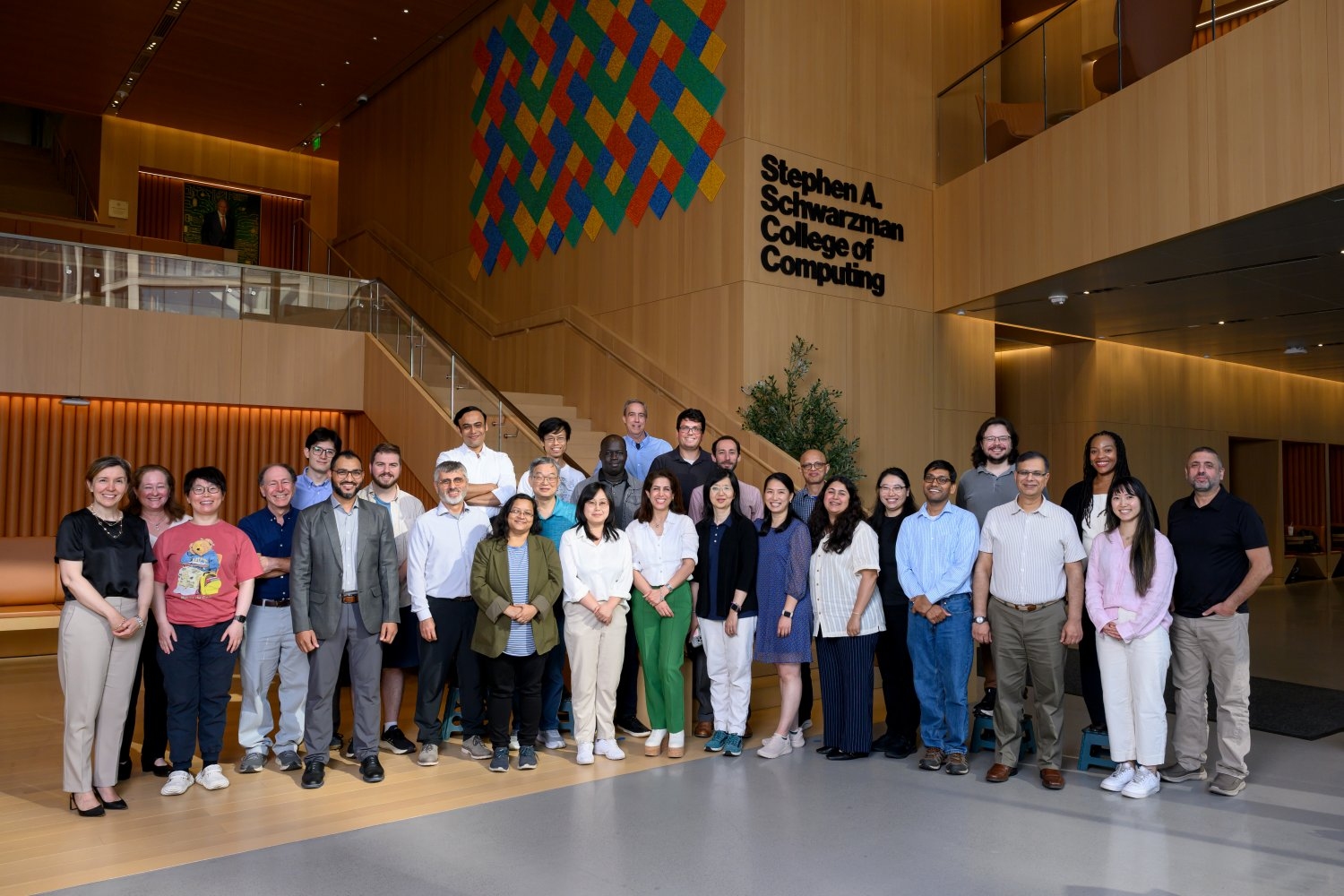
On September 10, 2026, Carnegie Mellon University announced that its AI4MiddleSchools initiative is expanding into Connecticut, Mississippi, New Jersey, and Pennsylvania, while deepening its existing footprint in Georgia, Texas, and Florida. That brings the program's active reach to at least six states running structured AI curriculum for middle schoolers, a age group the program's leaders consider strategically important because it sits at the point where students first start forming ideas about future careers, well before high school course selection narrows their options.
This is a curriculum and teacher-training story, not a governance one, and that distinction matters. Most of the AI-in-education news cycle over the past year has centered on whether schools should ban AI tools, how to detect AI-written work, or what compliance obligations vendors face. AI4MiddleSchools sits entirely outside that debate. It is not concerned with whether students should be allowed to use ChatGPT for homework. It is concerned with whether a twelve-year-old understands how a neural network makes a decision, and whether their teacher is equipped to explain it accurately.
The bottleneck nobody is pricing in
The program's core assumption is that the binding constraint on K-12 AI literacy is not student interest or district willingness but a genuine shortage of educators qualified to teach AI concepts credibly. That is a different problem than the one most edtech vendors are solving. A district can license as many AI tools as it wants, but if no teacher on staff can explain how a large language model differs from a search engine, or why a model can be confidently wrong, the tools get used mechanically rather than taught critically, and students absorb bad mental models about what the technology actually does.
AI4MiddleSchools has already trained more than 75 educators across its current six-state footprint, and its expansion plan targets training up to 1,700 educators along with 100 to 145 teacher leaders who can in turn train others within their own districts. That teacher-leader layer is the mechanism meant to make the program self-sustaining past the initial NSF-funded rollout, since a program that depends entirely on Carnegie Mellon staff traveling to every new district does not scale past a handful of states no matter how much grant funding is available.
How the training actually works
The delivery model combines teacher cohorts, regional training hubs, and online learning platforms rather than relying on a single in-person workshop format. Teachers move through structured cohorts that build up both content knowledge, how AI systems actually function at a conceptual level, and pedagogical technique for translating that content into age-appropriate middle school instruction. Regional hubs are meant to reduce the travel and cost burden that has historically limited access to specialized STEM teacher training to districts with more resources, spreading capacity into states that have not previously had strong AI education infrastructure.
Research professor David Touretzky, who leads the initiative, put the philosophy directly: middle school is an important stage where students think about careers, and the curriculum is built to equip children to think of themselves as technology creators, not just users. That framing shapes what the curriculum actually covers. Rather than teaching students to prompt a chatbot effectively, the program covers how models are built, trained, and evaluated, along with the societal impacts of deploying them, aiming at conceptual literacy that should hold up regardless of which specific AI products exist by the time these students reach high school.
The funding model and its limits
The program runs on National Science Foundation grants paired with industry partnerships, a funding structure that gives it more durability than a philanthropic pilot dependent on a single donor's continued interest, but that still carries real constraints. NSF grant cycles have fixed terms, and the projected three-year horizon to reach 15,000 students implies the program needs to demonstrate measurable outcomes within that window to justify renewed or expanded funding, whether from NSF, industry partners, or state education budgets that would need to pick up costs after the grant period ends.
For education technology vendors and enterprise partners watching this space, the industry partnership component is worth tracking closely. A program that successfully builds AI literacy infrastructure across six or more states, with a defined pipeline of teacher leaders trained to sustain it, becomes a natural integration point for any company building K-12 AI curriculum products, assessment tools, or professional development content. The vendors that build relationships with AI4MiddleSchools now, rather than after it has scaled further, get a head start on distribution into districts that have already done the harder work of building teacher capacity to use their products well.
Why this matters past K-12
The talent pipeline argument here extends well beyond the middle school classroom. Enterprise technology leaders spend considerable effort and budget building internal AI literacy programs for existing employees, and the same core problem AI4MiddleSchools is solving, a shortage of people who deeply understand AI concepts well enough to teach them to others, exists inside corporations at a comparable scale. A generation of students who leave middle school with a working conceptual model of how AI systems function, rather than just experience prompting a consumer chatbot, arrives at the entry-level workforce years from now with a meaningfully different baseline than the current cohort.
That is a long horizon for any individual employer to plan around, but it is exactly the kind of structural workforce development trend that CHROs and learning leaders at large enterprises should be tracking alongside their own AI upskilling investments. Programs like this one are effectively subsidizing a future reduction in the corporate AI literacy training burden, and companies that engage with K-12 AI education initiatives now, through grants, curriculum input, or teacher externship programs, are positioning themselves to shape what that future baseline actually looks like rather than simply inheriting it.