What Microsoft walked away from
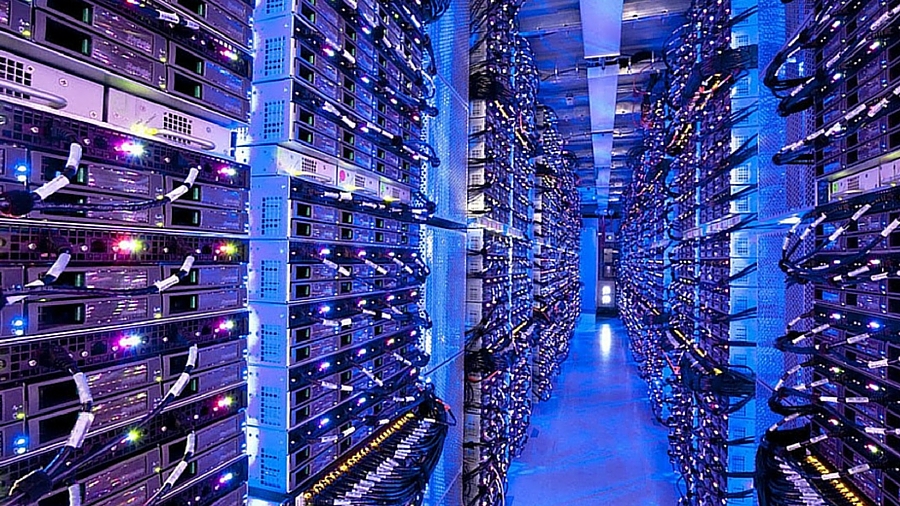
Microsoft has ended its agreement with Nscale for a data center in Loughton, Essex, according to a Telegraph report that Reuters relayed over the weekend. Microsoft is one of Nscale's two largest customers, and the Loughton site was not a minor booking. Nscale had sized it at 50 megawatts of power capacity, scalable to 90 megawatts, with a target go-live of end-2026, and Microsoft had planned to install a supercomputer there with more than 23,000 GPUs.
Microsoft declined to comment on the cancellation, and neither Microsoft nor the Telegraph gave an official reason. That silence matters less than the explanation the Telegraph did report: Nscale had faced repeated delays at the site, and National Grid officials reportedly told the company they did not expect to have power available there until the 2030s. A data center with no realistic connection date for most of a decade is not a data center a hyperscaler customer can plan workloads around, whatever the contract says.
Nscale's response, and what it concedes
Nscale's public response was carefully worded damage control. The company said its relationship with Microsoft remains strong and long-term, and that it is committed to both the Loughton project and the UK market. It attributed the problem to a London-wide grid issue rather than anything specific to Loughton, said its other contracts are unaffected, and is now exploring alternative power sources for the site along with other UK expansion locations.
Read closely, that statement confirms the core problem rather than dismissing it. A London-wide grid constraint is not a company-specific risk Nscale can engineer around with better project management. It is an infrastructure ceiling that applies to every data center operator trying to get new capacity connected in the region, and it means Nscale's UK growth plans now depend on finding power sources regulators and utilities do not currently have a timeline for.
The timing problem: an IPO that leans on this customer
This cancellation lands at the worst possible moment for Nscale. The company filed for a US IPO last month, dated September 18, seeking to raise 3 billion dollars at a valuation Financial Times reporting put near 35 billion dollars, up sharply from the 14.6 billion dollar valuation of its last funding round. Nvidia had already agreed to provide 1 billion dollars in convertible debt as part of a larger financing package ahead of the listing.
The prospectus shows why any Microsoft wobble is material. Nscale reports more than 103 billion dollars in total contracted value, and about 85 percent of that comes from just two deals: 43.8 billion dollars in compute from Microsoft through 2033, and 44.6 billion dollars from Anthropic. The Anthropic agreement is itself contingent on Nscale securing financing and hitting what the filing calls stringent milestones, meaning Anthropic can walk away if Nscale stumbles. A canceled site with its single largest customer, filed publicly days before a roadshow, is exactly the kind of headline concentrated-customer IPOs are built to avoid.
Microsoft's own capacity math says this is not a retreat
Nothing in Microsoft's own numbers suggests a pullback in AI infrastructure appetite. Azure revenue grew 43 percent in Microsoft's most recent quarter, management said demand still exceeds supply, and the company added 31 data centers in the period alone, a pace few competitors can match at any scale. Microsoft's commercial backlog stands at 678 billion dollars, and CFO Amy Hood has guided to roughly 175 billion dollars of capital spending for calendar 2026, up sharply from the prior year as the company keeps building toward demand it says it still cannot fully serve.
Hood has also made a point relevant to exactly this kind of decision: land and data center construction are a smaller share of Microsoft's capex than chips and other short-lived assets, and their timing can be adjusted without disrupting the broader buildout. Walking away from one delayed site in Essex is consistent with that flexibility, and it is the kind of portfolio-level adjustment a company spending 175 billion dollars a year can make without much friction. It costs Microsoft very little to redirect a planned GPU cluster to a site with a real power timeline, even as it costs Nscale a great deal to lose the anchor tenant for one of its flagship UK developments.
A pattern of reshuffling, not a one-off
This is not the first sign that UK data center capacity is being reshuffled around power availability rather than demand. Earlier this year, OpenAI dropped out of an agreement to lease space at several unbuilt Nscale sites in the UK tied to its Stargate UK plans, which had envisioned as many as 8,000 GPUs under that deal. Google subsequently moved to lease capacity at a separate Nscale facility in West London, reportedly gaining access to Grace Blackwell GPU capacity there instead.
Put together, the sequence is a live demonstration of how neocloud capacity actually gets allocated when power is the binding constraint: hyperscaler customers rotate between a provider's sites and its competitors' sites based on which locations can actually get connected, not based on long-term contract loyalty. Nscale is absorbing the churn each time, because its business model depends on hyperscaler tenants choosing it site by site, and grid timelines are now a bigger swing factor in that choice than price or chip generation. For a provider trying to price an IPO on the durability of its contracts, that is an uncomfortable amount of churn to explain to new shareholders.
What this means for enterprise buyers
If your organization sources AI compute through a neocloud intermediary rather than directly from a hyperscaler, this story is a template for a risk you may not have modeled. You inherit two layers of exposure at once: the neocloud's customer concentration, since a hyperscaler walking from one site can ripple into the vendor's broader financing and IPO story, and the local grid's connection timeline, which no amount of contractual commitment from the vendor can accelerate.
Before committing to capacity tied to a specific site or region, ask the vendor directly for the grid connection status and utility confirmation date, not just the contracted power figure. A 50 megawatt allocation on paper is not the same as 50 megawatts with a confirmed interconnection date. Microsoft had the scale to absorb a canceled site without comment. Most enterprise buyers locking in multi-year capacity commitments through a single neocloud site do not have that same flexibility if the power never arrives.