A modest announcement with a long tail
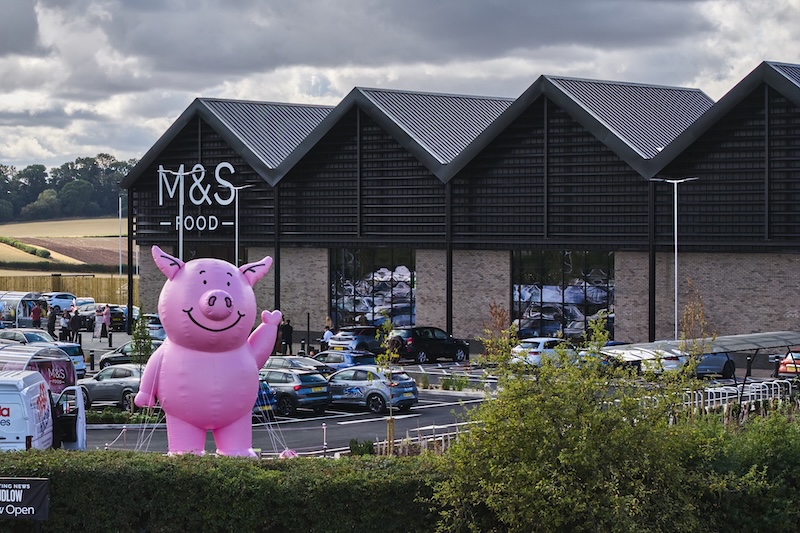
Marks and Spencer will roll out Vusion's Connected Store platform to a number of new stores, built on Bluetooth enabled EdgeSense infrastructure, according to Retail Technology Innovation Hub. Roy Horgan, Vusion's CEO for the UK and Ireland, said the company is pleased to be working with M&S as it continues to invest in its store estate and colleague experience, and described the Connected Store platform as designed to help retailers improve operational execution. Neither side disclosed how many stores, what it costs, or a rollout timeline.
The initial feature set is deliberately modest. Flashing labels help store colleagues locate products faster on a crowded shop floor. Better product information management keeps pricing and attribute data consistent across systems, which matters more than it sounds once a retailer runs thousands of SKUs through seasonal changes, promotions, and supplier substitutions. Simplified inventory processes cut down on the manual counting and reconciliation that eats staff hours in any physical retail format. None of this will generate a demo reel, and that is precisely why it is worth paying attention to rather than dismissing as a minor supplier press release.
Why a flashing label is not a trivial feature
It is easy to read electronic shelf labels as a pricing gimmick left over from a decade of retail technology hype cycles. The more useful way to read this deployment is as a location and task management layer for store staff, which is a genuine operational cost center at a retailer the size of M&S. Every minute a colleague spends searching a backroom or wandering an aisle to locate a misplaced item is a minute not spent serving a customer, restocking, or handling a return.
Bluetooth enabled infrastructure that can flag exactly where a product sits, and update that in close to real time as stock moves, directly attacks that cost without requiring a single customer facing AI feature to justify the investment. That is an unusually clean business case for a retail technology deployment: measurable staff time saved, no customer behavior change required, and no dependency on an AI model performing correctly in front of a shopper. Finance teams tend to approve that kind of project faster than one pitched on projected revenue lift from a feature nobody has tested at scale yet.
What the missing numbers tell you
No disclosed store count or cost is a deliberate signal, not an oversight. A retailer planning a flagship, press friendly AI rollout typically wants a splashy number attached: hundreds of stores, a named pilot region, a launch date tied to a shopping season. The absence of any of that here points to a measured, operationally driven rollout evaluated on internal metrics rather than external attention, which is consistent with Horgan's own framing around operational execution rather than customer experience.
That is the right instinct for this category of investment. Shelf and store infrastructure upgrades should earn their next phase of funding based on measured colleague time savings and inventory accuracy improvements, not on press coverage. Any retailer running a similar pilot internally should resist the urge to attach a splashy number to it before the operational data actually supports one, since a premature headline creates pressure to scale before the metrics justify it, and a rollback after an overhyped launch costs far more credibility than a quiet, successful pilot that only gets written up once the results are in.
The real asset is the data layer, not the label
Flashing labels and cleaner product data sound like the whole story, but the more durable value sits underneath: a Bluetooth enabled infrastructure layer that knows where products and, with the right sensors, people are inside a store in close to real time. That is the same data layer that eventually supports computer vision based inventory checks, dynamic pricing, personalized in-store offers, and the kind of associate facing AI tools other retailers have been piloting separately and expensively.
Retailers that skip straight to a flashy in-store AI pilot without this kind of foundational sensing infrastructure often find the pilot cannot scale, because the underlying data about product location and stock state simply is not reliable enough to support it. M&S's sequencing, infrastructure first, with AI features presumably layered on later, avoids that trap, even if it means the current announcement reads as smaller news than it will turn out to be in retrospect. A year from now, whatever customer facing feature M&S eventually attaches to this platform will likely get the press attention, while this quieter rollout will have been the reason it actually worked on day one.
The decision for your own store roadmap
If your organization is choosing between funding a visible AI pilot and funding boring shelf or store sensing infrastructure, ask explicitly which one the other depends on. A computer vision or dynamic pricing pilot built on top of unreliable shelf data will underperform no matter how good the model is, while infrastructure like EdgeSense delivers value on its own through colleague time savings even if no AI feature is ever layered on top of it.
That makes infrastructure the lower risk, more defensible first investment in almost every case, even though it is the harder sell to a board that wants to hear about AI by name. Frame the pitch internally around the operational metrics this kind of deployment actually moves, colleague time per task and inventory accuracy, and treat any future AI feature as the upside case rather than the justification you need upfront to get the budget approved.