A quiet launch with a concrete number behind it
Profitmind made its AI powered Awase product matching tool generally available on November 4, after running it in production with customers since April, according to Retail Technology Innovation Hub. Awase pairs the same product across rival online catalogues even when there is no shared barcode or manufacturer product code to anchor the match, which is the normal state of competitive catalogue data rather than the exception. Most retailers' pricing teams already know this problem well: two listings for what is obviously the same battery, charger, or accessory, described in slightly different words, with no clean identifier linking them.
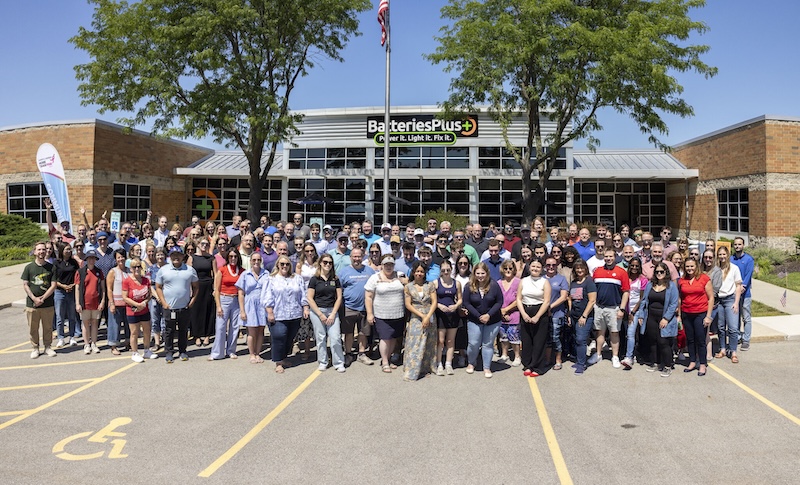
Batteries Plus, the US retailer, has used Profitmind's competitive matching since 2024, and its CFO Peter Evans put real numbers behind the upgrade. About 11,000 of its products are now matched to roughly 75,000 competitor listings, up from around 2,000 previously. Evans said the company uses that information to decide when to adjust prices and by how much. That is a pricing team moving from occasional spot checks to a standing, automated view of where it sits against the market across a meaningful share of its catalogue.
Why barcode free matching is the hard part
Jeff Rix, Profitmind's head of AI, described the real difficulty plainly: the hardest matches hinge on subtle attributes that models trained purely on web data tend to miss. A battery pack with a slightly different connector, a charger rated for a different voltage range, or a bundle that includes one extra accessory can look identical to a naive text matching system and mean a materially different price point. Getting that distinction wrong in either direction either hides a real pricing gap or creates a false one that sends a merchandiser chasing a price cut that was never warranted.
This is the unglamorous part of applied AI in retail that rarely makes a headline on its own. It is also exactly the kind of problem that separates a vendor worth paying for from a matching feature bundled into a broader analytics suite. Buyers evaluating this category should ask vendors for their false match rate on ambiguous product families, not just their coverage percentage, since an impressive coverage number built on sloppy matches creates more pricing risk than no matching data at all.
The data investment behind the product
Profitmind trained Awase on several years of public retail catalogue data, then had retail merchandisers across hundreds of product categories provide match assessments showing how experienced buyers tell true matches apart from similar looking products. That process produced 7 million labeled product pairs, with a portion held back purely for evaluation rather than training. The current production model runs on roughly 1 million of those pairs, and Profitmind plans to put the full 7 million to use within the next 12 months.
That detail matters more than the generally available announcement itself. A model already in production on one seventh of its available labeled data has a clear, pre-funded improvement path ahead of it, not a hypothetical one dependent on future fundraising or data collection. Retailers evaluating Profitmind or a competitor should ask directly how much labeled training data a vendor is sitting on versus actively using, since that gap is a reasonable proxy for how much better the product gets over the next year without you paying for a new contract.
The 95 percent number is the real lesson
Batteries Plus did not chase full catalogue coverage. It grew matched products roughly fivefold, to 11,000, and those 11,000 account for more than 95 percent of its consumer revenue. The retailer evidently sells a long tail of slower moving items that are not worth the matching effort, and it made a deliberate choice to leave them unmatched rather than demand perfect coverage from its vendor or its own data team. That is a pragmatic, revenue weighted definition of done, and it is the right one for most retailers evaluating a similar project.
Too many internal pricing intelligence initiatives stall because a team sets catalogue completeness as the success metric and then spends a year chasing the last few thousand obscure SKUs for diminishing return. Revenue coverage is the metric that should go in front of a steering committee instead. It gives a clear, defensible stopping point, and it lets a pricing team show value within a single quarter rather than waiting for a project that never quite finishes.
What this means for your pricing roadmap
If competitive pricing intelligence is still a quarterly spreadsheet exercise at your company, Batteries Plus's trajectory is a useful benchmark: a mid-size specialty retailer went from roughly 2,000 to 11,000 matched products over about two years with a vendor rather than an in-house build, and the CFO is now citing the output directly in pricing decisions. That is a reasonable pace to hold a vendor to, and a reasonable level of executive attention to expect once the tool is actually delivering usable matches rather than a dashboard nobody opens.
Before signing anywhere, push past the demo and ask for the vendor's current false match rate, how much of its labeled training data is actually live in production versus sitting unused, and what revenue coverage, not catalogue coverage, looks like for a retailer your size in your category. Those three questions separate a tool that will quietly improve every quarter from one that peaks on day one and never gets better, no matter how clean the generally available press release reads.