A New Technology Chief for a Pivotal Moment
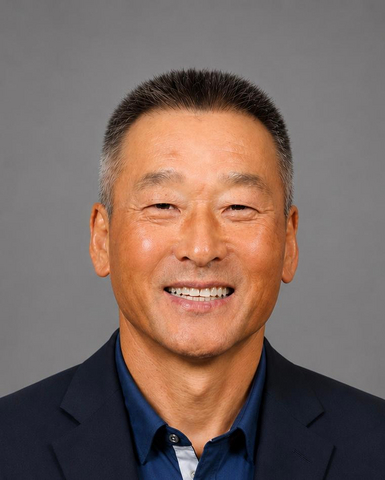
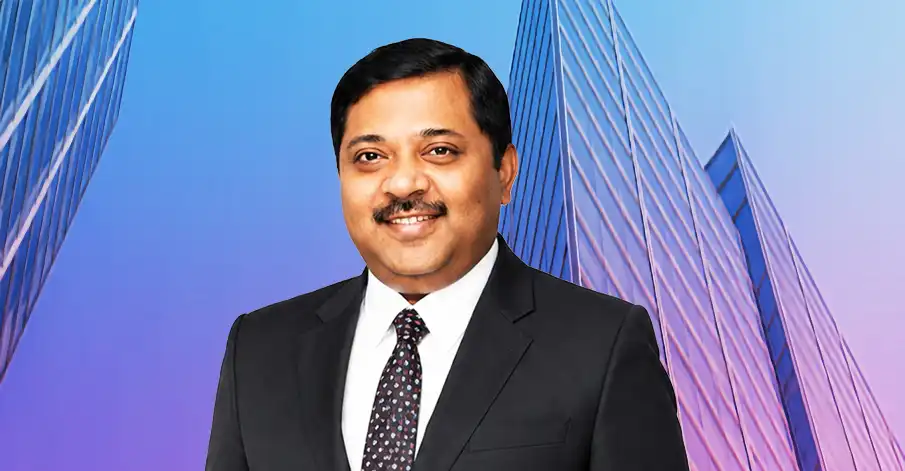
Lucid Motors has appointed Raja Ramana Macha as its Chief Technology Officer, placing a seasoned industrial engineering leader at the head of the electric vehicle maker's technology agenda. The Newark, California company said Macha will lead global technology strategy, engineering innovation, and product development, with oversight of software platforms, AI enabled vehicle technologies, electrification, digital engineering, and future mobility solutions. It is a broad mandate, and a telling one, arriving as Lucid works to prove that a boutique luxury brand can scale manufacturing and software in parallel without losing the engineering edge that defined its early cars.
We read the timing as deliberate. Electric vehicle makers are no longer competing chiefly on range or battery chemistry, they are competing on the quality of the software stack that ties the car, the cloud, and the customer together. Handing that responsibility to a single accountable executive, rather than diffusing it across product and manufacturing, tells us Lucid intends to treat technology as a coherent system rather than a collection of features. For a company that still needs to convert engineering acclaim into durable volume, the clarity of that reporting line matters as much as the résumé behind it.
Three Decades Across Industrial and Digital Engineering
Macha brings more than thirty years of global leadership spanning automotive engineering, industrial automation, electrification, digital transformation, and power management. Most recently he served as Executive Vice President and Chief Technology Officer at Eaton, where he directed the company's global technology strategy, innovation roadmap, and digital transformation across a sprawling industrial portfolio. Earlier senior positions at Schneider Electric, AVEVA, and GeometricPLM gave him deep exposure to the software that runs factories, grids, and product lifecycles, the unglamorous but essential plumbing that increasingly separates carmakers that ship reliable software from those that do not.
That background is unusual for a marquee electric vehicle CTO, and we think it is the point. Eaton, Schneider, and AVEVA operate at the intersection of hardware and industrial software, where uptime, safety, and lifecycle management are non negotiable. A leader shaped by those disciplines is likely to prize traceability, model based systems engineering, and disciplined release management over splashy demonstrations. Macha also sits on the board of Sasken Technologies, adding a governance perspective to his operating experience. For Lucid, which must industrialize its software as aggressively as its assembly lines, that pedigree is a considered bet rather than a conventional one.
Software Defined Vehicles Move to the Center
The explicit inclusion of software platforms and AI enabled vehicle technologies in Macha's mandate confirms where Lucid believes the next phase of value will be created. The modern premium vehicle is a rolling data center, its differentiation defined by over the air updates, driver assistance, in cabin intelligence, and the ability to improve after the sale. Owning that roadmap under one technology chief lets Lucid coordinate silicon, operating system, and cloud services as a single product, rather than negotiating them across competing internal fiefdoms that rarely optimize for the customer experience.
We would watch three things closely. First, how quickly Lucid consolidates its software architecture around a unified platform that can carry features across model lines without bespoke rework. Second, whether AI moves from marketing language into shipping capability, in the powertrain, the assistance stack, and the ownership app. Third, how the company balances in house engineering against strategic partnerships for compute and models. Macha's industrial instincts suggest he will favor build where it compounds advantage and buy where it does not, a pragmatism that has served capital intensive manufacturers far better than reflexive vertical integration.
Why an Industrial Operator, Not a Consumer Native
It would have been easy for Lucid to recruit a consumer technology figure with a familiar logo on the résumé. Instead it chose an operator whose career was built making complex physical systems dependable at scale. We see this as a maturation signal. Early stage electric vehicle brands often over index on novelty and under invest in the boring disciplines of reliability, supplier management, and manufacturable design. A CTO steeped in power management and industrial automation is more likely to institutionalize those disciplines, which is precisely what a company transitioning from acclaim to volume needs.
There is a strategic message for the wider market as well. As every carmaker becomes a software company, the scarce leadership profile is not the pure technologist or the pure manufacturer but the executive fluent in both. Boards are learning that vehicle programs fail at the seams between hardware and software, and that closing those seams requires someone who has lived on both sides. Macha's appointment fits that emerging template, and we expect more automakers to reach for similar hybrids rather than importing leaders wholesale from consumer platforms whose failure modes are far more forgiving.
The Governance and Board Signal
Technology leadership changes are rarely just personnel news, they are governance decisions that reveal how a board intends to steer risk and investment. By elevating a single CTO with end to end authority over strategy, engineering, and product, Lucid's leadership is centralizing accountability at a moment when scrutiny of capital efficiency in the electric vehicle sector is intense. Investors want evidence that research spending translates into shippable, defensible product, and a clear technology owner makes that line of sight easier to hold management to.
Macha's board experience at Sasken should sharpen that instinct. Executives who have sat on the other side of the table tend to be more disciplined about prioritization, sequencing, and the honest reporting of technical debt. For a company that has weathered questions about cash burn and timelines, the value of a CTO who can translate engineering reality into board level language is considerable. We would expect his early quarters to feature fewer feature announcements and more emphasis on platform consolidation, quality metrics, and the unsexy scaffolding that ultimately determines whether ambitious roadmaps survive contact with production.
What Technology Executives Should Read Into the Hire
For CIOs and CTOs outside the automotive world, the Lucid appointment is a useful case study in matching leadership profile to strategic moment. When an organization is inventing, it wants visionaries. When it is scaling, it wants operators who can make invention repeatable. The discipline is knowing which phase you are in and hiring against it honestly, rather than defaulting to the most decorated name available. Lucid appears to have judged that it is entering an industrialization phase, and it recruited accordingly.
The broader lesson is that technology leadership is converging across industries. The competencies that make an industrial CTO effective, systems thinking, lifecycle discipline, and fluency across hardware and software, are exactly the competencies enterprises now need as AI and connected products blur the line between physical and digital operations. We suspect the most sought after technology leaders of the next decade will look more like Macha, veterans who have shipped dependable complex systems, than like the pure software executives who dominated the last cycle. Lucid has placed an early, considered bet on that thesis.