The Classroom Becomes a Platform
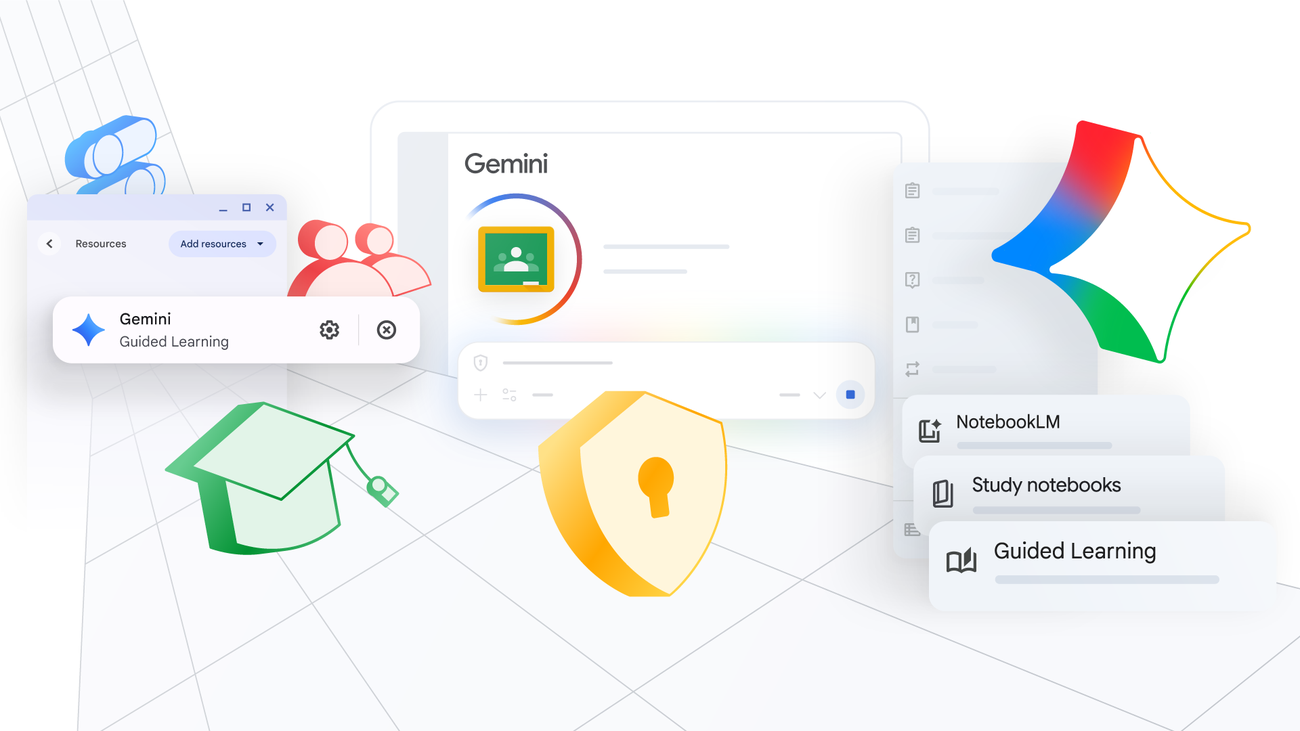
At ISTE 2026, the education technology sector's marquee gathering, Google laid out an AI strategy that is more consequential than any single feature it announced. The centerpiece for us is a forthcoming Google Classroom Model Context Protocol server, a mechanism that will let external edtech platforms securely reference Classroom context so that daily workflows stay unified while third parties build teaching experiences tailored to each class. Alongside it, Google detailed teacher led AI features including Guided Learning in Gemini for interactive study guides and adaptive quiz preparation, study notebooks for exam prep grounded in class material, and NotebookLM integration that turns course materials into flashcards and podcasts.
The protocol is the part that should command attention, because it is a platform play dressed as an interoperability feature. By exposing Classroom context through a standard interface, Google is inviting the entire edtech ecosystem to build on top of the system that already sits at the center of millions of classrooms. That is precisely how durable platform advantages are built, not by winning every feature but by becoming the substrate everyone else depends on. We have seen this move before in other markets, and it tends to end with the platform owner capturing the strategic high ground while third parties compete for the value that flows through it.
Meeting Teachers Inside the Tools They Already Use
Google's second theme is distribution, and it is being pursued with characteristic reach. NotebookLM is available now inside PowerSchool Schoology and coming to Canvas by Instructure, with Moodle also supported, and a fuller rollout across learning management systems promised via Gemini LTI in the coming months, bringing student insights to those platforms as well. A connected Classroom app in Gemini securely uses existing assignments, grades, and materials to analyze progress and draft tailored activities. The strategy is to meet teachers inside the systems they already inhabit rather than asking them to adopt yet another destination.
We regard this as the smart and hard part of education technology. Teachers are chronically overloaded, deeply skeptical of tools that add work, and quick to abandon anything that does not fit their existing rhythm. Products that require educators to leave their gradebook and learning management system to visit a separate AI tool tend to die of neglect regardless of how impressive they are. By embedding capability directly into Schoology, Canvas, and Classroom, Google is betting on the unglamorous truth that adoption follows convenience. Whether the features prove genuinely useful in the daily grind of teaching, rather than merely demonstrable, will determine if this distribution advantage converts into lasting habit.
A Training Campaign at National Scale
The third pillar is human, and it may be the most important. Through a Google AI Educator Series delivered in partnership with ISTE and ASCD, Google has set the ambition of making AI training available to all six million United States educators. That is a staggering number, and the choice to pursue it through established education organizations rather than direct outreach is telling. Google appears to understand that a tool without capable, confident users is inert, and that the binding constraint on AI in schools is not model quality but teacher readiness and trust.
We think this focus on educator capability is where the real battle for education technology will be won or lost. The history of edtech is littered with sophisticated products that failed because teachers were never given the time, training, or confidence to use them well. By investing in professional development at national scale, Google is addressing the actual bottleneck rather than shipping features into a vacuum. It is also, not incidentally, building loyalty and familiarity with its ecosystem among the exact population that decides which tools live and die in classrooms. Training six million teachers on your platform is a formidable moat, one that no competitor can easily replicate with software alone.
The Governance Questions Schools Must Answer
For all the promise, embedding AI this deeply into the classroom raises governance questions that districts cannot defer. When a Model Context Protocol server exposes assignments, grades, and student materials to external platforms, the questions of data privacy, consent, and vendor accountability become urgent and concrete. Student data is among the most sensitive and heavily regulated categories there is, and an interoperability layer that makes it easier to share also makes it easier to mishandle. The convenience of unified workflows must be weighed against the responsibility of protecting minors' information across an expanding web of connected tools.
We would urge education leaders to treat this moment with the same rigor a CISO would apply to any new data sharing architecture. That means understanding exactly what context the protocol exposes, to whom, and under what controls, insisting on transparency about how connected platforms use student data, and retaining the ability to audit and revoke access. The technology is arriving faster than most districts' governance frameworks, and the gap between capability and oversight is precisely where harm accumulates. Schools that adopt these tools without answering the governance questions first are not saving time, they are deferring risk onto the students least able to bear it.
What the AI in Education Race Now Looks Like
Google's ISTE announcements clarify the shape of the competition. This is no longer a contest between individual tutoring apps or grading assistants, it is a platform war over which company owns the connective tissue of the digital classroom. The Classroom protocol, deep LMS integration, and a national training campaign together form a coherent strategy to make Google's ecosystem the default substrate for AI in education. Rivals, from Microsoft to a long tail of specialized startups, now face the familiar challenge of competing against an incumbent that controls the platform their products must run on.
For educators and administrators, our counsel is to engage this shift deliberately rather than passively. The tools genuinely can reduce teacher workload and personalize learning in ways that were impossible a few years ago, and that potential is real and worth pursuing. But the decisions being made now, about which platforms to standardize on and how to govern student data, will shape the classroom for a decade. The AI in education market is projected to grow enormously this decade, and the platforms establishing themselves today are laying claim to that future. Choosing thoughtfully, with eyes open to both the pedagogical upside and the governance stakes, is the responsibility this moment demands.