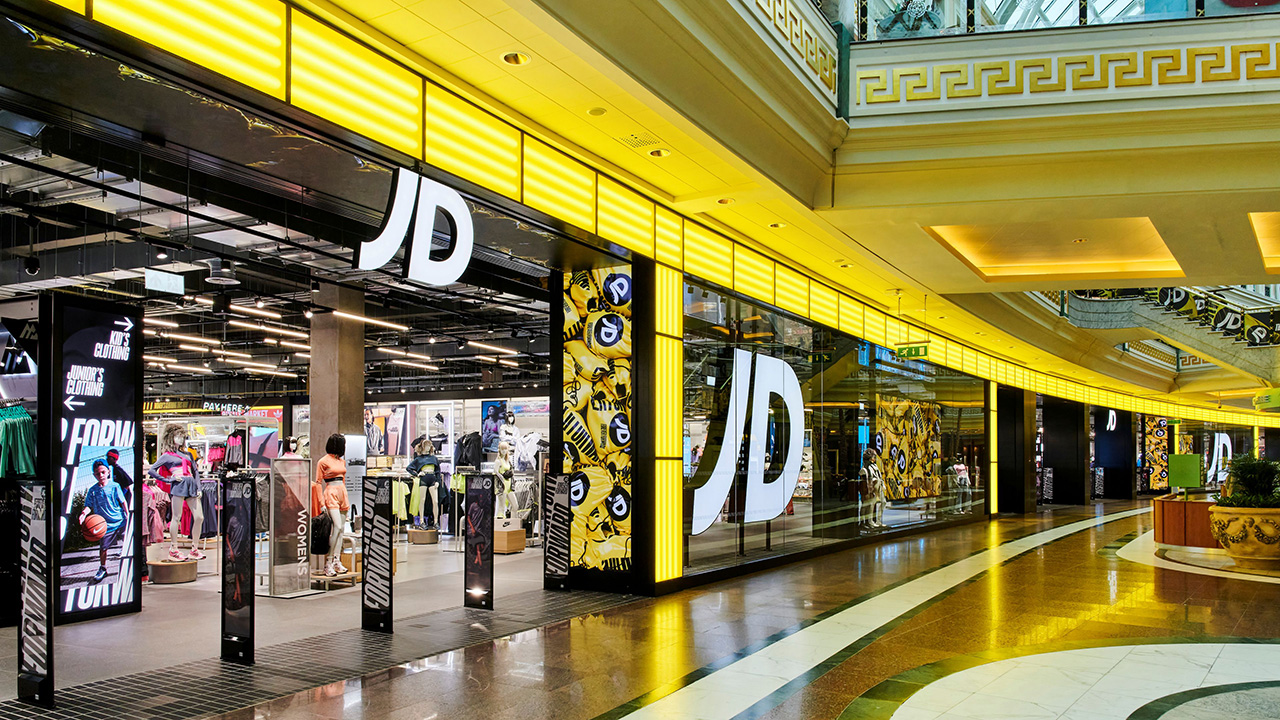
The numbers and the timeline behind them
JD Sports has completed a rollout of RFID enabled mobile computing, built on Zebra Technologies hardware, across 414 stores in the UK and Ireland, achieving 98 percent on shelf availability and 20 percent faster replenishment. Those headline metrics matter to any retail operator evaluating RFID investment, but the rollout timeline underneath them is arguably the more useful detail for CTOs planning their own technology deployment at scale. The project began with a five store pilot, reached its first full store launch 76 days after project start, and then averaged 26 stores a week until the entire 414 store rollout completed in roughly three months.
That cadence, 26 stores a week sustained across the bulk of the rollout, is a specific, repeatable operational benchmark rather than a vague claim about moving fast. Most large retail technology rollouts stall somewhere between a successful pilot and the full scale deployment, precisely because the operational discipline required to sustain a consistent weekly rollout pace across hundreds of locations is harder to execute than the pilot phase suggests it will be. JD Sports hitting and sustaining that 26 store per week pace across the majority of the rollout is the detail that should draw attention from any retail CIO who has watched a promising pilot stall during scale up.
What the inventory movement figure actually reveals
The claim that store associates move 95 percent more inventory from storeroom to shop floor is a specific, measurable labor productivity outcome, distinct from the shelf availability and replenishment speed figures that get more attention in retail technology coverage generally. This number points at a labor allocation shift: associates previously spending meaningful time manually locating and verifying stock are instead spending that time actually moving verified inventory to where customers can buy it, a shift in labor allocation rather than simply a labor reduction.
For retail CIOs evaluating RFID or similar inventory visibility technology, this labor reallocation effect, rather than any headcount reduction, is often the more defensible business case to present to finance leadership, since it reframes the investment as a productivity multiplier on existing labor rather than a cost cutting measure that invites scrutiny over service quality tradeoffs. The daily stock count capability, replacing 90 or 180 day audit cycles, compounds this effect further by giving store managers continuously accurate inventory data rather than data that is, at best, several weeks stale between formal audit cycles.
The phrase worth unpacking: scale with trust
JD Sports Head of Customer Operations Daniel McGrath's framing, that Zebra gives the retailer the ability to scale with trust, is worth examining closely rather than treating as a generic vendor endorsement quote. Trust, in a rollout context, typically means confidence that each successive store deployment will replicate the results of the validated pilot reliably, rather than requiring fresh troubleshooting and custom configuration at every new location. A rollout that averages 26 stores a week for three months is only sustainable if each store deployment genuinely is largely repeatable, since any significant per store customization burden would make that pace impossible to maintain.
The practical lesson for other retailers planning a comparable technology rollout is to invest disproportionately in validating that the pilot configuration genuinely generalizes across your store estate's variation, different store sizes, different product mixes, different existing point of sale integrations, before committing to an aggressive weekly rollout cadence. JD Sports' ability to sustain 26 stores a week for the bulk of three months strongly suggests that validation work happened thoroughly during the pilot and early scale up phase, rather than being discovered as a problem partway through the rollout.
Why this matters specifically ahead of the holiday season
The timing of this rollout's completion, landing in early November, positions JD Sports with meaningfully improved inventory visibility heading directly into the holiday shopping peak, when stock accuracy failures are both more frequent and more costly in lost sales and customer frustration than during any other period of the retail calendar. A 98 percent on shelf availability figure achieved before peak season demand hits is a materially different competitive position than achieving that same figure in February, after the peak selling window has already passed.
For other retailers watching this case study, the lesson on timing is as important as the lesson on methodology: technology rollouts aimed at improving holiday season performance need to complete well before peak demand arrives, not during it, since any disruption during a rollout's final weeks compounds the operational risk precisely when the business can least afford additional disruption. JD Sports' three month timeline, started well ahead of the holiday season, reflects planning discipline worth replicating regardless of which specific inventory technology a competing retailer ultimately chooses.
What this means for RFID adoption more broadly
RFID based inventory visibility has been a known technology category for years, yet adoption across mid sized and large retailers has historically been slower and more uneven than the technology's demonstrated benefits would seem to justify, often due precisely to the rollout execution risk this case study addresses directly. A retailer considering RFID investment has reasonably been able to point at other organizations' stalled or partial rollouts as evidence that the execution risk outweighs the inventory accuracy benefit, particularly for retailers without a dedicated technology rollout team experienced in large scale store level deployments.
This case study, with its specific and sustained weekly rollout cadence, is a useful counterexample worth citing directly in your own internal business case if you are advocating for RFID investment at your organization. The combination of concrete outcome metrics, 98 percent shelf availability, 20 percent faster replenishment, 95 percent more inventory movement, and a specific, repeatable rollout methodology gives this case study more persuasive weight than a typical vendor case study that reports outcomes without detailing how the rollout execution itself was actually managed.
The decision this reader actually owns
If your organization is evaluating RFID or comparable inventory visibility technology, use JD Sports' specific rollout cadence, pilot validation followed by a sustained weekly store count, as a planning benchmark for your own deployment timeline, and build your internal project plan around demonstrating that same kind of repeatability during your own pilot phase before committing to an aggressive full scale rollout schedule.
If your organization has already attempted a similar rollout that stalled during scale up, this case study is worth revisiting specifically for what validation work might have been skipped or rushed during your own pilot phase, since the gap between a successful pilot and a successful full scale rollout is almost always a validation and repeatability problem rather than a fundamental flaw in the underlying technology choice.