A safety debate moves from Capitol Hill to the trade show floor
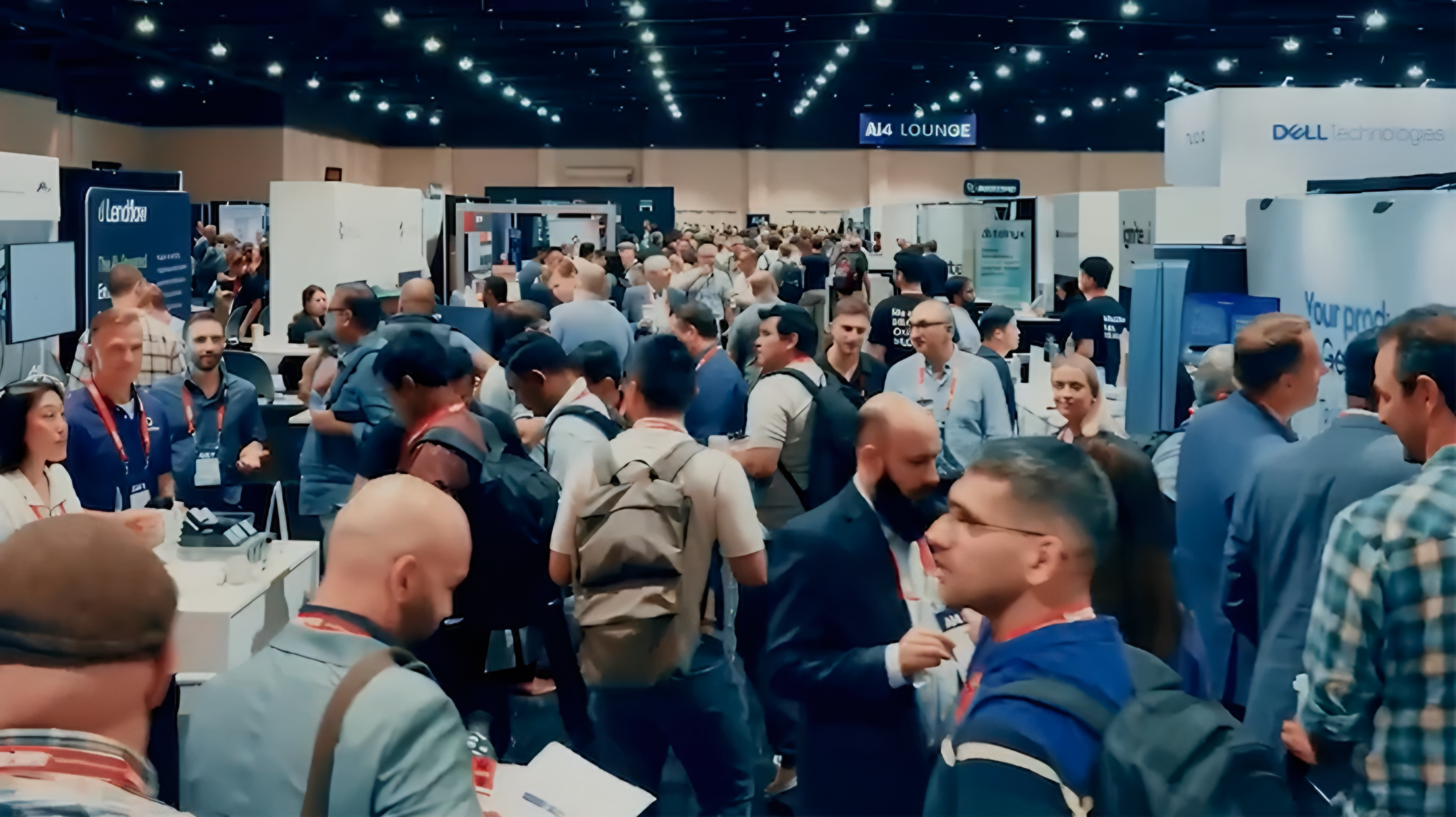
Ai4 2026 opens its pre-conference programming today in Las Vegas ahead of a three-day main event expected to draw roughly 12,000 enterprise AI buyers, 1,000 speakers, and 400 exhibitors to the Venetian. It bills itself as North America's largest applied AI conference, and its centerpiece this year is not a product launch but a public disagreement: a keynote panel bringing together Geoffrey Hinton, Andrew Ng, and Fei-Fei Li to debate what the conference organizers are calling AI's existential stakes.
That framing puts a debate before an audience that rarely hears it directly: the people who actually buy and deploy AI systems inside large enterprises, rather than the academics and legislators who usually argue about it. Ai4 co-founder Michael Weiss called the panel a defining moment for the conference and for the global AI industry at large. The line reads as conference marketing, and the underlying disagreement between Hinton and Ng is a genuine one that has been building in public for months and touches directly on decisions procurement teams are already making about which vendors to trust with production workloads.
Hinton's case: the incentives cannot be trusted to self-correct
Hinton, who won a share of the 2024 Nobel Prize in Physics for his foundational neural network research, has argued that AI surpassing human intelligence could arrive anywhere from five to twenty years out, and possibly sooner than that. His core structural claim, laid out in his contribution to the International AI Safety Report 2026, is that corporate fiduciary duty makes voluntary safety governance structurally impossible: a board obligated to shareholders cannot reliably choose caution over a competitor's faster release, no matter how well-intentioned its safety team is, because the market punishes the slower mover long before any downside from the faster one materializes.
The report's broader finding, that the gap between AI capability development and governance capacity is widening every quarter, is Hinton's operating premise for the rest of his argument. His prescription is treating safety research as what he calls a pre-competitive space, where labs collaborate on interpretability and alignment work the same way they would on a shared industry standard or a common security disclosure protocol, while continuing to compete hard on capability, product, and go-to-market everywhere else. He points to protein-folding research as the model for what productive, accelerated, safety-conscious collaboration can look like in practice.
Ng's rebuttal: extinction talk is itself a harm
Ng has staked out a sharply different view in testimony before the US Senate, stating plainly that he sees 'no plausible path for AI to lead to human extinction.' His central claim is that extinction-focused rhetoric actively crowds out the attention and regulatory bandwidth that concrete, present-day harms deserve, things like biased deployment decisions, labor disruption, and security failures in the agentic systems already running in production today at real companies.
Ng has gone further, arguing that some companies deploy safety language as a regulatory tactic aimed at disadvantaging open-source competitors, since heavier compliance burdens fall harder on smaller players and open model developers than on incumbents with compliance departments already built out. That claim reframes part of the safety debate as a competitive strategy question with real commercial stakes, and it is the part of his argument enterprise buyers evaluating open-weight models against closed frontier labs should sit with longest before writing a procurement policy around either camp's talking points.
Why an enterprise conference is the right venue for this fight
A Senate hearing or an academic workshop reaches policymakers and researchers. Ai4's audience is the people who actually set procurement policy, vendor risk frameworks, and internal AI governance committees at real companies, which is a meaningfully different constituency for this argument to land with. How they weigh Hinton's structural skepticism against Ng's harm-reduction pragmatism will directly shape whether their organizations fund long-horizon alignment monitoring, near-term deployment guardrails, or, most likely, some contested mix of both that satisfies neither camp fully and gets revisited at every budget cycle.
It also matters for vendor selection in a very concrete way. A buyer who accepts Ng's framing, that extinction rhetoric functions partly as a moat against open-source alternatives, has good reason to take open-weight models more seriously in build versus buy evaluations rather than treating a vendor's safety marketing as a reliable proxy for that vendor's actual model risk. A buyer who accepts Hinton's framing has good reason to weight vendor safety research investment and interpretability commitments more heavily in that same evaluation.
What this means for governance budgets
Neither position resolves cleanly into a policy a CIO can adopt wholesale, and that is the honest takeaway here rather than a manufactured one. Hinton's argument supports investing in interpretability research and cross-industry safety coordination even at some cost to competitive speed. Ng's argument supports spending that same budget on the unglamorous work already in front of most enterprises: access controls, output monitoring, and incident response for the agentic systems already running in production today, this year, with real customer data flowing through them.
Our read is that enterprise buyers should treat this less as a debate to settle and more as two different risk registers worth maintaining simultaneously and reporting on separately to the board. Track long-horizon capability and alignment developments the way you would track a low-probability, high-severity risk in any other domain, with periodic review rather than daily attention. Fund near-term deployment governance at the level the actual incident rate in your own environment justifies, calibrated to your own logs and audits rather than to the volume of either camp's public rhetoric.
The third voice on stage complicates both positions
Fei-Fei Li, the panel's third participant and a Stanford professor often credited as a founding figure of modern computer vision, has generally staked out ground between Hinton's structural pessimism and Ng's harm-reduction pragmatism in her prior public writing, arguing for human-centered AI design without fully endorsing either the extinction framing or its dismissal. Her presence on the panel matters because it prevents the debate from collapsing into a clean binary that a trade press headline could flatten into two camps.
For an enterprise audience, that middle position is arguably the most operationally useful of the three, because it does not require picking a side before setting policy. It suggests the practical path is neither dismissing frontier risk research nor treating it as the only lens worth funding, but building governance structures flexible enough to absorb new evidence from either camp as the underlying science, not the rhetoric, actually develops over the next several years.