The Numbers Behind a New Affordability Era
Acosta's report puts hard numbers behind a shift many grocery executives have described anecdotally for the past year. The price of a large grocery basket rose 27% between 2020 and 2026, reaching $366, while median hourly earnings rose 29% over the same stretch, climbing to nearly $31 an hour. On paper, that comparison suggests purchasing power for groceries has roughly kept pace with basket costs, and food inflation itself moderated meaningfully after 2023 as supply chains normalized and commodity price spikes eased. Those two trend lines, wages and basket costs moving in rough parallel, are exactly the kind of data a retailer's pricing team would normally read as reassuring.
Yet unit sales have declined significantly over the past year despite that wage recovery, a gap Acosta's report treats as the central puzzle worth explaining. If wages have caught up with grocery inflation, standard economic reasoning would predict unit volumes stabilizing or recovering alongside that improved purchasing power. Instead, shoppers are buying less, which is the specific anomaly that gives the report its title and its argument that something other than raw affordability now drives the numbers.
Why the Old Models Stopped Predicting Behavior
Acosta's explanation centers on behavioral lag rather than current economic conditions. The firm states plainly that shoppers are no longer responding to rapidly changing affordability conditions, and instead describes consumers as settling into routines shaped by lessons learned during the sharpest years of grocery inflation. In practice, that means habits like clipping every available coupon, switching between store brands and national brands based on whichever is cheaper that week, and delaying replenishment purchases have become default behavior rather than a response to current prices.
That distinction matters for anyone trying to forecast grocery demand using traditional price-elasticity models. Those models generally assume consumers adjust spending in reasonably close proportion to price changes, whether prices are rising or falling. Acosta's data suggests that relationship has weakened considerably. Consumers appear to be applying inflation-era caution regardless of whether current price trends justify it, which means retailers modeling demand off current pricing alone are likely missing a meaningful behavioral variable.
What Retailers Are Doing Instead of Racing on Price
The report highlights three different responses from major grocers, none of which is a straightforward price cut. Walmart redesigned its Great Value private label line, betting that a stronger store-brand identity keeps price-sensitive shoppers loyal without requiring the company to compete purely on the lowest sticker price in every category. Kroger updated its loyalty program structure, aiming to reward repeat behavior with targeted value rather than blanket discounting across the store.
Wegmans took a different route entirely, leaning into freshness guarantees as its value proposition. That approach bets shoppers will pay a premium, or at least resist trading down, if they trust that perishable quality is consistently high, reducing the waste and disappointment that erode a shopper's sense of getting good value for money even when the sticker price is not the lowest on the shelf. Three different national and regional players, three distinct bets on what actually earns loyalty in a market where price alone is not moving the needle the way it used to.
The Loyalty Problem Underneath the Data
Acosta's report also flags persistently low brand loyalty as a defining feature of this new era, with shoppers continuing habits from 2023 of switching between brands and retailers based on whatever deal is available that week. That pattern is expensive for retailers and CPG brands alike, since it means promotional spending increasingly functions as a baseline cost of retaining any given customer rather than a periodic tool for driving incremental volume during genuine demand slumps.
The report frames that promotion dependency as self-reinforcing. Shoppers trained to expect discounts during the inflation years now treat full-price purchases as something to avoid by default, which pushes retailers to run more frequent promotions to move volume, which in turn further trains shoppers to wait for the next discount rather than buy at list price. Breaking that cycle, according to Acosta, requires more than temporarily pulling back on promotions, since price alone did not create the pattern and price alone will not unwind it either.
Confidence, Not Just Price, According to Acosta
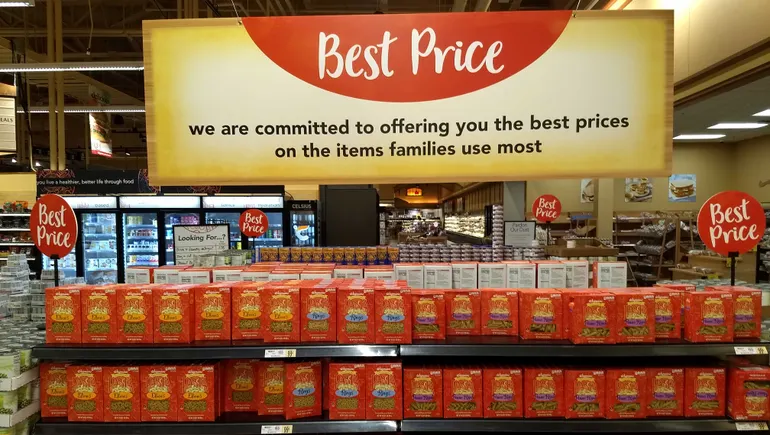
Acosta's central recommendation reframes the challenge away from pure affordability. The firm argues that affordability will always matter to grocery shoppers, but says the more enduring opportunity for retailers lies in helping consumers feel confident about their spending decisions, whether that confidence comes from trusted private label quality, freshness guarantees, or loyalty programs that reward consistent behavior rather than one-off deal hunting. Retailers that treat confidence as a distinct lever from price, worth measuring and designing for on its own terms, are the ones Acosta expects to hold volume even as promotion-driven habits persist across the rest of the category.
That framing gives retail and CPG executives a different lens for evaluating technology and merchandising investments going forward. Rather than asking only whether a new private label line, loyalty redesign, or freshness initiative lowers the effective price a shopper pays, Acosta's data suggests the more useful question is whether it reduces the anxiety and second-guessing baked into grocery shopping after several years of visible inflation, since that anxiety now appears to be driving purchase decisions independent of what actual prices are doing this month.