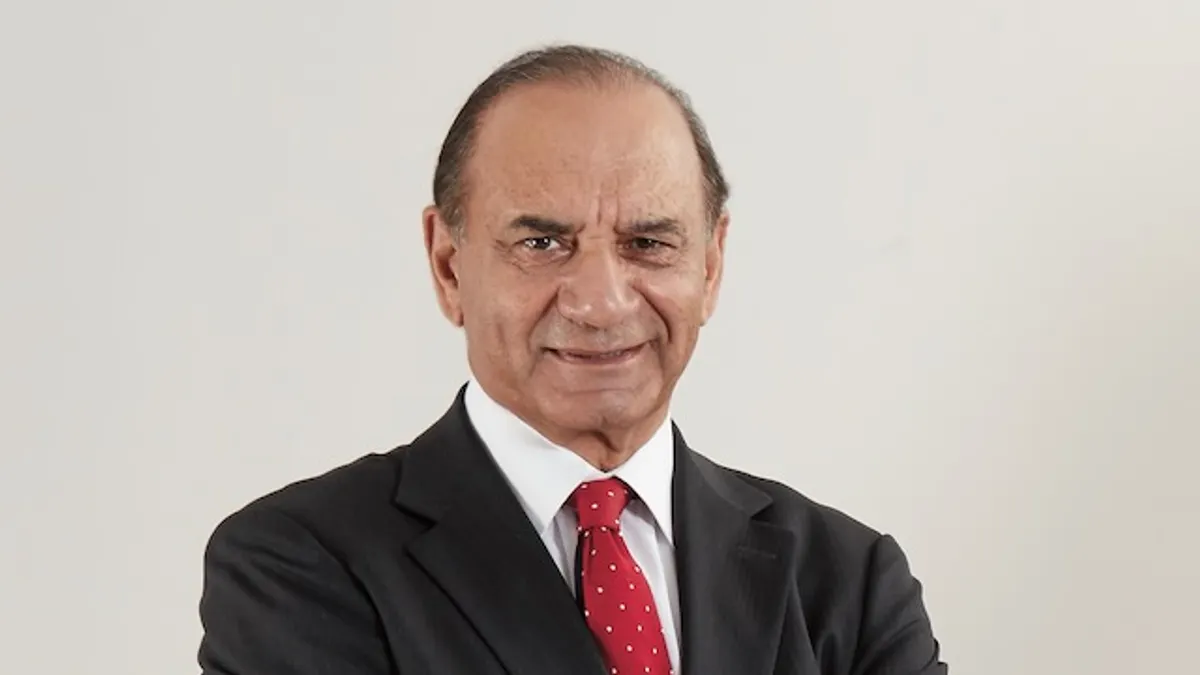
The vote that ended a four decade run
Ethan Allen announced Tuesday that Farooq Kathwari is no longer chairman and CEO of the company he built. Kathwari became company president in 1985, then chairman and CEO in 1988, leading a group that acquired the company a year into his tenure and later taking it public in 1993, a run of nearly 40 years at the top that made him one of the longest-serving chief executives in American retail. He is replaced on an interim basis by Stefanie Tsen Ward, a former Neiman Marcus Group executive, who will oversee day-to-day operations and what the company is calling a strategic reset while the board runs a search for a permanent CEO.
The original plan, set in September 2026 when Ethan Allen first launched a CEO search, called for naming a successor by June 30, the date Kathwari's existing contract was due to end, with Kathwari staying on the board afterward as a nonexecutive member in a quieter, more ceremonial role. That orderly plan did not survive contact with the company's annual shareholder meeting the previous week, where the board's own composition changed faster than anyone had scheduled for.
Who actually won the boardroom fight
Doug Bergeron, an activist investor holding just over 5 percent of Ethan Allen's shares, a relatively small stake by activist standards, had pushed for major changes at the company for months before this meeting. At the annual meeting, shareholders elected three of his five board nominees, and Kathwari himself failed to win reelection to the board, a result that effectively ended his tenure as chairman and CEO before the company's own carefully negotiated succession timeline ever had the chance to play out on schedule.
Bergeron framed the outcome in historical terms specific to the company's own namesake, comparing the vote to the original Ethan Allen's 1775 capture of Fort Ticonderoga and declaring that a new day begins for the employees, customers, and shareholders of the company. Telsey Advisory Group analysts, led by Cristina Fernandez, read the vote in plainer financial terms: shareholders voted for change, and Ward specifically brings meaningful experience with brands and retailers to the interim role she now holds.
A boardroom rebuilt around digital retail experience
The directors joining this week are notable mostly for who they are not: furniture industry veterans in the mold of Kathwari himself. Anna Brockway, Chairish co-founder and a former Levi's executive, Kristine Miller, former chief strategy officer at eBay and a 24-year Bain veteran, and Steve Oblak, Wayfair's former chief commercial officer, all bring ecommerce and digital brand backgrounds rather than home furnishings manufacturing or retail operating experience. Lindsay O'Reilly, with leadership roles at Barclays and JPMorgan Chase, and Adam Treanor, managing partner of Stone Bay Capital, round out the incoming slate alongside Ward herself. Maria Eugenia Casar and Tara Stacom were the only two directors reelected from the existing board without being part of Bergeron's slate.
For a 90-plus-year-old furniture and home furnishings company, stacking the board with Wayfair, eBay, and Chairish alumni is a direct statement about where the directors think value gets created now: digital merchandising, marketplace economics, and ecommerce operations, not showroom expansion or manufacturing scale.
The numbers that made the activist case
Ethan Allen reported its first fiscal quarter results the Monday before the leadership change was formally announced, a timing coincidence that made the numbers impossible for the board to ignore going into the vote. Net sales fell 12 percent to 130 million dollars, with retail sales down 11 percent and wholesale sales down more than 9 percent across the same period. Consolidated gross margin fell 180 basis points to 59.6 percent, which the company attributed to tariffs, higher designer floor sample sales, and lower manufacturing production, partly offset by a favorable sales mix shift, reduced headcount, and a higher average ticket price on the goods it did sell.
Net income fell 84 percent to 1.7 million dollars. Numbers like these, delivered a day before the board moved on the CEO, gave Bergeron's activist campaign exactly the evidence it needed to argue that incremental management under the existing team was not working.
An interim CEO with a mandate, not a caretaker role
Ward's title is interim CEO, but the language around her appointment, overseeing day-to-day operations and a strategic reset, is not the language boards usually use for a placeholder. Boards that want a true caretaker while they run a search typically promote from inside and deliberately avoid words like reset. Naming an outside retail executive with Neiman Marcus pedigree specifically to reset strategy suggests this board expects meaningful operational change to happen before a permanent CEO is even named, not after.
That also means whoever Ethan Allen eventually hires on a permanent basis will inherit the decisions Ward makes right now, on store footprint, manufacturing footprint, and margin structure, rather than walking into anything resembling a blank slate. Candidates being considered for the permanent role should expect the strategic reset already underway to constrain, not just inform, what they are able to propose once they actually take the job.
What this means for governance at family controlled retailers
Kathwari's four decade tenure made Ethan Allen one of the longest-running founder-adjacent leadership structures left in home furnishings retail, and arguably in American retail more broadly. His removal, forced by an investor holding just a 5 percent stake rather than any kind of majority position, is a reminder that activist leverage does not require a large ownership stake when operating results are weak enough and enough other shareholders are willing to listen to the alternative being offered.
For PE-backed and founder-led retail and commerce businesses more broadly, the real lesson here is about timeline discipline and how little control boards actually retain over it. Ethan Allen's own board had a carefully negotiated succession plan with a defined end date months away. A sufficiently motivated activist investor and one bad quarterly print compressed that timeline from months down to a single week. Boards that assume they control the pace of their own leadership transitions should treat this sequence of events as a direct counterexample worth studying.
What we are watching next
The near-term signal to watch is what Ward actually changes operationally over her first full quarter in the role, particularly around manufacturing footprint and tariff exposure, since both were called out explicitly as margin drags in the company's own disclosures. The permanent CEO search will also reveal whether this new, digitally weighted board pushes for a genuinely ecommerce-native leader or ultimately settles for a more traditional retail operator who can simply execute the reset that Ward has already started.
We will also be watching closely whether other founder-led or long-tenured-CEO retailers facing similar margin pressure see this outcome play out publicly and choose to move preemptively on their own governance, rather than waiting for an activist investor to force the issue the way Bergeron just did here with a stake that most boards would not have considered large enough to worry about.