On-Demand Delivery Becomes a Toggle
DoorDash confirmed on 14 July a direct integration with Shopify that lists DoorDash as a native sales channel inside Shopify's App Store. US merchants with a physical store can enable the channel to push their catalog onto the DoorDash marketplace, with no separate onboarding, no manual catalog uploads and no disruption to existing operations. Inventory, orders and fulfillment data sync automatically between the two systems, and self-serve setup cuts integration time from weeks to days. For a category of retailer that previously found on-demand delivery too operationally heavy to attempt, the barrier drops to flipping a switch.
Mike Goldblatt, VP of Enterprise Partnerships at DoorDash, framed the promise plainly, saying that if a product is in your area, it is on DoorDash, and that independent retailers deserve tools that work as hard as they do. Atlee Clark, VP of Partnerships at Shopify, said merchants want to sell wherever their customers are, increasingly meaning speed and convenience. The integration targets gift shops, sporting goods stores and specialty food retailers, the long tail of physical commerce that lacks the engineering resources to wire up delivery logistics on its own. DoorDash says international expansion will follow in the coming months.
The Mechanics That Make It Work
The technical value is in the synchronisation. Because inventory, orders and fulfillment data flow automatically between Shopify and DoorDash, a merchant avoids the classic failure of marketplace expansion, which is maintaining a second catalog that drifts out of sync with the first. Overselling, stale pricing and manual reconciliation are what usually make additional channels more trouble than they are worth for small teams. By making Shopify the system of record and DoorDash a synchronised surface on top of it, the integration removes the operational drag that historically capped how many channels a small retailer could realistically run.
This matters because the hidden cost of any new channel is the ongoing operational load rather than the listing itself. Every extra storefront that needs manual updates consumes staff hours a small retailer does not have. Native integrations that keep data consistent are what turn a theoretical channel into a used one. Commerce leaders evaluating marketplace expansion should weigh the synchronisation architecture as heavily as the audience size, because a channel that demands manual upkeep will be neglected and underperform regardless of how large its reach looks on paper.
Buying Demand and Fulfillment Together
DoorDash reports that 90% of merchants say it helped them reach new consumers and 85% of shoppers say it makes supporting local businesses easier, and a separate figure puts its marketplace reach at tens of millions of monthly users. For an independent retailer, that is demand it could never generate alone and a delivery fleet it could never afford to operate. The integration bundles both, the customer acquisition surface and the last-mile logistics, into a single toggle. That combination is the reason the deal is attractive, because building either capability from scratch is out of reach for the retailers being targeted.
The trade is margin for reach and capability. DoorDash's marketplace and delivery come with fees that compress the economics of each order, and the retailer accepts that cost in exchange for incremental sales and a logistics network it does not have to build. For most small physical retailers, that is a rational bargain, because the realistic alternative is no on-demand channel at all. The discipline is to treat DoorDash orders as incremental demand with their own economics, and to price and merchandise accordingly rather than assuming the margin profile of a walk-in sale.
What It Signals for Local Retail
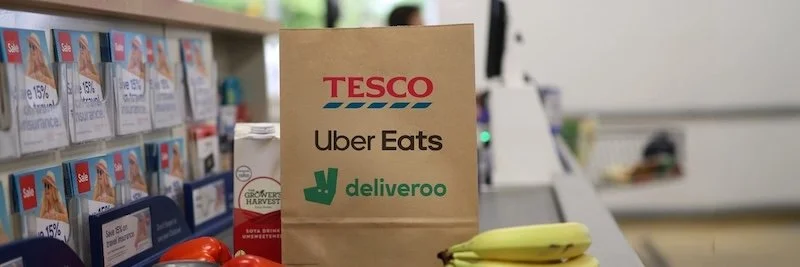
The launch continues a broader shift where physical stores become fulfillment nodes for platforms that own the demand. Tesco is doing the same in UK grocery by listing on Uber Eats and Deliveroo, and DoorDash is extending the pattern to the long tail of US specialty retail. The store's inventory and location become the asset, and the platform supplies the customer and the courier. For the retailer, this is a way to monetise physical proximity to local shoppers who increasingly expect same-hour delivery, without building an app or a delivery operation.
The strategic risk is the familiar one of intermediation. When the platform owns the customer relationship and the delivery experience, the retailer can become an interchangeable supplier competing on price and availability. The defence is the same as in grocery, keeping a first-party channel healthy and using the platform for genuinely incremental demand rather than as the primary storefront. Retailers that let DoorDash become their only route to local delivery customers cede pricing power and data, while those that treat it as one channel among several preserve leverage and the direct relationship that sustains margin.
The Build-Versus-Buy Calculus
For the retailers DoorDash is targeting, build versus buy is barely a contest. Constructing a same-day delivery operation means fleet management, routing software, driver supply and a customer acquisition engine, none of which a specialty shop can justify. Buying that capability through a native Shopify integration converts a multi-year infrastructure project into a configuration task. The clarity comes from the size of the operator. Below a certain scale, owning last-mile logistics destroys value, and renting it through a platform is the only sensible path to offering delivery at all.
Larger retailers face a genuinely harder decision, because at scale the platform fees can exceed the cost of an owned or hybrid delivery model, and owning the customer data may justify building. The lesson from this launch is to match the decision to scale rather than to fashion. Small operators should buy the capability and accept the fees, mid-sized operators should run the numbers on where platform economics stop being favourable, and everyone should keep enough first-party demand that the platform remains a supplement. The mistake is treating a convenient integration as a permanent strategy without revisiting it as volume grows.
The Read for Commerce Leaders
We see the DoorDash and Shopify integration as a clean example of platform bundling lowering the barrier to a capability that used to require real infrastructure. The winners are small physical retailers who can now offer on-demand delivery without a project plan, and the beneficiaries are the platforms that deepen their hold on local commerce demand and data. The synchronisation architecture is what makes it usable, and the reach and fleet are what make it valuable. For the target merchant, the maths is straightforward and the upside is real.
The guidance for commerce leaders is to adopt these integrations where scale makes owning the capability irrational, and to keep a clear eye on the fee drag and the intermediation risk as volume grows. Treat platform orders as incremental demand with distinct economics, protect a first-party channel so the relationship and data do not migrate entirely to the platform, and revisit the build-versus-buy line as the business scales. DoorDash has made local delivery a toggle, and the retailers who use it well will be the ones who never mistake the toggle for the whole strategy.