The Industry Descends on Moscone
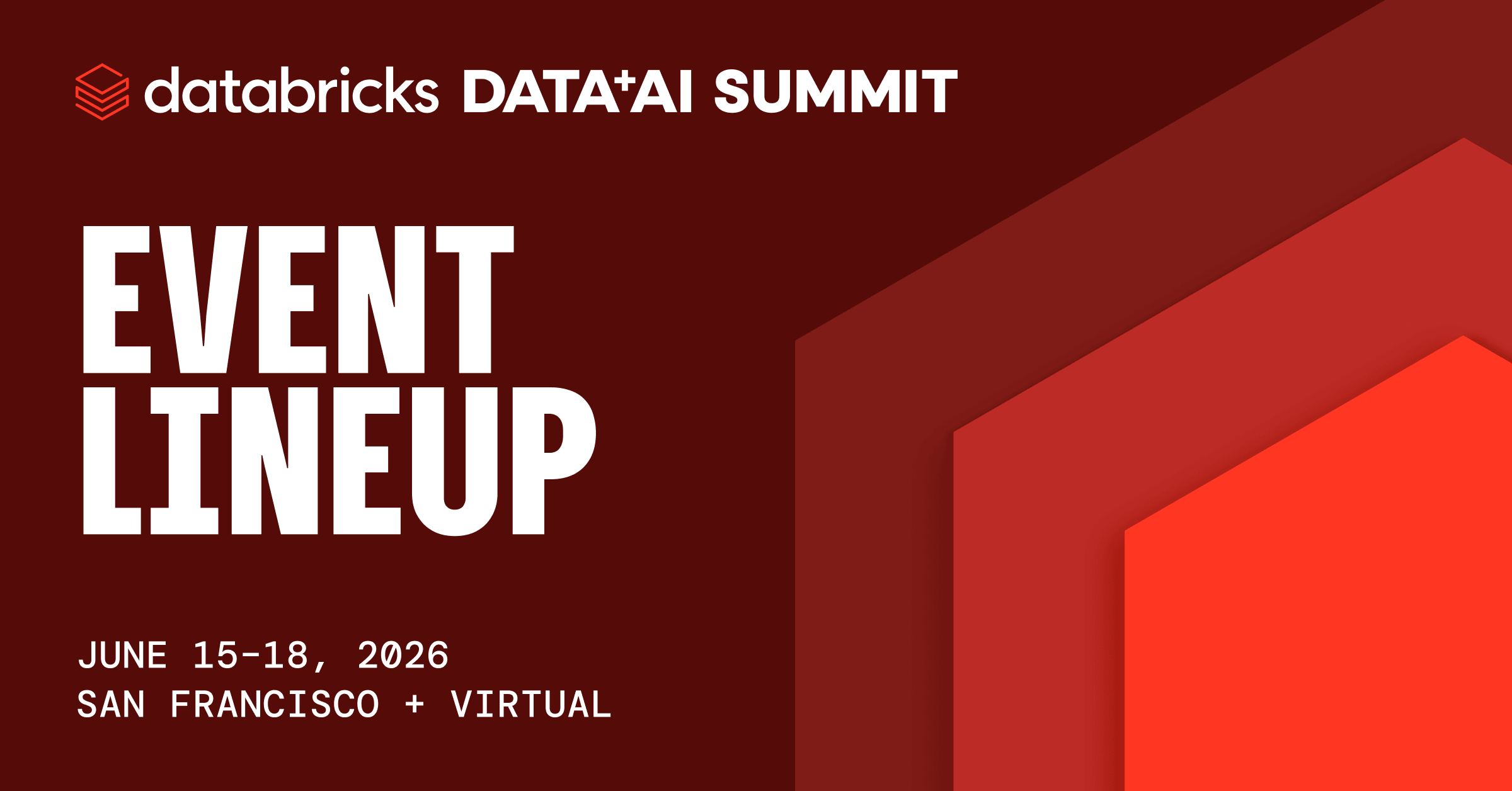
There are few clearer barometers of where enterprise technology spending is heading than which conferences fill the Moscone Center, and this week it is Databricks. The company's Data and AI Summit 2026 opened today and runs June 15 through 18, drawing more than 30,000 in-person attendees plus tens of thousands more virtual participants from over 150 countries. A gathering of that size is not merely a product launch venue; it is a statement of gravitational pull, evidence that the data platform sits at the center of the enterprise AI conversation rather than at its periphery.
The keynote lineup reinforces that centrality. Alongside Databricks co-founders Ali Ghodsi, Matei Zaharia, Arsalan Tavakoli-Shiraji, and Reynold Xin, the stage features Microsoft Chairman and CEO Satya Nadella in a pre-recorded fireside chat, OpenAI President and co-founder Greg Brockman, and PepsiCo Global Chief Data and AI Officer Magesh Bagavathi. The mix is telling. A hyperscaler, a frontier model lab, and a Fortune 50 data leader on the same agenda signal that Databricks wants to position itself as the connective tissue between the model makers, the cloud platforms, and the enterprises trying to put both to work.
The Product Story Is Now About Agents
The headline products on display, Lakebase, Agent Bricks, Genie, Lakeflow, Lakehouse, Unity Catalog, and Lakewatch, trace the arc of where the platform is heading, and the destination is clearly agentic AI. Databricks says Lakebase adoption is growing more than twice as fast as its core data warehousing product since launch, a striking detail that suggests customers are rapidly adopting the newer transactional database layer rather than treating it as a curiosity. When a new product outpaces the flagship's growth rate, it usually means the company has found where the demand is actually moving.
Agent Bricks is the piece that captures the strategic shift most clearly. The pitch is that building AI agents should be governed architecture rather than ad-hoc code snippets scattered across an organization, with Unity Catalog serving as the control plane that governs data, models, and now agents alike. That framing is shrewd. It takes the messy, ungoverned reality of how most enterprises are experimenting with agents today and offers a structured alternative anchored in the governance layer Databricks already sells. The agenda backs this up with more than 800 breakout sessions and hands-on training that now includes agent development and so-called vibe coding.
Governance as the Differentiator
The recurring word in the Databricks message this week is governance, and that is a deliberate strategic bet. Plenty of vendors can help an enterprise build an agent or query a dataset. Far fewer can credibly claim to govern the whole estate, controlling who can access which data, which models can act on it, and what the agents built on top are permitted to do. By positioning Unity Catalog as the control plane for this entire stack, Databricks is wagering that as agentic AI proliferates inside enterprises, the binding constraint will not be building agents but governing them safely at scale.
This is, in our view, a well-aimed bet. The early enthusiasm for AI agents is colliding with the reality that ungoverned agents acting on enterprise data are a compliance and security nightmare waiting to happen. Boards and regulators are already asking how organizations control what their AI systems can do, and most organizations do not have a good answer. A platform that offers governance as a first-class capability rather than an afterthought speaks directly to that anxiety. Whether Databricks can deliver on the promise across the full complexity of real enterprise environments is the open question, but the strategic instinct to lead with governance is sound.
The Snowflake Rivalry Sharpens
None of this is happening in a vacuum. The Databricks Summit follows rival Snowflake's own summit on June 2, and the two events together stage a head-to-head contest that Databricks frames as the fight for the agentic client and the AI back end. The rivalry has matured from a debate about data warehouse versus data lake into a broader struggle over which platform becomes the foundation on which enterprises build their agentic AI future. Both companies have concluded that the data platform is the natural home for enterprise AI, and both are racing to prove it.
The financial stakes underscore why the competition is so intense. Databricks recently disclosed year-over-year growth above 55 percent, a revenue run-rate exceeding 4.8 billion dollars, and a Series L raise of more than 4 billion dollars at a 134 billion dollar valuation. Those numbers buy a great deal of product development and market presence, and they raise the cost of losing this contest. For enterprises, the rivalry is mostly good news, because two well-funded competitors pushing each other tends to accelerate innovation and restrain pricing. The risk is platform lock-in, as each vendor works to make its governance layer the indispensable center of the stack.
What CIOs Should Take Away
For technology leaders, the Summit is less about any single product announcement than about a clear signal of where the data platform category is heading. The message is that the next phase of enterprise data strategy is inseparable from agentic AI, and that the platforms intend to compete on their ability to build, run, and govern agents rather than merely store and query data. CIOs who still think of Databricks and Snowflake primarily as analytics tools are working from an outdated mental model, because both vendors have repositioned themselves as the foundation for enterprise AI.
The practical implication is that data platform decisions now carry far more weight than they did even two years ago, because they increasingly determine an organization's entire approach to agentic AI and its governance. That raises the stakes on choosing well and on avoiding casual lock-in to a single vendor's control plane. We would urge leaders to evaluate these platforms not just on today's analytics performance but on how credibly each can govern a future estate of autonomous agents acting on sensitive data. That is the contest these companies are now fighting, and it is the one that will define which of them earns the central place in the enterprise stack.