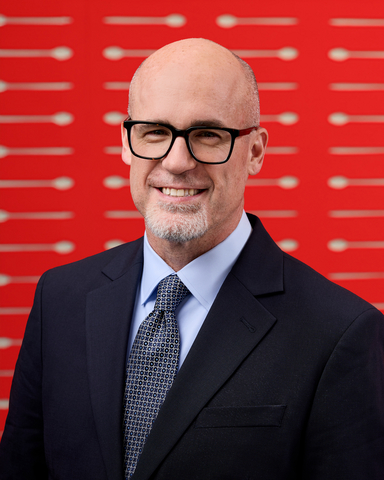
A Legacy Brand Bets on a Commerce Technologist
International Dairy Queen confirmed on July 7 that it has hired Phil Crawford as executive vice president and chief technology officer, a move that reads less like a routine backfill and more like a statement of intent. Crawford will report directly to president and chief executive Troy Bader and will own IT and retail technology across a system of more than 7,800 DQ restaurants in over 20 countries. For a brand built on nostalgia and soft serve, putting a career commerce technologist in the C-suite is a signal that the next chapter will be written in code and data, not just in cones.
We read this hire as part of a broader pattern in quick-service and casual dining, where technology has moved from a back-office cost center to the primary lever for growth. Bader framed it plainly, saying technology plays an increasingly critical role in empowering the business for employees, franchisees and fans. That last word matters: Dairy Queen is a franchise-heavy operator, and the person holding the CTO title has to modernize systems he does not fully control while keeping thousands of independent operators aligned. It is one of the harder technology mandates in retail.
Who Phil Crawford Is
Crawford arrives with roughly two decades of restaurant and retail technology leadership, and his resume is a tour of brands that have wrestled publicly with digital transformation. Most recently he led the global food, beverage and hospitality vertical at payments firm Adyen, giving him a merchant-side and a vendor-side view of how transactions actually move. Before that he held chief information officer or chief technology officer roles at CKE Restaurants, the parent of Carl's Jr. and Hardee's, as well as Godiva Chocolatier, Shake Shack and Yard House. That is a deliberate mix of fast food, premium retail and full-service dining.
What stands out is the consistency of the problem he has been hired to solve at each stop: unifying fragmented point-of-sale, mobile and loyalty systems into something a customer experiences as one brand. His academic background rounds out the profile, with an MBA and completion of the Harvard Business Analytics Program. We would caution that pedigree alone does not modernize a franchise network, but Crawford has repeatedly walked into legacy estates and pushed them toward digital ordering and data-driven operations. Dairy Queen is buying that specific muscle memory.
A Planned Handoff, Not a Crisis Hire
Crucially, this is a succession, not a rescue. Crawford succeeds Kevin Baartman, who is retiring later in 2026, which means Dairy Queen had the luxury of recruiting for a forward-looking mandate rather than plugging a sudden hole. That distinction shapes how much runway the incoming CTO gets. When a technology chief is hired into a smoking crater, the first year is triage. When the handoff is orderly, the incoming leader can spend that year setting architecture and strategy rather than fighting fires.
In his own words, Crawford said he respects the team's recent commitment to technological innovation and digital capabilities and wants to build what he called a truly unified, scalable commerce ecosystem. We take that phrasing seriously because it is a thesis, not a platitude. Crawford will be based at the company's global franchisee support center in Minneapolis, close to the operational core. The message to franchisees is that headquarters intends to give them modern tools rather than mandates they cannot execute, though the proof will be in what actually ships to stores.
The 7,800 Restaurant Problem
Scale is the defining constraint here. A unified commerce vision is straightforward to articulate and brutal to deliver across 7,800 locations spanning more than 20 countries, each with its own tax rules, payment rails, connectivity realities and franchisee sophistication. The gap between a slick demo in Minneapolis and a reliable transaction in a rural drive-thru is where most restaurant technology programs quietly stall. Crawford's Adyen tenure is relevant precisely because global payment orchestration is one of the thorniest pieces of that puzzle.
There is also a change-management dimension that no architecture diagram captures. Franchisees carry the capital cost of hardware refreshes and the operational risk of new systems at the counter, so adoption is never guaranteed by a corporate decision. The CTOs who succeed in franchise models tend to win by proving unit-level economics, showing operators that a new ordering flow or loyalty integration lifts ticket size or throughput. We expect Crawford's early wins, if they come, to look less like a headline platform launch and more like measurable improvements franchisees can feel in their own margins.
Why Unified Commerce Is the Real Mandate
The phrase unified commerce is doing a lot of work in this announcement, and it is worth unpacking for executives outside food service. It describes a single technology backbone that treats in-store, drive-thru, mobile app and third-party delivery as one commercial system rather than a set of bolted-together channels. For a brand whose customers increasingly order on their phones and expect loyalty points to follow them everywhere, the cost of fragmentation is real: lost data, inconsistent pricing and a customer experience that fractures at the seams.
This is also where artificial intelligence quietly enters the story. You cannot personalize offers, forecast demand or route delivery intelligently on top of siloed data. A unified commerce layer is the precondition for the AI use cases every restaurant board now asks about. We suspect Crawford's real internal pitch is sequencing: consolidate the data and transaction plumbing first, then layer intelligence on top. That is the unglamorous but correct order of operations, and it is the same one CIOs in retail and hospitality are being forced to confront.
What Enterprise Leaders Should Take From This Hire
For CIOs and CTOs watching from adjacent industries, the Dairy Queen appointment is a useful case study in matching the leader to the problem. Dairy Queen did not hire a pure AI researcher or a greenfield cloud native builder. It hired someone whose entire career has been about dragging complex, franchised, legacy retail estates into a coherent digital present. That specificity is the point. The most common failure in executive technology hiring is optimizing for the most impressive title rather than the closest fit to the actual mess that needs untangling.
The second lesson is about reporting lines and timing. Crawford reports to the CEO, and he inherits the role through an orderly retirement rather than a crisis. Both conditions materially raise his odds of success, and both are things a board can engineer deliberately. We would argue that how a technology leader is set up on day one predicts outcomes as much as the individual's talent. Dairy Queen appears to have done the setup work. The open question, as always, is execution across a system it influences more than it commands.


