The Cart Builds Itself
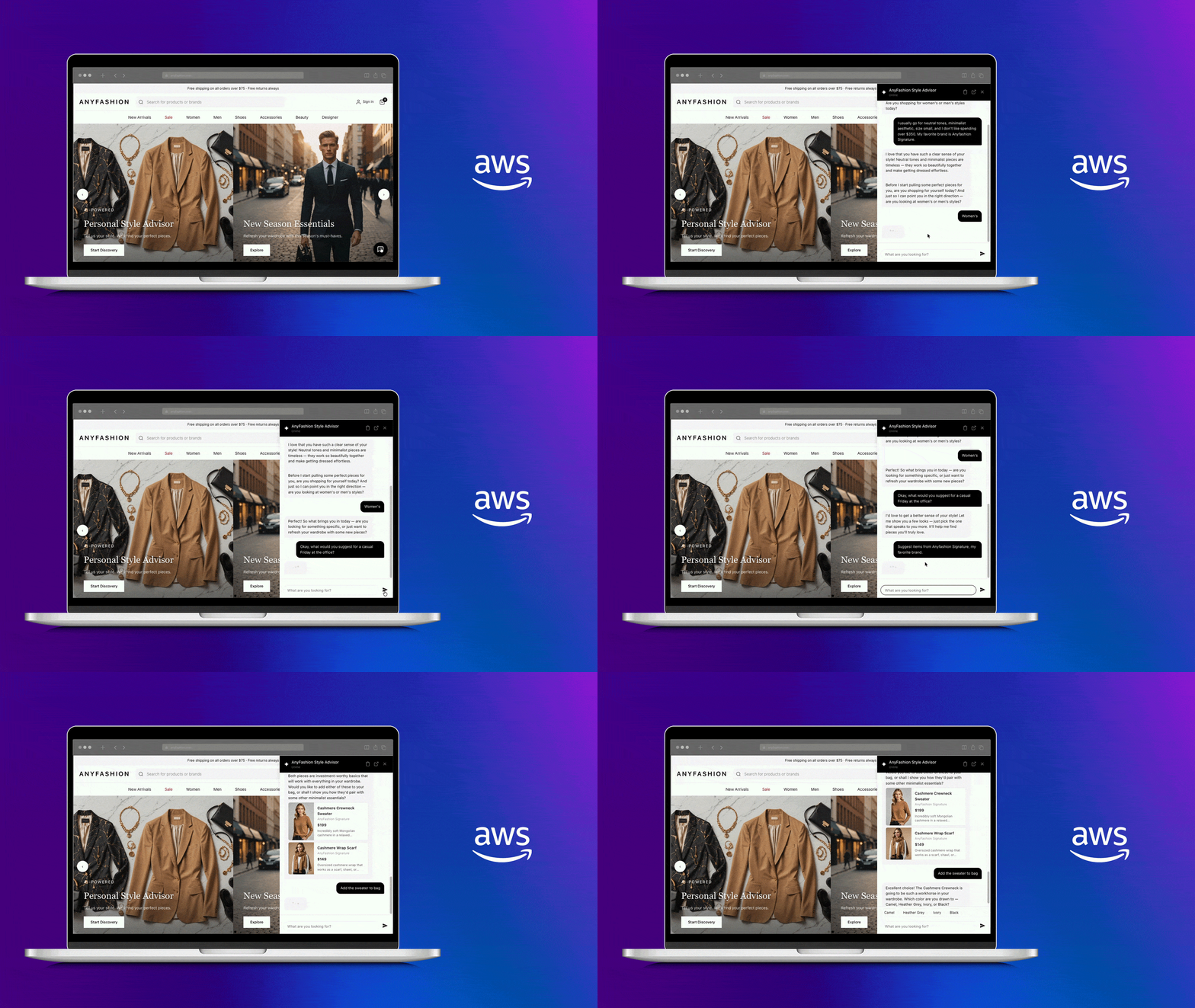
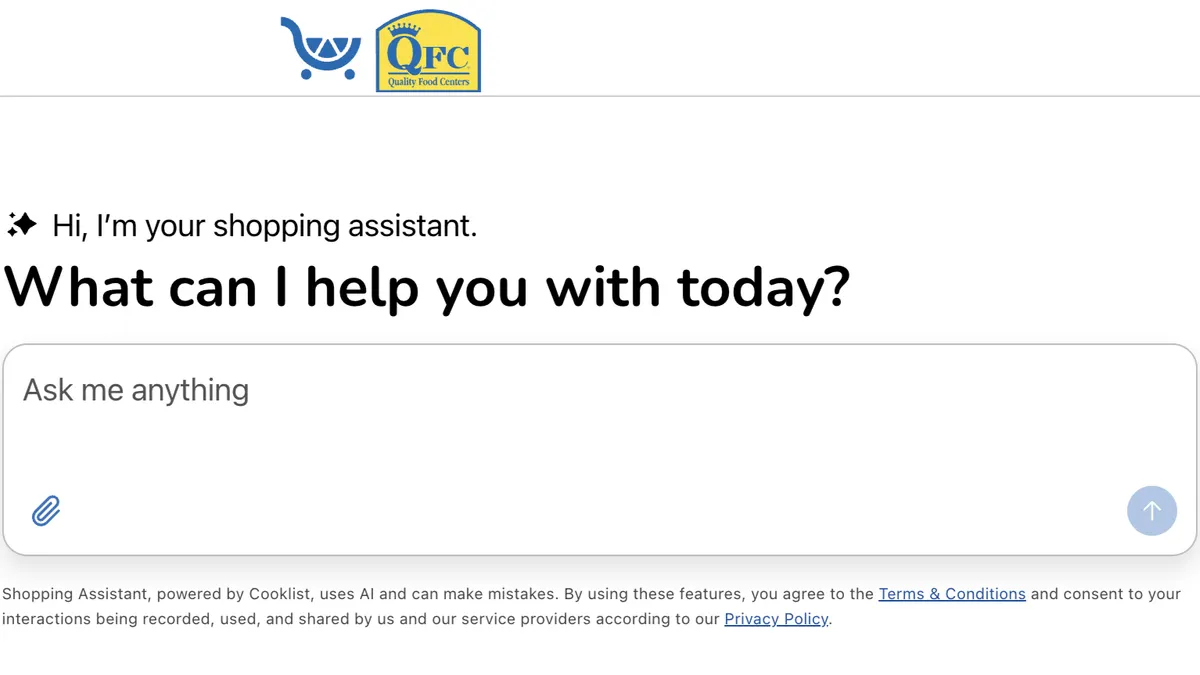
One of the more consequential shifts in grocery retail is happening under someone else's brand. Cooklist, a startup founded by Daniel Vitiello and Brandon Warman, is supplying the agentic AI that lets shoppers at Kroger and Wegmans describe what they need in plain language and receive a shopping cart already loaded with suggested products. The assistant checks live inventory and assembles bundles personalized to a shopper's purchase history, budget, dietary preferences, and nutritional goals. It can even import a recipe from a social video or blog and turn it into a checkout-ready cart.
This is agentic commerce in its most practical form, and it is notable precisely because it is invisible. Customers experience it as their grocer's own smart assistant, not as a third-party bolt-on. Vitiello frames the company's mission as helping people eat intelligently, which he defines as combining the intelligence of a personal shopper, a chef, and a nutritionist into one tool. The ambition is larger than convenience. It is to make the assembly of a weekly grocery order something the software does on the shopper's behalf, with the human simply approving the result.
Intent, Not Keywords
The behavioral data behind these assistants is where the story gets interesting for anyone thinking about the future of digital commerce. Cooklist reports that the average chat message from a shopper runs about 50 characters, compared with roughly 10 characters for a typical search query. Co-founder Brandon Warman says that translates into roughly five times more context with each message, which gives the system far more signal about what the shopper actually intends rather than what keyword they happened to type.
That difference is not cosmetic; it changes what the retailer can do. A keyword search tells you a shopper wants milk. A conversational request tells you they want a week of lactose-free dinners for a family of four on a budget, which is a vastly richer basis for recommendation, substitution, and merchandising. As shoppers grow comfortable expressing intent in natural language, the retailers that capture and act on that context will pull ahead. Cooklist's numbers are an early, concrete signal that conversational interfaces surface intent that traditional search simply throws away.
Why Grocers Chose the White-Label Path
The reach is already substantial. Cooklist's technology is live across more than 700 US stores, with expansion to roughly 700 additional locations underway, spanning Kroger banners including Fred Meyer, Ralphs, Baker's, Dillons, QFC, and Smith's, alongside Wegmans. Integration takes about six weeks, a timeline that lets grocers add sophisticated agentic capabilities without embarking on a multi-year internal build they are unlikely to staff or finish.
For grocers, the appeal of a white-label partner is straightforward. Building a competent conversational commerce engine in-house requires AI talent, data infrastructure, and ongoing model work that most regional chains cannot justify. Buying a specialized platform that plugs into existing systems in weeks, rather than years, is a rational trade. Vitiello notes that for years it felt like the company was pushing a boulder up a hill, and that the past twelve months have been the complete opposite. That reversal reflects how quickly grocers have moved from curiosity about agentic AI to a scramble to deploy it before rivals do.
The Data-Ownership Wedge Against Instacart
Cooklist's sharpest strategic argument is about who controls the customer relationship. Retailers own all their data with Cooklist, Vitiello says, and they retain complete control of how everything works. That is a deliberate contrast with third-party marketplaces and delivery platforms like Instacart, which can insert themselves between a grocer and its shoppers and accumulate the behavioral data that makes those shoppers valuable. For a grocer, ceding that data is a long-term strategic cost that is easy to underestimate in exchange for short-term convenience.
This wedge matters more as commerce becomes agentic. If AI agents increasingly mediate what shoppers buy, then whoever owns the agent owns the most valuable real estate in retail. A grocer that outsources its assistant to a platform that also serves competitors is handing over both the interface and the intelligence derived from it. Cooklist is betting that retailers will pay to keep that control in-house, even when a third party could offer more scale. It is a compelling pitch precisely because it aligns with grocers' deepest interest: not losing their customers to the middle layer.
From Online Chat to In-Store Baskets
The most underappreciated finding is that this is not a purely digital play. Roughly half of the shoppers who engage with Cooklist's assistants complete their purchases in physical stores, and nearly a third of queries are support-related rather than transactional. That omnichannel spillover is significant. A conversational assistant is not just building online orders; it is shaping what people put in their carts when they walk into the store, which is where the vast majority of grocery spending still happens.
That blurring of online and offline is exactly what grocers need from AI, and it is often missing from purely e-commerce-focused tools. Shoppers who engage with the assistants increase basket sizes by high double-digit percentages, according to the company, and if that lift carries into physical visits, the return on a six-week integration looks compelling. The lesson for retail leaders is that conversational AI should be evaluated as an omnichannel capability, not a digital silo. Its value shows up wherever the shopper ultimately transacts, and increasingly that is both online and in the aisle.
The Read for Retail Leaders
For retail and CPG executives, Cooklist's trajectory is a useful case study in how agentic commerce is actually arriving: not as a splashy consumer brand, but as infrastructure quietly embedded in familiar storefronts. The strategic questions it raises are the ones every retailer should be asking now. Who will own the conversational interface to your customers? Who will own the intent data that interface generates? And are you building, buying, or renting that capability, with full awareness of the trade-offs each choice implies?
Our view is that the data-ownership question will prove decisive. Convenience will tempt many retailers to outsource their agents to whoever offers the most scale fastest, and some will regret it when they realize they have handed a competitor-adjacent platform the keys to their customer relationships. The retailers that treat their AI assistant as a strategic asset to be controlled, rather than a feature to be procured cheaply, will be better positioned as agentic commerce matures. Cooklist is not the whole answer, but its rise is a clear signal of where the leverage in retail is moving.