A Go-To-Market Hire Built Around One Specific Scar
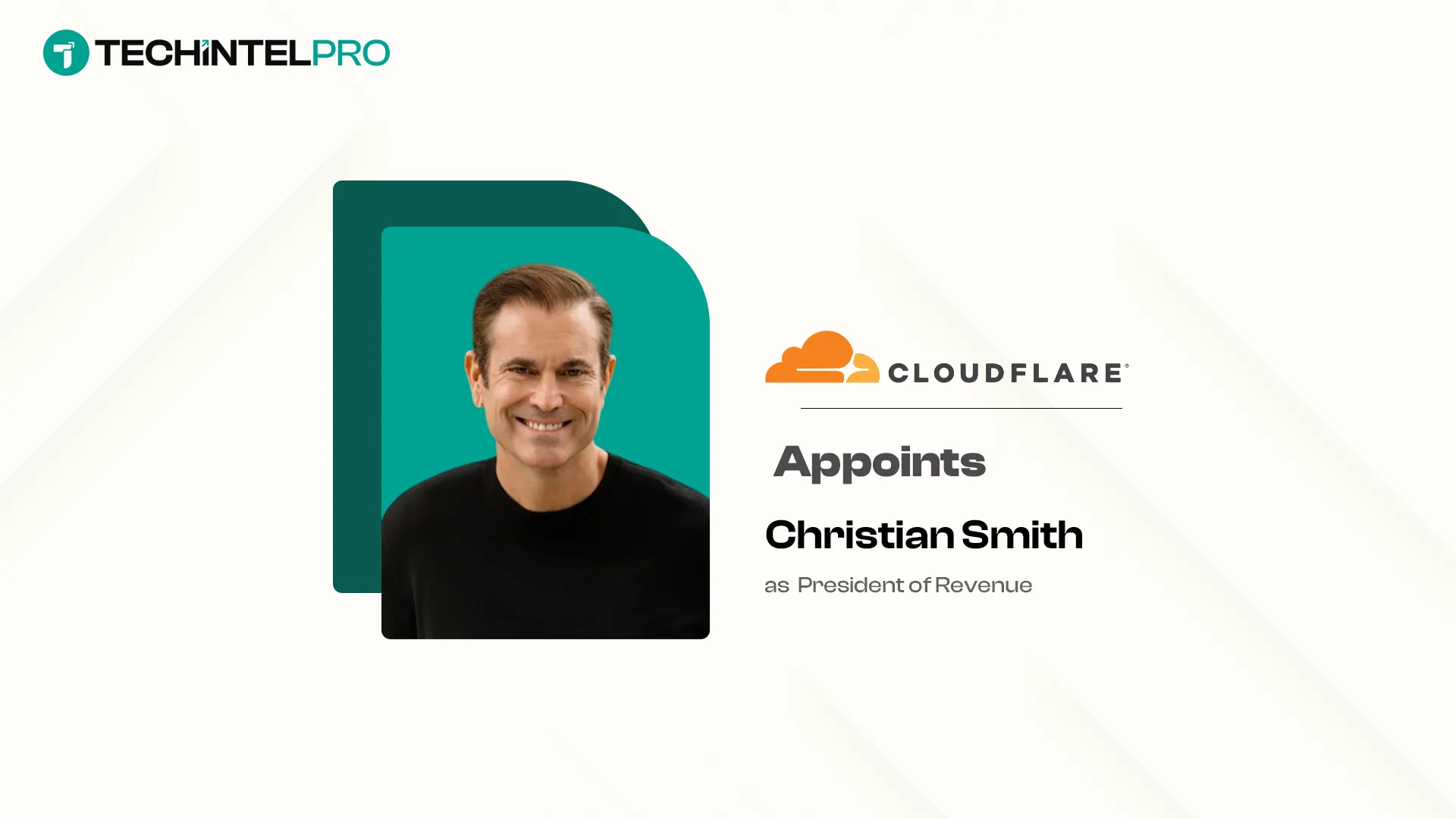
Cloudflare named Christian Smith President of Revenue on November 6, 2026, putting him in charge of the company's worldwide sales and revenue operations as it pushes toward five billion dollars in annual recurring revenue and beyond. He succeeds Mark Anderson, who is retiring at the end of 2026 after leading the revenue organization through a sustained growth run, and will stay on through December to help with the transition. CEO Matthew Prince framed the hire around Smith's ability to lead global go-to-market organizations through periods of rapid expansion, language that reads as boilerplate until you look at what Smith actually did in his last operating role.
What he actually did was run Splunk's go-to-market organization through the exact transition Cloudflare is still navigating at a different scale: the shift from one-time licensing revenue to cloud consumption and recurring contracts. As Splunk's chief revenue officer, Smith grew annual recurring revenue past four billion dollars while rebuilding how the sales organization sold, priced, and renewed. That is not a generic enterprise sales background. It is a specific, well-documented rehearsal for the exact structural problem Cloudflare's board is paying him to solve again.
Why the Specific Transition Matters More Than the Title
Plenty of executives carry the chief revenue officer title without ever having managed a fundamental shift in how their company monetizes its product. Smith's Splunk tenure is unusual because the transition he managed there, from perpetual licenses to subscription and usage-based pricing, is precisely the kind of pricing and packaging complexity that infrastructure vendors like Cloudflare still wrestle with as workloads move toward consumption-based, often AI-driven usage patterns. Having already built the internal systems, incentive structures, and customer conversations needed to pull that off once gives Smith a playbook most newly appointed revenue chiefs simply do not have.
Cloudflare's own ambitions compound the relevance. Reaching five billion dollars in annual recurring revenue requires more than adding logos. It requires a pricing and packaging structure that scales cleanly across a customer base ranging from small developers to the largest enterprises on the planet, each with different consumption patterns and negotiating leverage. Smith's time at Cisco running Splunk's commercial business worldwide, plus earlier revenue leadership at Nintex and senior roles at Oracle, gives him repeated exposure to exactly that kind of multi-segment pricing complexity.
The Portfolio Executive Pattern
Smith's profile also reflects a broader shift in who gets tapped for top revenue roles at scaled technology companies. Before joining Cloudflare, he was an operating partner at Technology Crossover Ventures, sits on the boards of Atlassian and Feedzai, advises Axonius, and remains an executive advisor to TCV. That is a portfolio of relationships that spans operating, board, and investor roles simultaneously, rather than a single linear climb up one company's org chart. It is becoming a common pattern among executives recruited into top revenue and growth roles at companies this size.
The appeal to a board is straightforward: a portfolio executive arrives with pattern recognition from watching multiple companies navigate similar growth stages, rather than the accumulated internal politics of climbing one ladder. The risk is equally straightforward, and worth naming directly. An executive juggling board seats, advisory roles, and an operating partner position elsewhere has divided attention by design, and Cloudflare's board is betting that the breadth of Smith's exposure to similar transitions outweighs the cost of that divided focus during a critical growth phase.
What Anderson's Exit Timing Says
Anderson's retirement, and the decision to have him advise through December rather than exit immediately, points to a board trying to manage transition risk carefully rather than treat a CRO change as a routine swap. Revenue leadership changes at infrastructure vendors tend to unsettle account teams and, by extension, customers mid-renewal, and a deliberate handoff period is a tacit acknowledgment of that risk. Companies that rush these transitions often see renewal friction and account attrition show up in the following two quarters, well before it shows up in a public earnings call.
For Cloudflare specifically, the stakes of getting this handoff right are higher than usual because the company is explicitly targeting a growth number, five billion dollars in annual recurring revenue, that requires sustained account discipline rather than one strong quarter. A revenue leadership change that disrupts account continuity during exactly this stretch would be self-defeating. The structured handoff with Anderson staying engaged through year end suggests the board understands that risk and is trying to protect against it directly.
What to Ask Your Cloudflare Account Team Right Now
If your organization is a Cloudflare customer sitting inside a renewal window over the next two quarters, this is a reasonable moment to ask direct questions rather than assume continuity. Ask who owns your account relationship through the transition, whether pricing or packaging conversations already underway will carry forward unchanged, and whether your assigned team is reporting into a part of the organization that is being restructured as part of Smith's arrival. Vendors in the middle of a revenue leadership change rarely volunteer details about internal reorganization unless a customer asks specifically.
This advice generalizes well beyond Cloudflare. Any infrastructure or SaaS vendor you depend on that announces a CRO or chief revenue-adjacent change mid-cycle deserves the same direct questions, because the answers tell you whether the vendor's internal structure is stable enough to honor the commercial terms you negotiated. A vendor that answers clearly and specifically is demonstrating operational discipline. A vendor that deflects or cannot name who owns your account right now is telling you something about its internal state that its press release will never say directly.
The Hiring Signal for Your Own Revenue Leadership
For CTOs and CEOs at PE-backed SaaS companies watching this hire, the broader lesson is about what boards are now screening for in top revenue roles. A candidate who has already lived through the specific pricing and packaging transition your company is heading into, whether that is moving from seat-based to usage-based pricing or restructuring around AI-driven consumption, is worth more than a candidate with a longer resume but no direct exposure to that exact shift. Smith's Splunk tenure is the credential that mattered here, not his title history.
As you build your own revenue leadership bench for the next pricing transition your company will face, borrow Cloudflare's screening logic directly. Ask every serious candidate to describe, in specific operational detail, a pricing or packaging transition they have already led and what broke along the way. The answers will separate executives who have genuinely done this work from executives who have only managed revenue teams during stable, unchanging pricing environments, and that distinction is exactly what Cloudflare's board appears to have prioritized in picking Smith.