What the release actually changes
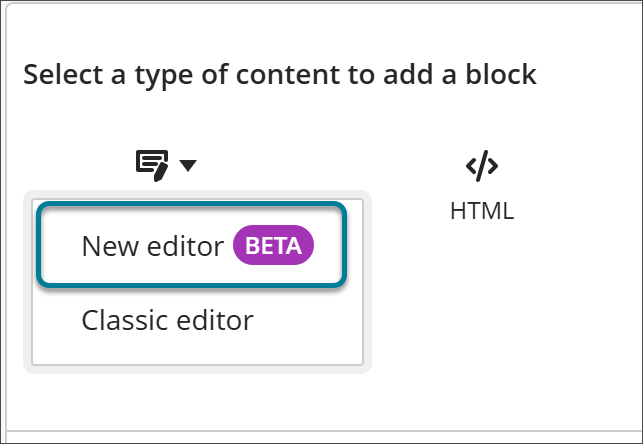
Anthology pushed Blackboard release 4000.21 to production on August 8, 2026, after staging it in early July. The release note carries a new content editor in beta, offering simplified authoring, better list and table formatting, and improved keyboard navigation, alongside a redesigned group management tool that lets instructors drag and drop students into groups and create between two and five thousand groups in a single bulk action, a real time saver for large lecture courses that previously required manual roster splitting. A new focus state for test-taking strips distracting interface elements for students during assessments, and a Your Top To Dos panel surfaces a student's five most urgent deadlines across every active course, pulled together in one place rather than scattered across separate course shells.
Those are incremental, defensible product improvements, the kind any mature LMS ships every few release cycles as it responds to instructor feedback. The more consequential line in the release notes is administrative rather than feature-driven: all Original courses now display a sunset banner warning that support ends December 31, 2026, and discussion, journal, and blog activity inside completed Original courses has already been switched to read-only. That is not a future warning sitting somewhere on a roadmap slide. It is a change that took effect with this release, already live in production Blackboard environments as of early August.
Why the read-only switch matters more than the date
Setting a sunset date is a normal vendor lifecycle decision. Making archived course content read-only ahead of that date is a different kind of change, because it affects institutions' ability to reference or reopen historical course records for accreditation reviews, grade disputes, or academic integrity investigations. Any registrar or provost's office that treats completed course shells as a searchable record of what was taught and discussed just lost write access to that record, even though the underlying courses have not been deleted.
Institutions need to audit now whether any completed Original courses are still being actively referenced for compliance, litigation hold, or accreditation documentation purposes, because read-only status may not satisfy every use case IT assumed was covered by simple content retention. That is the kind of gap that surfaces during an accreditation site visit or a legal discovery request, not during a routine IT ticket, which makes it worth flagging to compliance teams well before the December deadline rather than after, and worth confirming in writing with Anthology exactly what read-only status does and does not preserve for export and legal hold purposes.
The migration burden is not evenly distributed
Ultra migration is not a lift-and-shift IT project. It changes the faculty-facing course-building interface, the gradebook layout, and how content is organized into modules, which means every instructor still teaching in Original has to relearn parts of their workflow on a deadline set by the vendor, not by the academic calendar. Large state systems and community colleges, which tend to have the highest proportion of adjunct faculty and the least standardized course-building practices, carry the heaviest exposure here because there is no centralized team that can simply migrate content on their behalf.
Institutions that migrated to Ultra early, when Anthology first began pushing the transition, are largely insulated from this deadline. The ones still exposed are disproportionately under-resourced: smaller colleges, systems with heavy customization built on top of Original, and any campus where IT staffing turnover left institutional migration knowledge with people who have since left. That unevenness is worth naming plainly, because it means the deadline will land hardest on the institutions least equipped to absorb it quickly.
What CIOs should do with four months left
Four months is enough time to run a migration if the institution starts immediately, but not enough time to run one comfortably alongside a normal semester course load. CIOs still on Original should get an explicit migration budget and staffing commitment on the books this quarter, separate from routine IT operating costs, because faculty training and content conversion both take dedicated hours that will not appear if the work is left to absorb into existing workloads.
It is also worth pushing Anthology directly on what happens to institutions that miss the deadline: whether support genuinely stops, whether there is a paid extension path, and whether read-only archived content remains accessible indefinitely or faces its own retention clock. None of that is spelled out in the public release notes, and account teams will have different answers depending on contract terms, which is exactly the kind of ambiguity that should be resolved in writing before December, not discovered after.
The broader signal for LMS vendor relationships
This is not the first time an LMS vendor has forced a platform-wide migration on a fixed clock, and it will not be the last. What it underscores is that a legacy-experience sunset clause buried in release notes can turn into a forced, expensive migration project with very little advance notice if institutions are not actively tracking vendor roadmaps between contract renewal cycles. Anthology gave the market notice that Ultra migration was coming years ago, and the read-only switch landing in the same monthly release as the hard December date is the kind of operational detail that gets missed by anyone not reading release notes line by line, which describes most faculty and a fair number of IT staff outside the LMS administration team itself.
For institutions negotiating their next Blackboard renewal, or evaluating a switch to Canvas, Brightspace, or Moodle instead, this episode is worth raising directly in contract discussions: what commitments does the vendor make about advance notice, minimum support windows, and data accessibility before retiring a legacy experience. Those terms are cheap to negotiate up front, written into a renewal contract as a standard clause, and expensive to discover you needed only after a deadline has already landed and a migration project is already underway on a compressed timeline nobody budgeted for.