What Azoma Actually Sells
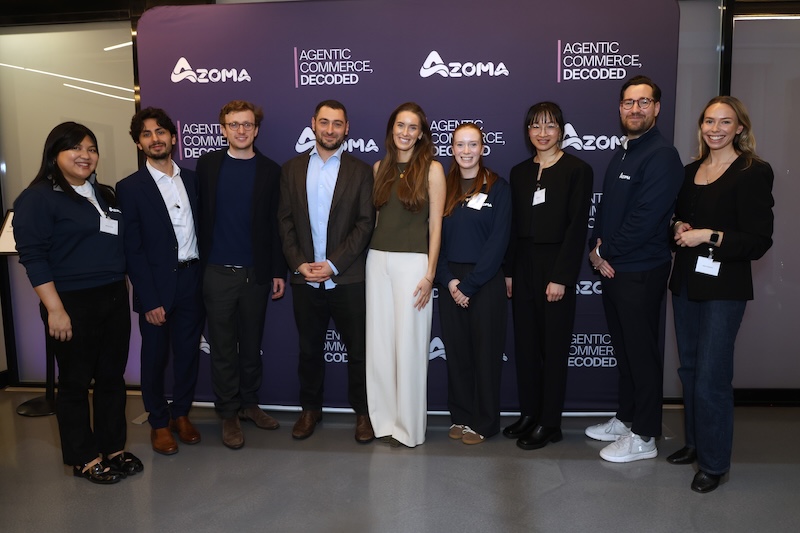
Azoma closed an 11.2 million dollar Series A round led by Puma Growth Partners, with dunnhumby, Twin Path, MaRS IAF, Rank Ventures and Ignite Ventures also participating, alongside angel investors from Google DeepMind and Legora. The round follows a 4 million dollar seed raised in December 2025, putting the company's total funding at roughly 15.2 million dollars inside its first two years. Azoma was founded in 2022 by Max Sinclair, a former Amazon executive, and Timur Luguev, a machine learning researcher, and its client list already includes L'Oreal, Unilever, Mars, Beiersdorf and Reckitt.
The company's pitch is measurement and optimization for AI shopping agents, not the agents themselves. As AI assistants like ChatGPT, Walmart's Sparky, and newer entrants such as Dots and Meta Muse increasingly sit between a consumer and a purchase decision, Azoma positions itself as the layer that tells a brand which of those interactions actually drove a sale. The new funding will extend that measurement across more assistants and build out attribution tools specifically for enterprise consumer brands, using data from dunnhumby, one of its own investors.
A Budget Line That Did Not Exist Two Years Ago
Retail media and search attribution are mature disciplines with established measurement standards. Attribution for AI agent commerce has no such standard yet, and that gap is precisely what Azoma is being funded to close. When a shopper asks ChatGPT for a product recommendation and later buys it somewhere else entirely, or when Walmart's Sparky surfaces a product a customer eventually purchases in-store, there is currently no agreed way to credit that interaction. For a brand spending millions across retail media, that gap is already a growing blind spot in the budget, not a theoretical concern for some later fiscal year.
This is why CPG names like L'Oreal, Unilever and Mars are already paying for Azoma's platform rather than waiting for the attribution standard to settle on its own. Brands with large retail media budgets cannot afford to wait two or three years for the industry to agree on a measurement framework while agent-driven commerce keeps growing underneath them. Buying a startup's attribution tooling now is a hedge against being unable to prove, later, whether AI agent spend was worth it at all.
The Numbers Worth Treating Carefully
Sinclair offered several striking figures to support the investment thesis: 350 million people used Alexa for Shopping last year, Walmart customers who use Sparky spend 40% more than those who do not, and Instinct, a personal AI assistant launched in August with no marketing budget, already accounts for 1 billion dollars in transactions and is growing 10% day over day. These numbers are doing a lot of work to justify why attribution for agentic commerce matters right now, and that is exactly why they deserve scrutiny rather than repetition.
Every one of those figures is sourced to Sinclair, the founder of a company whose entire business case depends on agentic commerce being large and growing fast. That does not make the numbers false. It means they have not been independently verified in this reporting, and any CTO or CMO using them to justify a budget request should ask Azoma, or the platforms themselves, for the underlying methodology before repeating them in a board deck. Vendor-sourced growth statistics are a normal part of fundraising, but they are not yet evidence.
What This Means for the Marketing and Technology Budget
Attribution for agentic commerce is no longer a problem marketing can solve alone, because it requires instrumenting systems, APIs, and data pipelines that sit squarely inside the technology organization's remit. Measuring whether a ChatGPT interaction or a Sparky recommendation led to a sale means tracking identifiers and events across platforms a brand does not control, which is an engineering and data governance problem as much as a marketing one. CTOs at large consumer brands should expect to be pulled into these vendor evaluations whether or not they currently sit on the retail media buying committee.
The practical question for any brand considering a tool like Azoma's is not whether agentic commerce is real, it clearly is, but whether the specific attribution methodology on offer can survive an audit from a skeptical finance team. Ask what data Azoma can actually see versus infer, how it handles a purchase that happens across multiple sessions or devices, and what happens to that measurement infrastructure if the underlying platforms change their data sharing terms without warning. Those contract terms matter more than the funding round, because the round only buys Azoma time to build the thing brands are actually paying for, not a guarantee that the methodology will hold up two years from now.
The Broader Signal in an 11.2 Million Dollar Round
A Series A of this size, led by a growth-stage investor rather than a seed-focused fund, signals that institutional capital sees agentic commerce attribution as an investable category now rather than a speculative one. Puma Growth Partners' Henri Songeur called Azoma's measurement solution defensible in a category the company helped create, language growth investors use when they believe a market is forming fast enough to reward an early, well-positioned entrant before competitors catch up.
For enterprise CPG brands, the signal is less about Azoma specifically and more about timing. If investors believe agentic commerce attribution is worth funding at this stage, brands that wait for a mature, standardized measurement layer to emerge on its own will be waiting through at least another full budget cycle of agent-driven commerce they cannot yet measure. The decision facing CMOs and CTOs is whether to start building internal measurement capability now, through a vendor or otherwise, while the category is still being defined, rather than leaving that choice to whichever platform writes the attribution rules first.