Alphabet disclosed late Monday that it intends to raise about $80 billion through a fresh equity offering, with Berkshire Hathaway committing to acquire $10 billion of the stock directly. The company said proceeds will be used for general corporate purposes, with specific emphasis on capital expenditures needed to scale AI infrastructure and global compute capacity. The raise is one of the largest single secondary offerings in market history and reflects an unusual move for a company that ended its most recent quarter with more than $100 billion in cash and marketable securities. According to TechCrunch.
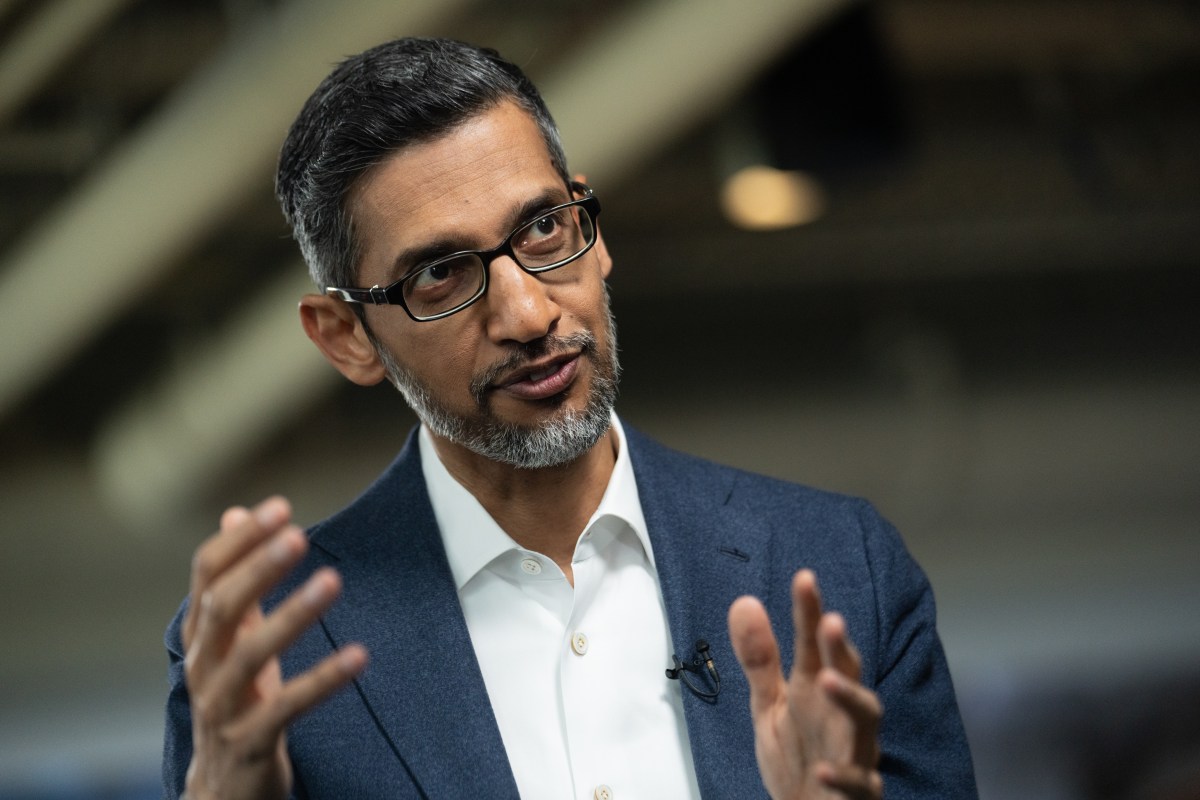
The financing arrives roughly five weeks after Google I/O, where Sundar Pichai told investors that Alphabet now expects to spend between $180 billion and $190 billion on capital expenditures by year end. That figure is up sharply from the $75 billion the company guided to only a year earlier and reflects the compounding cost of building out data centers, custom TPUs, networking, power, and cooling for both Gemini training runs and inference at search scale. In the official statement accompanying the filing, Alphabet said it is experiencing strong demand for its AI services from enterprises and consumers at levels exceeding available supply.
Berkshire Hathaway's role is the headline detail for many readers. The conglomerate, long associated with skepticism toward technology bets, will take a $10 billion slug of the offering. For Alphabet, having a famously cash rich anchor investor on the cover of the prospectus reduces execution risk and signals to the broader market that this raise is not a sign of distress. For Berkshire, the position is consistent with its recent willingness to take meaningful stakes in AI exposed names where it sees defensible cash flow.
The economic context is striking. Bloomberg has projected that the largest cloud and AI platforms collectively will spend up to $700 billion on AI capex in 2026, a figure that would nearly double the 2025 baseline. Hyperscalers including Microsoft, Amazon, Meta, and Oracle have all raised guidance over the last two quarters, and chipmakers led by Nvidia have publicly told investors that supply remains constrained well into 2027. Against that backdrop, Alphabet's decision to issue stock rather than rely solely on debt or operating cash signals a desire to preserve balance sheet flexibility for additional moves.
For CTOs and infrastructure leaders, the practical implication is straightforward. Hyperscaler capacity will keep expanding, but pricing for premium GPU and TPU instances is unlikely to soften in the near term. Google in particular has been steering enterprise customers toward longer term reserved commitments for TPU v6 and the upcoming v7 generation, and the new capital base makes it more likely those instances will be available in volume. At the same time, customers should expect modest increases in list pricing on managed AI services as Google works to translate this raise into a return profile that justifies the dilution.
There are governance questions as well. An $80 billion raise dilutes existing shareholders by roughly four percent at current prices, which is a meaningful move for a company of Alphabet's size. Some buy side analysts will press management on whether the round signals an intent to pursue large acquisitions, perhaps in robotics, energy, or vertical AI applications, rather than purely organic data center construction. Alphabet did not address that question in the filing, but the wording around general corporate purposes leaves the door open.
The competitive read across is also important. OpenAI raised $122 billion in March at an $852 billion post money valuation, Anthropic confidentially filed for an IPO earlier the same day at a valuation approaching $1 trillion, and SpaceX is preparing an offering targeting $2 trillion. The AI infrastructure layer is consolidating into a small group of platforms that can each absorb tens of billions of dollars of annual investment. Smaller players, including most enterprise software vendors, will continue to rely on these hyperscalers rather than attempting to build comparable capacity in house.
For our technology teams, the immediate planning takeaway is to revisit 2027 and 2028 cloud spend assumptions. Google will be aggressive in pursuing committed use agreements over the next two quarters, which means there is a real window to negotiate favorable terms in exchange for multi year volume guarantees. We should also expect Google to push its Gemini Enterprise and Vertex AI bundles harder, since converting infrastructure capacity into per seat software revenue is the most efficient way to service the new capital.
There are also second order implications worth tracking. A raise of this size will pull capital away from other technology issuers in the same window, which may slow secondary offerings from smaller cloud and software vendors. Power and grid availability will be tested further as Google accelerates new data center sites, and regional regulators are already responding with stricter rules on water use and energy sourcing. Customers planning major workload migrations should add power related schedule risk to their planning documents and confirm contractually that capacity will be available in the regions they care about. Finally, expect Google to deepen its partnerships with energy producers and small modular reactor developers over the next year, since durable access to clean power is now a competitive differentiator between hyperscalers.