A role built for a turnaround
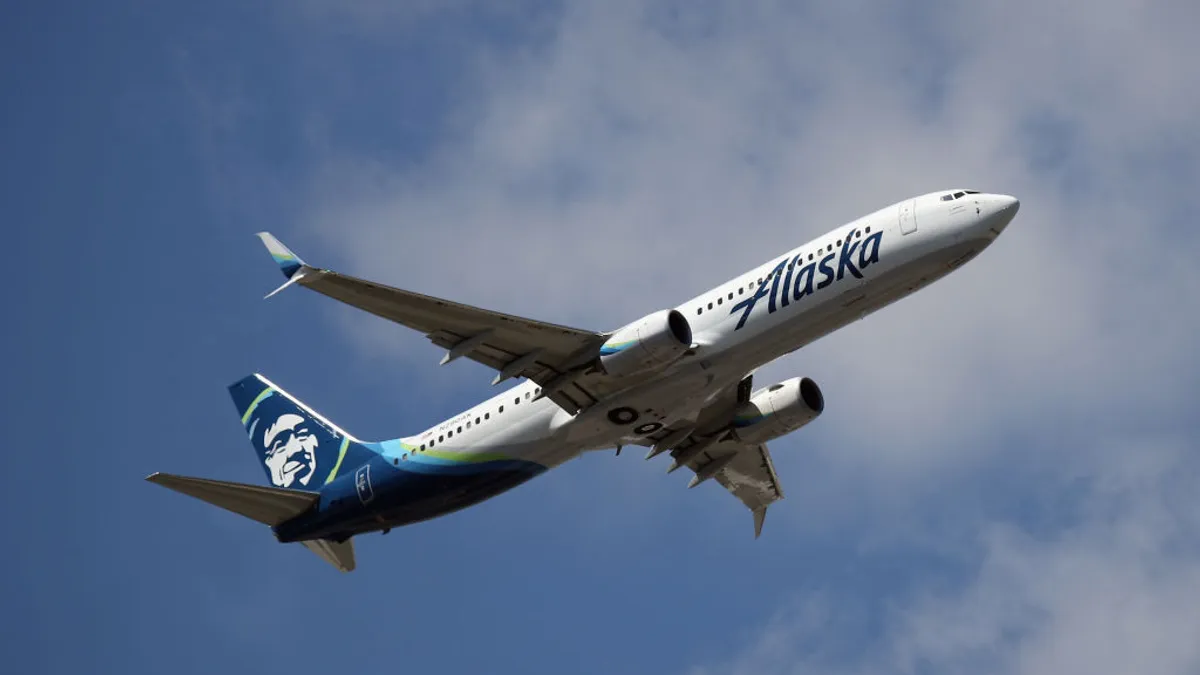
Alaska Air Group announced on a Monday that it created a new chief information technology officer role and handed it to Amaresh Siva, a 29-year technology veteran, effective next month. Siva will report directly to CEO Ben Minicucci rather than through a layer of operations or finance leadership, a reporting line that tells us how seriously the airline is treating this hire. The new seat folds together enterprise technology, AI strategy, data, cybersecurity, and digital experience, functions that at most airlines still sit in separate silos with separate budgets and separate priorities.
We read the structure before we read the title. A chief information technology officer who answers to the CEO and owns AI, data, cybersecurity, and digital in one mandate has more authority than a typical CIO buried under a CFO or COO. Alaska is betting that unifying those functions under one accountable leader will move faster than coordinating four separate reporting lines, and for a company trying to turn around its financial performance, speed of decision making matters as much as the decisions themselves.
Retail discipline, not airline pedigree
Siva's resume reads like a retail technology career, not an airline one. He spent his most recent years at CVS Health leading large scale modernization and AI projects, and before that held IT leadership roles at Lowe's and Target. That background matters because retail technology leaders have spent the last decade wrestling with the exact problem Alaska now faces: legacy core systems that need to support real time personalization, mobile experiences, and AI tools without breaking the operational backbone that keeps the business running.
Hiring from retail rather than from inside the airline industry is itself a signal. Airlines have historically recruited technology leadership from within aviation or from adjacent transportation and logistics companies, where domain knowledge of reservations systems and crew scheduling carries real weight. Alaska's choice suggests the airline cares more about Siva's track record modernizing customer facing platforms at scale than about airline specific experience, a trade off that works only if the team around him can supply the operational context he lacks.
The numbers behind the urgency
The timing explains the urgency. Alaska Air Group posted a $76 million net loss in the second quarter of 2026 and lost nearly $500 million over the first half of the year, a results picture the company has partly attributed to an outsized fuel headwind. Those numbers put real pressure on every cost center, and technology at an airline is rarely a small one. A newly created executive seat focused on modernizing core platforms arrives at exactly the moment the company needs technology spending to show a return rather than simply keep the lights on.
Siva's stated priorities, advancing technology to improve the guest experience and reduce friction for employees, read like standard talking points, but the mandate behind them is not. Building scalable AI and data foundations while a company is losing money means every modernization project competes for capital against cost cutting elsewhere. CIOs who have run technology functions through a financial downturn know this tension well: the title gets bigger right as the budget gets tighter, and the leader who cannot show measurable savings alongside new capability will not keep the mandate for long.
Consolidating a fragmented technology function
What stands out structurally is the breadth of what Siva now owns in one seat. Enterprise technology, AI strategy, data, cybersecurity, and digital experience are functions that at most large enterprises still report through different executives, often with competing budgets and incompatible roadmaps. Collapsing them into one role removes a coordination tax that shows up constantly in large organizations: the data team builds a pipeline the AI team cannot use, the digital team ships a feature the cybersecurity team has to slow down, and nobody owns the full picture end to end.
This consolidation also concentrates risk. A single leader now owns the full blast radius if a modernization project slips, a cybersecurity gap surfaces, or an AI rollout underperforms. Alaska is making a bet that unified accountability beats distributed risk, which is the same bet a growing number of enterprises have made as they fold chief data officer and chief AI officer responsibilities back into a single technology leadership seat rather than adding yet another C-suite title to the org chart.
A pattern repeating across travel and retail
Alaska's move fits a pattern we have tracked across travel, retail, and grocery this year, where companies under financial or competitive pressure have reached for technology leaders who can unify digital, AI, and core systems rather than hiring narrowly for one function. The logic holds regardless of industry: fragmented technology ownership was tolerable when technology was a support function, but it becomes a liability the moment AI, cybersecurity, and customer experience all depend on the same underlying data and infrastructure.
We expect more companies facing margin pressure to follow the same playbook rather than inventing a new one. Creating a single senior technology seat is cheaper and faster than running three separate executive searches, and it gives the board one person to hold accountable for both modernization progress and the return on that spending. The harder part, which Alaska has not yet had to prove, is whether consolidation actually accelerates delivery or simply moves the bottleneck from coordination between executives to capacity inside one organization.
What this means for the reader's roadmap
For CIOs and CTOs watching from the outside, Alaska's move is worth tracking for one specific signal: whether the airline reports faster platform consolidation or AI deployment within the next two to three quarters. A new title with a broad mandate means nothing if the underlying technical debt, legacy reservations systems, and years of acquired IT from prior mergers, takes just as long to untangle as it would under four separate leaders.
The broader lesson for enterprise technology leaders is about reporting lines, not titles. Siva reports directly to the CEO, which gives him leverage that a CIO reporting through a CFO rarely has when asking for modernization budget during a downturn. If your organization is weighing whether to unify AI, data, cybersecurity, and digital under one leader, Alaska's experiment is a live test case worth revisiting once the airline reports results, not just reorganizations.