One customer's report, and what Trezor found when it looked
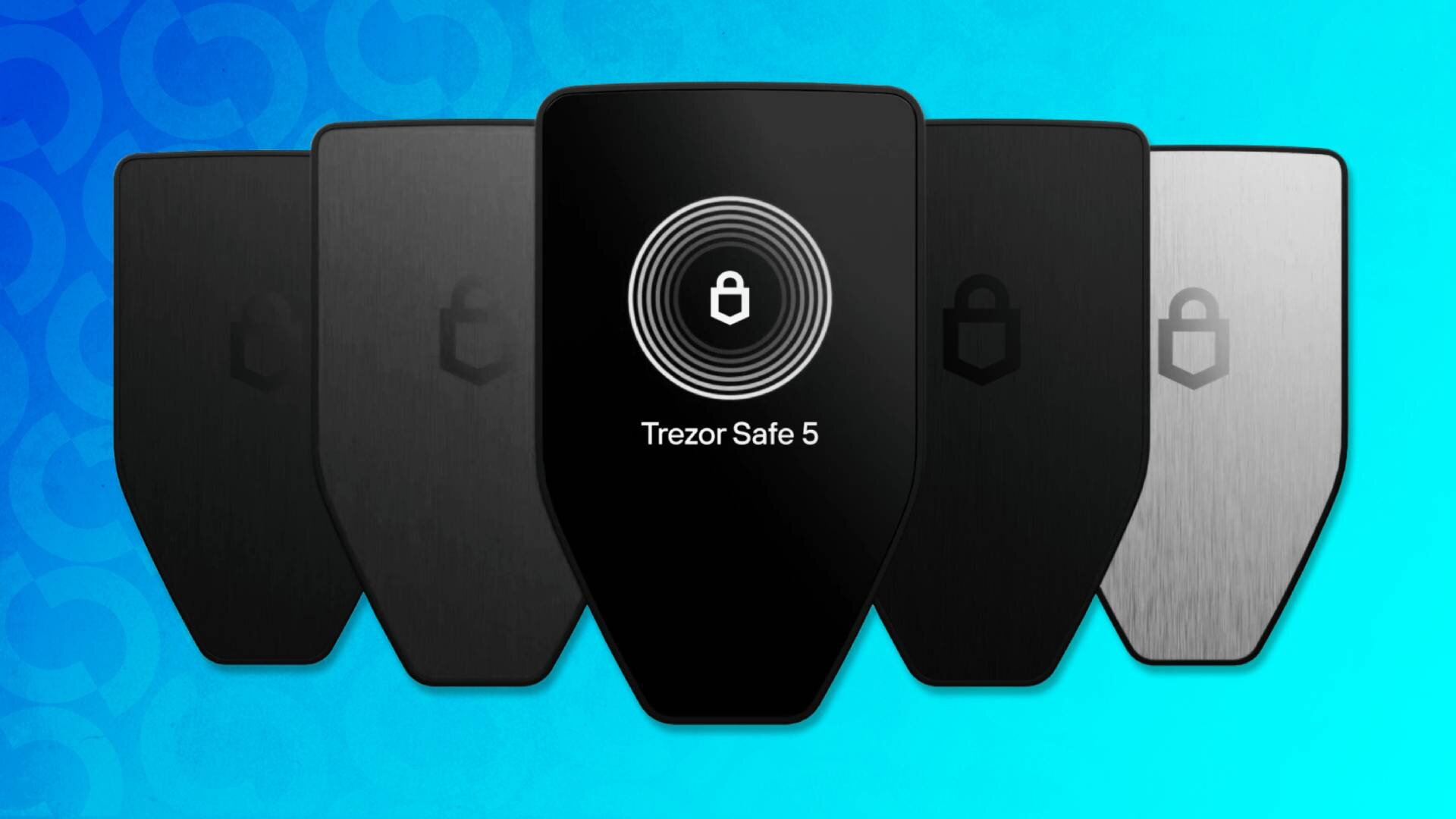
A buyer in Indonesia filed a report through Trezor's responsible disclosure program on October 28, 2026, describing a suspected hardware implant inside a Trezor Safe 5 purchased from the reseller CryptoBilis via Tokopedia back in August. Trezor announced the warning publicly two days later, on October 30, saying it had not yet received or examined the specific device but treats the report as credible enough to act on immediately rather than wait for confirmation.
The report describes an added circuit board sitting between the wallet's main board and its screen, fitted with a cellular module and antenna. That board reads whatever the screen displays, including the recovery phrase shown during setup, and transmits it over a mobile network each time the device is plugged in. Trezor says this appears to operate similarly to an LTE implant Ledger found in its own hardware, though it is not drawing a firm connection while both investigations continue.
The common thread is the reseller, not the hardware
What makes this incident different from a typical single vendor security flaw is that it points at the supply chain rather than the product itself. Trezor had already cut ties with CryptoBilis on October 9, three weeks before this specific implant report surfaced, after Ledger started investigating losses among customers who had bought their wallets through that exact same reseller. Two competing hardware wallet manufacturers, each running its own engineering, firmware and security review process independently of the other, ended up exposed through one shared distribution channel neither of them controlled directly.
That is the detail enterprise buyers of any hardware security product, tokens, keys, HSMs, signing devices, should sit with carefully. Attackers who want to intercept secrets at scale do not need to break a vendor's design or find a firmware flaw when they can instead compromise the last physical link in the chain between manufacturer and end user: a reseller, a fulfillment center, or a logistics partner that most enterprise procurement processes never formally vet the way they would vet a software vendor's security posture before signing a contract.
A three week gap between removal and public warning
Trezor removed CryptoBilis as a reseller on October 9 but did not publish a customer facing warning until October 30, after the specific implant report arrived through its disclosure program. Investigating a reseller relationship quietly while gathering evidence is often the genuinely responsible path, rather than a sign of negligence on Trezor's part, since premature public claims about an unconfirmed implant could have caused unnecessary panic. Even so, it means that for roughly three weeks, buyers who had purchased from CryptoBilis had no public signal that anything was wrong, even though the manufacturer already had enough reason for concern to end the relationship.
Any organization managing its own vendor risk program should read this timeline as a reminder that an internal decision to stop using a supplier is not automatically the same thing as notifying every customer already holding that supplier's product. The lag between knowing internally and disclosing publicly is a deliberate policy choice with real consequences for the people waiting on the other side of it, and it deserves exactly the same scrutiny a CISO would apply when reviewing a software vendor's own breach notification timeline during a vendor security assessment.
Four inspected devices with no tampering is not reassurance
Trezor says it inspected four other devices bought through CryptoBilis, one Safe 7, two Safe 5s, and one Safe 3, and found no evidence of tampering in any of them. On its face that sounds like reassuring news for the broader customer base. Read more carefully, it actually means something closer to the opposite: a hardware implant capable of transmitting a wallet's entire recovery phrase can coexist in the very same supply chain as units that pass a careful physical inspection cleanly, which points toward a targeted or sporadic compromise rather than a wholesale batch defect that a simple sampling exercise could catch.
That distinction changes the risk calculus substantially for anyone who bought from the same channel. A uniform batch flaw affecting every unit can be screened for reliably with one known test applied across a sample. A sporadic, targeted implant inserted somewhere along distribution cannot be ruled out by sampling a handful of units at all, which is exactly why Trezor's guidance treats every single CryptoBilis purchase as suspect by default, rather than waiting for a broader forensic sweep to clear the ones that look fine on first inspection.
What this means for anyone who issues hardware security devices
Trezor's advice to affected customers is unambiguous: move funds to a brand new wallet with a freshly generated recovery phrase as soon as possible, never reuse the old phrase on any device, and do not set up any CryptoBilis bought unit that has not already been activated. Customers can keep the physical device and request a replacement, but the recovery phrase itself is considered permanently burned the moment it may have passed through a compromised reseller's product.
For any enterprise that issues hardware security keys, tokens or signing devices to employees or holds crypto assets in cold storage, the lesson generalizes past wallets specifically. Procurement should treat reseller provenance as a formal vendor risk category, buying direct from the manufacturer or a vetted distributor wherever the device will touch a secret that cannot be rotated after the fact. A recovery phrase, like a root certificate's private key, has no equivalent of a password reset once it has left the building through the wrong hands.