A fulfillment process rebuilt down to five steps
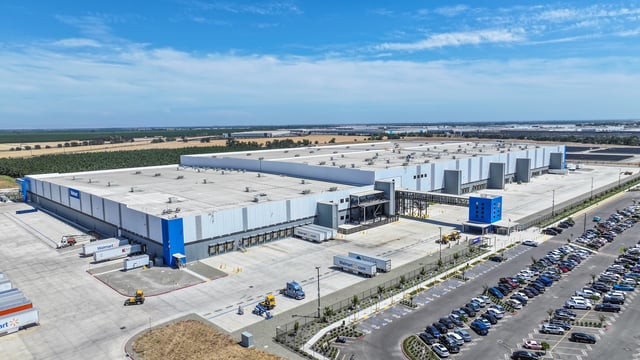
Walmart opened its fifth next-generation fulfillment center this week in Stockton, California, a 900,000-square-foot facility expected to create more than 1,000 jobs. The number worth sitting with is the process redesign underneath it: Walmart says the facility runs on five steps where its traditional fulfillment process ran on twelve. That represents a structural rebuild of how an order moves from inbound truck to outbound package, built around an automated storage and retrieval system developed with intelligent automation provider Knapp.
The mechanics are straightforward to describe and hard to execute at scale. Associates unload cases onto conveyors and break them into totes. An automated system with shuttles moves those totes into a custom-built, floor-to-ceiling storage structure, then retrieves and delivers them to picking stations on demand. Custom-sized boxes get built for each order, with associates able to pack up to four orders simultaneously. Packages are then automatically taped, labeled, and routed to the right shipping zone. Walmart says the result is orders shipping in under 30 minutes of a customer clicking buy.
The labor story is the real headline
Buried in the operational detail is a labor statistic that matters more to any CTO evaluating a similar build: associates previously walked up to nine miles a day picking items under Walmart's traditional process. The automated shuttle system eliminates that walk by bringing inventory to the picker instead of sending the picker to the inventory. That is the actual ROI case for this class of automation, fewer non-value-add steps per worker-hour, not headcount reduction. Karisa Sprague, Walmart U.S. senior VP of fulfillment operations, described Stockton as proof that the company is people-led and tech-powered, a framing that puts the labor productivity gain, not labor replacement, at the center of the pitch.
That framing is worth taking seriously rather than dismissing as corporate messaging. Walmart has opened five of these centers since the first went live in Joliet, Illinois in summer 2022, with sites also in McCordsville, Indiana, Lancaster, Texas, and Greencastle, Pennsylvania. Five deployments over four years is a slow, deliberate cadence for a company with Walmart's capital base, which suggests each site is generating enough operational learning to justify refining the design before committing to the next one rather than rolling out a finished blueprint at speed.
95% coverage is the actual business case
Walmart frames the entire next-generation network, now five sites plus a 1.5 million-square-foot automated facility announced for Georgia in August, around a single coverage target: reaching 95% of the U.S. population with next- or two-day shipping, using a base of 4,700 stores and 210 distribution centers. That coverage number is the real competitive pressure point behind the automation technology. Amazon's delivery speed advantage has been the single hardest thing for any competitor to match, and Walmart's answer leans on capital-intensive regional density rather than algorithmic routing or last-mile partnerships alone.
Third-party sellers get pulled into that density play too. Walmart Fulfillment Services will use the Stockton facility's capacity for Marketplace items, so sellers who never touch Walmart's technology stack directly still benefit from the same five-step automated process. For a CTO at a mid-size retailer competing against Walmart's marketplace, that is the part of this announcement worth watching closely: Walmart is extending that speed advantage to any seller willing to pay for access to it, widening the delivery gap smaller platforms have to close.
The vendor landscape is wider than the usual names
Knapp is not a household name next to Amazon Robotics or Symbotic, and Walmart's willingness to build a flagship facility on an automation provider most retail CTOs have not evaluated says something about how fragmented and fast-moving the warehouse automation vendor landscape has become. Walmart has run five of these deployments since the first opened in Joliet, Illinois in summer 2022, with sites also in McCordsville, Indiana, Lancaster, Texas, and Greencastle, Pennsylvania, and has stuck with the same automation partner across all of them rather than shopping the market site by site.
That consistency is itself a signal worth reading. A company with Walmart's capital base and leverage over vendors chose to deepen one partnership across five facilities rather than run competitive pilots at each site. For technology leaders building a shortlist for a 2027 automation RFP, the lesson is that proven integration depth with one partner can beat chasing marginal feature advantages across several, provided the first deployment actually works as designed.
What this means for anyone building a fulfillment roadmap
The real lesson for retail technology leaders evaluating their own automation spend sits in the sequencing. Walmart redesigned the fulfillment process first and built the facility around that redesign, rather than bolting shuttles and conveyors onto an unchanged twelve-step workflow. Retrofitting automation into an unchanged workflow is the most common way these projects underdeliver, because the software and robotics end up automating inefficiency instead of removing it. Any fulfillment automation business case should start with the process map before the vendor RFP goes out.
The second lesson is about pace and proof. Walmart took four years and five sites to get a repeatable design it trusts enough to keep scaling, with a sixth large automated facility already under way in Georgia. Few retailers have Walmart's balance sheet to fund that long a learning curve, which argues for smaller pilot footprints that still force the same process-first discipline: redesign the picking and packing flow on paper, validate it against real order volume at one site, and only then commit capital to a network-wide rollout.