An operations background in a technology title
Prabash Coswatte's most recent role before Trader Joe's was chief operating officer at Heritage Grocers Group, where he was responsible for both store operations and IT simultaneously. That dual mandate is unusual for someone about to step into a pure CIO seat, and it is almost certainly the point of the hire rather than an incidental detail in his resume.
Grocery retail is a business where the technology stack and the operational floor are harder to separate than in almost any other retail category. Point-of-sale uptime, inventory accuracy, and perishable supply chain visibility are simultaneously operations problems and systems problems, and a CIO who has already run both sides at a comparable chain arrives with fewer translation gaps between the technology roadmap and what actually happens in a store on a Saturday morning.
A career built entirely inside grocery
Coswatte's path to Trader Joe's runs through a sequence of grocery-specific roles rather than a broader retail or technology consulting background. He was CIO at Cardenas Markets starting in 2019, held a comparable role at Vallarta Supermarkets, and earlier served as VP of enterprise program management at 99 Cents Only Stores. Each of those chains operates in a similar value and specialty grocery segment, which means Coswatte is arriving at Trader Joe's with direct, repeated exposure to the specific operational patterns of that category.
That kind of narrow, deep industry specialization is a deliberate hiring choice, not a limitation. A CIO who has solved the same category of inventory, checkout, and supply chain problems at three prior grocery chains brings pattern recognition that a generalist retail technology executive would need months to build from scratch.
Why the timing lines up with store expansion
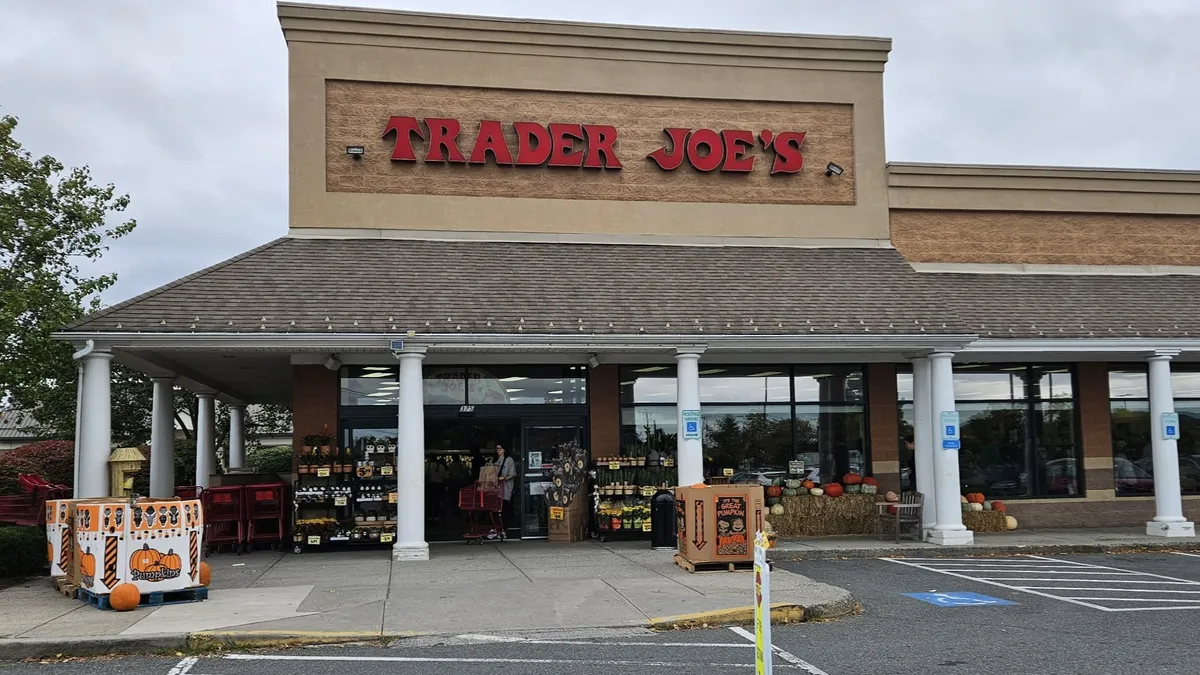
Trader Joe's is accelerating its physical footprint, with more than 20 new stores planned for 2026 after 43 openings in 2025 and 34 in 2024. Each new store opening is itself a systems rollout event: point-of-sale deployment, inventory system onboarding, network connectivity, and staff training on store technology all have to happen on a fixed timeline tied to a lease and a grand opening date.
A CIO with direct operational experience is a better fit for that cadence than one coming from a pure enterprise architecture background, because store rollout problems tend to surface as operational friction before they show up as a formal systems ticket. Coswatte's history of owning both sides of that equation at Heritage Grocers Group suggests Trader Joe's wants someone who will catch rollout problems at the operational layer rather than waiting for them to escalate through a help desk.
What is notably absent from the announcement
Unlike many executive appointment announcements, the public reporting on this hire does not include a direct quote from Coswatte or from Trader Joe's leadership about the strategic rationale. That is consistent with Trader Joe's famously low-key, press-averse corporate culture, which tends to avoid the kind of expansive executive-transition messaging that most public companies issue as a matter of course.
For an enterprise technology audience used to CIO announcements packaged with a stated AI strategy or digital transformation narrative, the quiet framing here is itself informative. It suggests Trader Joe's views this hire as an operational necessity tied to store growth rather than a strategic repositioning the company wants to narrate publicly.
The broader signal for grocery and specialty retail CIOs
Coswatte's hire reflects a pattern increasingly visible across grocery and specialty retail: chains are prioritizing CIOs with direct operational grocery experience over candidates with broader but shallower retail technology backgrounds, particularly during periods of rapid store count growth. The technology problems at a fast-expanding grocery chain are specific enough that domain depth appears to be winning out over generalist technology leadership credentials.
For other retail categories watching this trend, the lesson is less about grocery specifically and more about matching CIO hiring criteria to the actual operational tempo a business is running. A chain opening 20-plus stores a year needs a different kind of CIO than one focused on e-commerce platform modernization, and Trader Joe's hire is a clean example of hiring for the tempo rather than for a generic technology leadership profile.