What Texas just froze
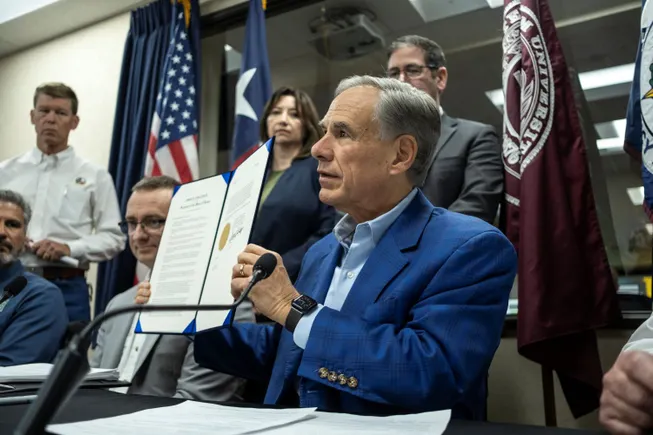
Texas Governor Greg Abbott called for a comprehensive audit of every data center sitting in the Electric Reliability Council of Texas interconnection queue, and ERCOT responded by delaying its Batch Zero transmission planning review, the process that decides which large loads get grid access and when. Abbott said the queue's scale, roughly 474 gigawatts of requests, is more than five times Texas' record peak electricity demand for the entire ERCOT grid. Data centers make up close to 90 percent of that number.
The audit covers three specific questions: whether each data center brings its own power or plans to lean on ERCOT, how much water it will consume and what that means for surrounding communities, and how much financial assistance it has received from state and local governments. Law firm Troutman Pepper Locke characterized the pause as a delay of indeterminate duration and is telling clients with projects in the queue to reassess viability and timelines now rather than wait for clarity that may not arrive on a predictable schedule.
A federal deadline is landing at nearly the same moment
Separately, and not because of Texas, the Federal Energy Regulatory Commission unanimously ordered six major grid operators, PJM Interconnection, MISO, the Southwest Power Pool, CAISO, ISO New England, and NYISO, to accelerate how they connect AI data centers to the grid. Those operators must file revised interconnection rules, or a formal justification for keeping existing ones, within a 60 day window that lands around August 17. ERCOT itself is excluded from the order because Texas runs its own grid outside FERC's direct jurisdiction, which is exactly why Abbott's audit and the FERC deadline are two separate stories that happen to be converging on the same week.
The order requires grid operators to address spare generating capacity, how they manage ballooning interconnection queues, and how they prevent the cost of new data center connections from shifting onto residential ratepayers. S&P Global's 451 Research projects US data center power demand climbing from 75.8 gigawatts in 2026 to 134.4 gigawatts by 2030, a gap of roughly 58.6 gigawatts that grid operators are now under direct federal pressure to plan for on a fixed timeline.
Why regulators are moving now, not later
Grid operators and state governments are reacting to the same underlying pressure from two different directions. FERC's order responds to systemic queue congestion and the political risk of data center power costs landing on residential bills, a concern regulators across multiple states have raised publicly. Texas's audit responds to something more local and more political: a queue so large it dwarfs the state's entire historical peak demand, raising legitimate questions about whether ERCOT can plan reliably around numbers that may include speculative or duplicate requests that will never actually get built.
New York set the precedent six weeks earlier with a data center approval moratorium that can run up to a year, giving state regulators room to rewrite the rules before approving new large loads. Two major markets pausing within six weeks of each other, for related but distinct reasons, suggests state and federal regulators are no longer content to let interconnection queues grow unchecked while they figure out the rules retroactively.
The hyperscalers already saw this coming
Major cloud providers have spent the past two years securing power outside standard interconnection queues precisely because they anticipated bottlenecks like this one. Microsoft locked in 835 megawatts from the Three Mile Island restart. AWS holds agreements totaling 1,920 megawatts through Talen Energy. Meta secured 1,100 megawatts from the Clinton, Illinois nuclear plant. Google Cloud has no comparable public commitment on record, which may leave it more exposed to the queue delays than its three largest rivals if Texas or FERC jurisdiction capacity tightens further in the months ahead.
The gap between hyperscalers who locked in dedicated power years ago and those still working through standard interconnection queues is about to become a visible competitive variable in vendor selection conversations. Enterprises picking a cloud region for a new AI workload now have a genuine reason to ask a vendor directly how its power supply for that specific region is contracted, not just what capacity is nominally available today. A vendor with dedicated nuclear or long term power purchase agreements behind a region can credibly promise stability that one still leaning on a standard interconnection queue currently cannot.
What this means for the reader's own roadmap
If your roadmap depends on a specific cloud region reaching capacity on a specific timeline, that plan just got less certain in two of the country's largest grid footprints. Texas alone hosts a meaningful share of hyperscaler and colocation capacity, and an audit of indeterminate duration is not something a vendor's stated availability date can paper over. Ask your account team directly whether a given region's expansion plans sit inside the ERCOT queue or a FERC jurisdiction queue affected by the August deadline, and get that answer in writing before you commit budget against it.
The broader lesson for infrastructure planning is that power, now the binding constraint regulators are actively managing in public, will show up in your vendor's capacity commitments before it shows up in a press release. Build a six to twelve month buffer into any plan that assumes new regional capacity coming online in Texas or a FERC jurisdiction state, and treat vendor capacity assurances in those markets as provisional until the audits and rule filings resolve. The vendors who locked in dedicated power years ago are the ones best positioned to hold their published timelines, and that is now a legitimate factor in choosing where new AI workloads get placed.


