What Target actually shipped
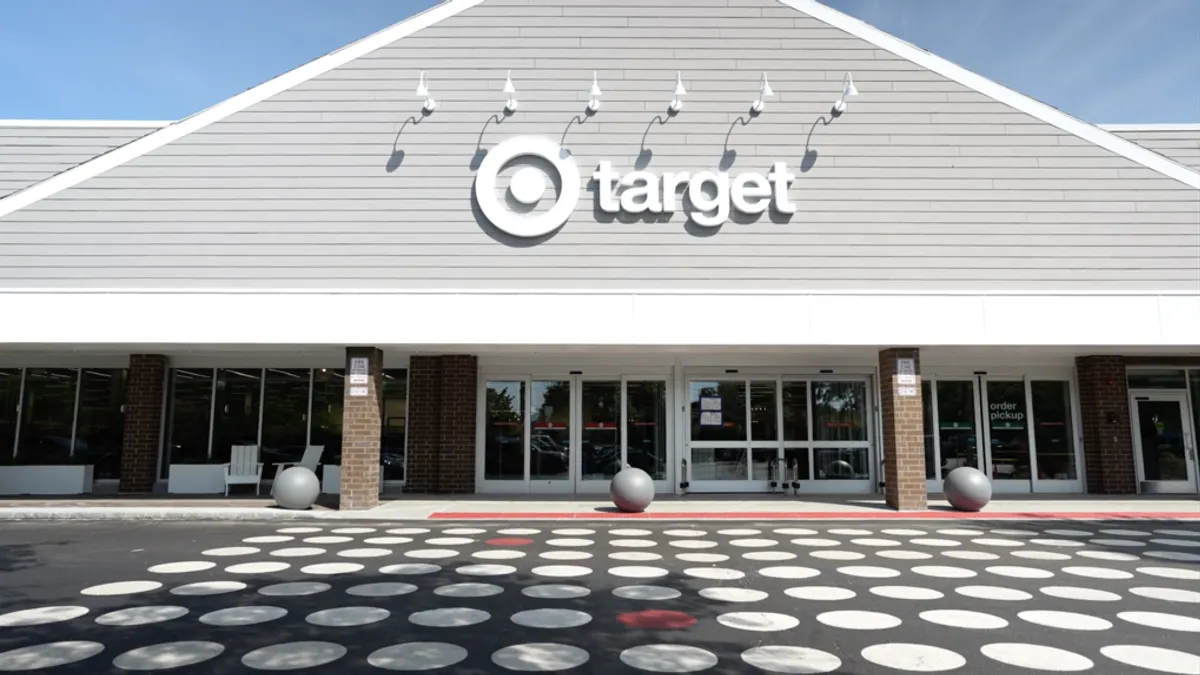
Target announced an upgraded version of myDay, its store operations app for employees, in a post published Wednesday, October 14. The company says it gathered input from employees across 50 stores to identify workflow problems before building the update, rather than designing it top-down from a corporate roadmap. The refreshed app now groups similar tasks together and ranks an employee's to-do list by urgency and business value, replacing what had previously been a flatter, less prioritized task list that left workers guessing which job mattered most in a given shift.
Two other features stand out. myDay Leader View gives team leaders a personalized home screen showing store updates and resources, with the ability to pin metrics specific to their role, such as shelf-stocking data or pickup-order fulfillment performance. Scan to Divert helps employees decide, at the moment they scan a newly arrived product, whether it belongs on the shelf immediately or should stay in the backroom, based on real-time demand and available space rather than a fixed default rule.
The number that matters more than the features
Target attached a figure to Scan to Divert specifically: the company says the feature has contributed 25 million dollars in value that can be reinvested in the guest experience and store operations. That is a concrete, dollar-denominated return tied to a single operational workflow change, which is a different kind of claim than the usual retail AI announcement that promises efficiency without quantifying it. Target's disclosure leaves the composition of that figure unclear, whether it comes from reduced labor hours, fewer out-of-stocks, lower shrink, or some blend of the three, though the willingness to name a number at all, in a sector where most AI claims stay vague, is itself notable.
It also tells you where Target believes the near-term payoff actually sits. A 25 million dollar return from a backroom logistics decision is a more defensible capital allocation story to a board than a speculative bet on a customer-facing assistant whose ROI is harder to isolate. For a retailer mid-turnaround, that kind of measurable, attributable number is exactly the evidence an investment committee wants before approving the next phase of spend, and it sets a concrete bar that the company's future AI investments will likely be measured against internally, whether or not Target ever publishes the comparison.
Where the AI actually comes in
Target says upcoming updates to myDay will add AI-enabled insights, the ability to assign tasks automatically, and shared handoff notes between shifts, though the company has given no further detail on how those AI capabilities will work or what model or vendor sits behind them. That vagueness is worth noting without reading too much into it. Retailers announcing store-ops AI tends to lag the detail retailers give about customer-facing AI, partly because back-of-house tooling rarely needs a press moment the way a flashy chatbot does.
What is already clear is the shape of the intended use case: AI applied to prioritization and coordination problems that store managers currently solve with experience and guesswork, rather than AI applied to generating content or holding a conversation with a shopper. That is a narrower, more mundane application than most of what gets marketed under the retail AI banner, and it is also the category of application most likely to produce a number like the one attached to Scan to Divert. Retailers chasing headline-grabbing generative features while skipping this layer are solving a less valuable problem first, and the order matters more than either individual feature.
The turnaround context behind the timing
This upgrade did not happen in isolation. CEO Michael Fiddelke has directed Target's turnaround toward store experience, in-stock levels, and digital fulfillment over the past several quarters, and leadership has repeatedly flagged in-stock performance as an area under close watch. On the company's second-quarter earnings call in August, COO Lisa Roath pointed to back-to-school in-stock positioning specifically as an area of improvement the company was proud of, which signals that operational execution, not merchandising or marketing, is where Target's leadership believes the turnaround will be won or lost.
A store operations app will never be the visible proof point a retailer wants when convincing Wall Street and shoppers that its problems are solved. In-stock rate, labor efficiency, and shrink are nonetheless exactly the metrics that an app like myDay can move directly, and they are also the metrics that show up in same-store sales and margin well before any customer ever notices a change in the shopping experience itself. By the time a turnaround becomes visible on the sales floor, the operational work that made it possible has usually been running quietly for several quarters already.
What this means for your retail tech roadmap
The lesson for other retail CTOs is not that customer-facing AI is a bad investment. It is that the fastest, most measurable returns right now are concentrated in employee-facing operations tooling, where the problem is well understood, the data already exists inside existing systems, and the success metric is a number finance already tracks. That is a far easier environment to ship against and prove value in than a customer chat experience where success criteria are still being invented across the industry in real time.
Target gathering input from 50 stores before building, rather than building first and rolling out after, is itself a process worth copying regardless of the technology involved. If your retail AI roadmap for next year does not include a back-of-house workflow tool with a dollar figure attached to it, Target's 25 million dollar number is a reasonable benchmark to measure your own pipeline against before chasing a flashier, harder-to-attribute customer-facing project instead.