SIS names a scale-and-AI CTO for surgery center software
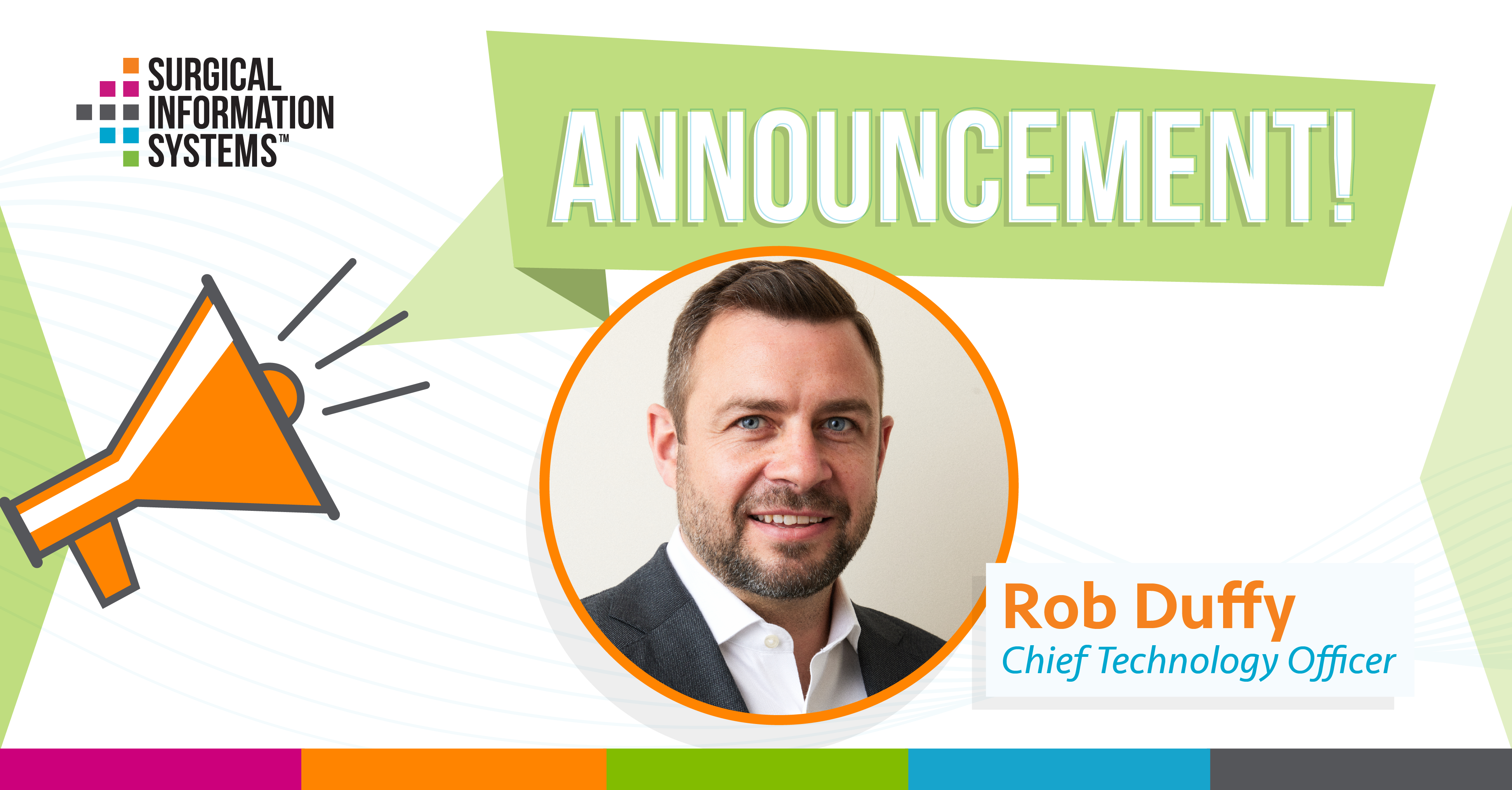
Surgical Information Systems has named Rob Duffy as its chief technology officer, putting a leader with deep consumer and healthcare platform experience in charge of technology advancement, AI strategy, and platform scaling. The company announced the appointment on 15 July. SIS, based in Alpharetta, Georgia, has spent 30 years building software and services for ambulatory surgery centers, the standalone facilities where a growing share of outpatient procedures now happen. The company serves more than 2,900 surgical facilities and has been ranked the top ASC electronic health record vendor by Black Book for 11 consecutive years, a position that gives it both scale and a reputation to defend.
The hire reads as a deliberate move to modernise a category leader. Chief executive Tim O'Brien tied the appointment to capability, saying 'Rob's deep experience in AI, software, and healthcare makes him an exceptional addition to our team.' For a vendor that already leads its niche, the risk is complacency, and outpatient surgery is a segment where hospitals, private equity, and technology vendors are all pushing to capture more volume. Bringing in a CTO whose brief explicitly names AI strategy and platform scaling signals that SIS intends to keep investing in the core rather than defending its lead with the systems that earned it.
A resume built on consumer and healthcare platforms
Duffy arrives from a career that crosses healthcare and large consumer technology. He has held senior leadership roles at HealthEdge, Drizly, the Uber-owned e-commerce company, Expedia Group, Salesforce, and Amazon. That combination is unusual and useful. Healthcare software teams often lack the consumer-grade engineering discipline that companies like Expedia and Amazon drill into their platforms, and clinical vendors that borrow those practices tend to ship more reliable and more usable systems. Duffy has worked on both sides, which positions him to bring commercial platform rigour to a clinical product without losing the domain nuance that surgery center software demands.
Duffy framed his motivation around the mission. 'SIS has earned a strong reputation as a trusted partner to ambulatory surgery centers, and I'm excited to help shape the future of technology for ASCs,' he said. He also pointed to the appeal of the problem itself, describing the chance to combine technology, AI, and deep industry expertise to solve meaningful challenges as compelling. For buyers, the cross-industry background is a credible signal. A CTO who has scaled transaction-heavy consumer platforms understands uptime, data pipelines, and release discipline, and those are the exact capabilities a surgery center depends on when its schedule and billing run through a single system.
The AI mandate for ambulatory surgery centers
AI is written directly into Duffy's remit. SIS said he will expand its AI strategy alongside advancing the platform, and the company has already put AI into production with an assisted transcription product for clinical documentation. Surgery centers are a promising place for practical automation because the workflows are repetitive and the documentation burden is heavy. Scheduling, coding, clinical notes, and revenue cycle work all follow patterns that models can assist, and every minute saved on paperwork is a minute a clinician can spend on care. The constraint, as always in healthcare, is accuracy and auditability, because a coding or documentation error carries clinical and financial consequences.
This is where Duffy's mandate gets serious. Expanding an AI strategy in a clinical setting means deciding where automation is allowed to act and where it only assists a human. Revenue cycle services, which SIS provides alongside its software, are a natural target because coding and claims work is high-volume and rules-driven. Getting it right lifts collections and cuts denials for surgery centers that run on thin margins. Getting it wrong invites compliance exposure and payer disputes. A CTO with genuine AI and healthcare experience is the right profile to walk that line, and buyers should press SIS on how its models are validated and monitored in production.
Why the ASC niche is a real moat
Ambulatory surgery centers are a distinct market with distinct software needs, and that specificity is part of what protects SIS. General hospital IT vendors struggle to serve ASCs well because the facilities are smaller, faster-moving, and run on different economics than large hospital systems. SIS has built 30 years of domain depth and an EHR that Black Book's customers rank first in the category. That focus is a moat, because a competitor cannot replicate three decades of surgery center workflow knowledge quickly. The risk to any niche leader is that the moat breeds caution, and a new CTO is often the mechanism a board uses to push a category leader to keep innovating.
The outpatient surgery market is also growing, which raises the value of that moat. As payers and providers move more procedures out of expensive hospital settings and into ASCs, the software that runs those facilities becomes more strategically important. SIS is positioning to ride that shift, and a technology chief tasked with scaling the platform is a direct response to expected volume. For technology leaders in any vertical software business, the pattern is familiar. A durable niche plus a growing market is the moment to invest in engineering leadership, because that is when demand outruns the systems that got you here.
What healthcare software buyers should watch
For surgery centers evaluating or renewing with SIS, the CTO change is a reason to ask sharper questions. Duffy's arrival signals investment, and buyers should translate that into specifics. What will the AI roadmap deliver in the next year, how will documentation and coding tools be validated, and how quickly will the platform scale to handle rising case volume? A vendor that has named a credible technology leader should be able to answer those questions concretely. The Black Book ranking is a useful proxy for satisfaction, and it is not a substitute for a clear roadmap that a buyer can hold the vendor against.
There is a reliability angle that matters even more in clinical settings than in commerce. A surgery center that cannot reach its schedule, records, or billing system loses money and disrupts patient care. Duffy's consumer-platform background is reassuring here because uptime engineering is a core discipline at companies like Amazon and Expedia. Buyers should ask about historical system availability and incident response, and weigh those answers as heavily as feature lists. The proof of this hire will be in measured reliability and the pace of genuinely useful AI features.
The read for technology leaders
Stripped down, this is a vertical software leader investing to protect and extend a strong position. SIS has scale, a top category ranking, and a growing market, and it has hired a CTO whose brief pairs platform scaling with AI. Those are the right priorities for a company that wants to stay ahead rather than defend a lead with ageing systems. The cross-industry resume is the distinctive feature, because a leader who has run consumer platforms at scale brings engineering habits that many healthcare vendors lack. The open question is execution inside a regulated, safety-critical domain.
If you run technology in vertical SaaS, the SIS hire is a useful reference point. The company chose a leader who combines domain relevance with big-platform engineering discipline, which is the pairing that hard-to-serve niches increasingly demand. Deep vertical knowledge and modern platform practice are both required, and the vendors who fuse them will pull ahead in specialised markets. Watch what SIS ships over the next few quarters in AI-assisted documentation and revenue cycle work. That output will tell you whether Duffy's mandate becomes real capability or stays a line in a press release.