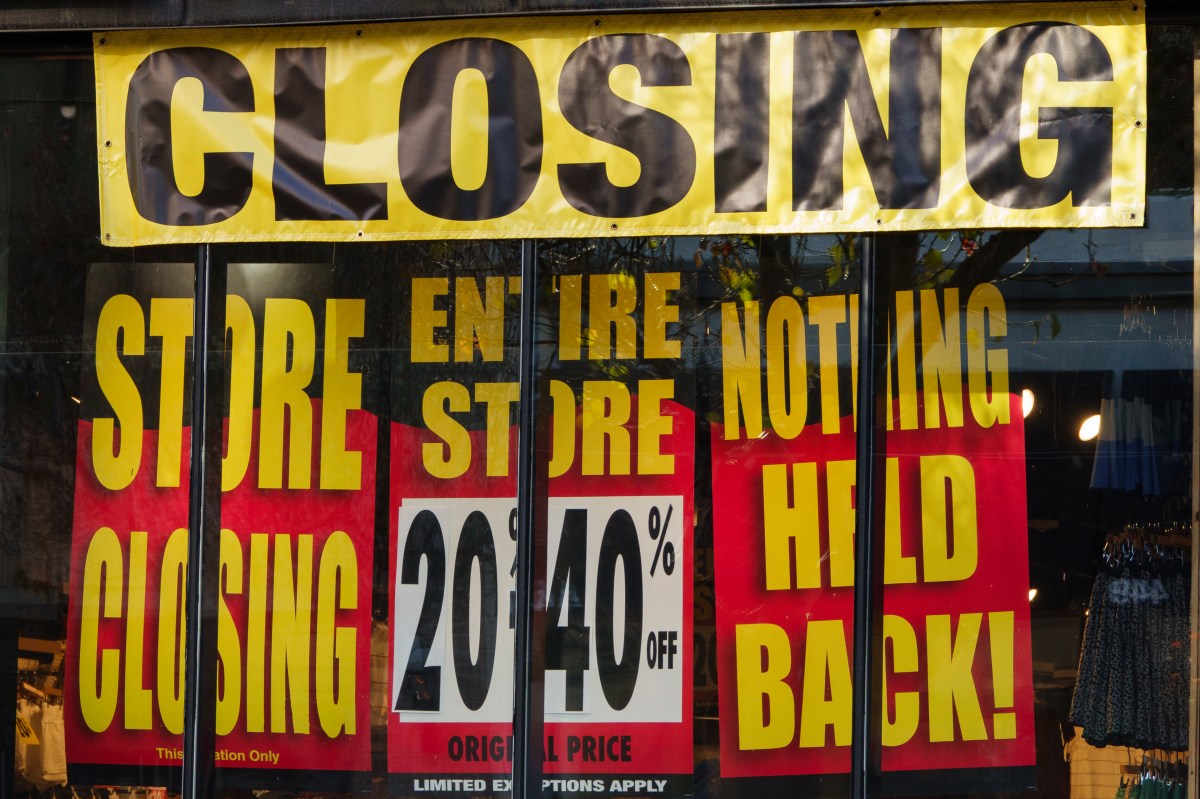
The closure count is down sharply, not up
Coresight Research tracked approximately 3,321 US store closures in the first half of 2026, a figure down more than 40 percent from the same period a year earlier. That data point cuts directly against the recurring seasonal narrative of a widespread retail collapse, which tends to resurface every fall when a handful of high-profile closures get bundled together into a single alarming headline regardless of the underlying trend.
The more accurate framing, per Coresight's own analysis, is that most of this year's closures represent targeted portfolio decisions rather than a sector-wide retreat. Retailers are attributing closures to a consistent set of causes: portfolio restructuring toward better-performing locations, rising operating costs that make marginal stores unprofitable, changing shopping habits that reduce foot traffic at specific store types, and continued e-commerce competition eating into categories that used to depend on physical browsing.
Macy's is cutting the long tail while investing in the top
Macy's plans to close roughly 150 underperforming stores by the end of 2026 as part of its 'A Bold New Chapter' turnaround plan, with dozens of those closures already completed. The company is explicitly redirecting the capital and management attention freed up by those closures toward its higher-performing stores and its luxury brands, a barbell strategy that treats the closures as a funding mechanism for investment elsewhere rather than simply a cost-cutting measure in isolation.
That distinction matters for how other retailers should read this move. A chain closing stores purely to cut costs is a different signal than a chain closing its weakest quartile specifically to fund stronger performance at the remaining locations, and Macy's framing places it firmly in the second category, a strategy that depends on correctly identifying which stores are genuinely unsalvageable versus merely underperforming in a way more investment could fix.
Starbucks ties closures directly to experience quality, not just real estate economics
Starbucks is closing about 250 underperforming North American cafes as part of its own turnaround, and the company's stated rationale is notably specific: these are locations where it concluded it could not deliver the intended customer and partner experience or reach acceptable financial performance. Tying the closure criteria explicitly to experience quality, not purely to a real estate cost calculation, signals that Starbucks is treating store closures as connected to its broader operational turnaround rather than as an isolated cost-reduction exercise.
For any multi-location retailer or restaurant chain evaluating its own underperforming footprint, Starbucks' framing offers a useful diagnostic question beyond simple profitability: is a given location's underperformance a symptom of a real estate or demand problem that closure genuinely solves, or a symptom of an operational problem that closing the location only masks without addressing the underlying cause that could resurface at other locations.
Kroger and Walgreens show two different paces of the same strategy
Kroger is closing 60 stores across several states by the end of 2026, with several of those closures scheduled for this fall specifically, and the company expects only a modest financial benefit from the closures while offering displaced employees roles at its other locations. That modest expected benefit is itself informative: Kroger is not framing these closures as a major financial turnaround lever, which suggests the decision is driven more by store-specific underperformance than by any broader strategic pivot.
Walgreens offers the clearest contrast in pacing. The company closed fewer than 100 stores in fiscal 2026, a significant slowdown from its earlier plan to close up to 1,200 locations over several years, while simultaneously opening six new locations. Walgreens says it is now prioritizing cash-flow-negative stores, underperforming owned locations specifically, and leases coming up for renewal soon, a more surgical and slower-moving approach than the scale of its original closure plan might have suggested to anyone tracking only the headline number from when that plan was first announced.
What this means for reading retail closure headlines generally
The consistent thread across Macy's, Starbucks, Kroger, and Walgreens is that each company is closing a specific, bounded, and explained subset of its footprint rather than retreating from physical retail broadly, and the aggregate Coresight data showing closures down more than 40 percent year over year supports reading these announcements individually rather than as evidence of a sector-wide trend. A retailer or investor evaluating any single closure announcement should ask the same questions these four companies answered: is the stated rationale tied to specific, measurable underperformance, and does the company frame the closures as funding something else or merely as a standalone cut.
For competitors operating in the same categories as these four chains, store closures by a competitor are also an opportunity signal worth evaluating directly: specific trade areas losing a Macy's, Starbucks, Kroger, or Walgreens location represent freed-up customer demand and foot traffic that a well-positioned nearby competitor can capture, provided they move quickly enough to establish themselves before customers' shopping habits in that trade area fully reset around whichever option remains most convenient.