The Pitch Is a Deadline, Not a Feature
Salesforce used its June 24 Agentforce Commerce announcement to do something software vendors rarely do this plainly: it set a clock. The company rolled the Shopper Agent, Buyer Agent and Merchant Agent toward general availability and told retailers that the window to act is this season, not next. Nitin Mangtani, EVP and GM of Agentforce Commerce, put it directly when he said the brands that win will have their Shopper Agent live on their own properties for the 2026 shopping season. That is not a roadmap. It is a warning dressed as a product launch.
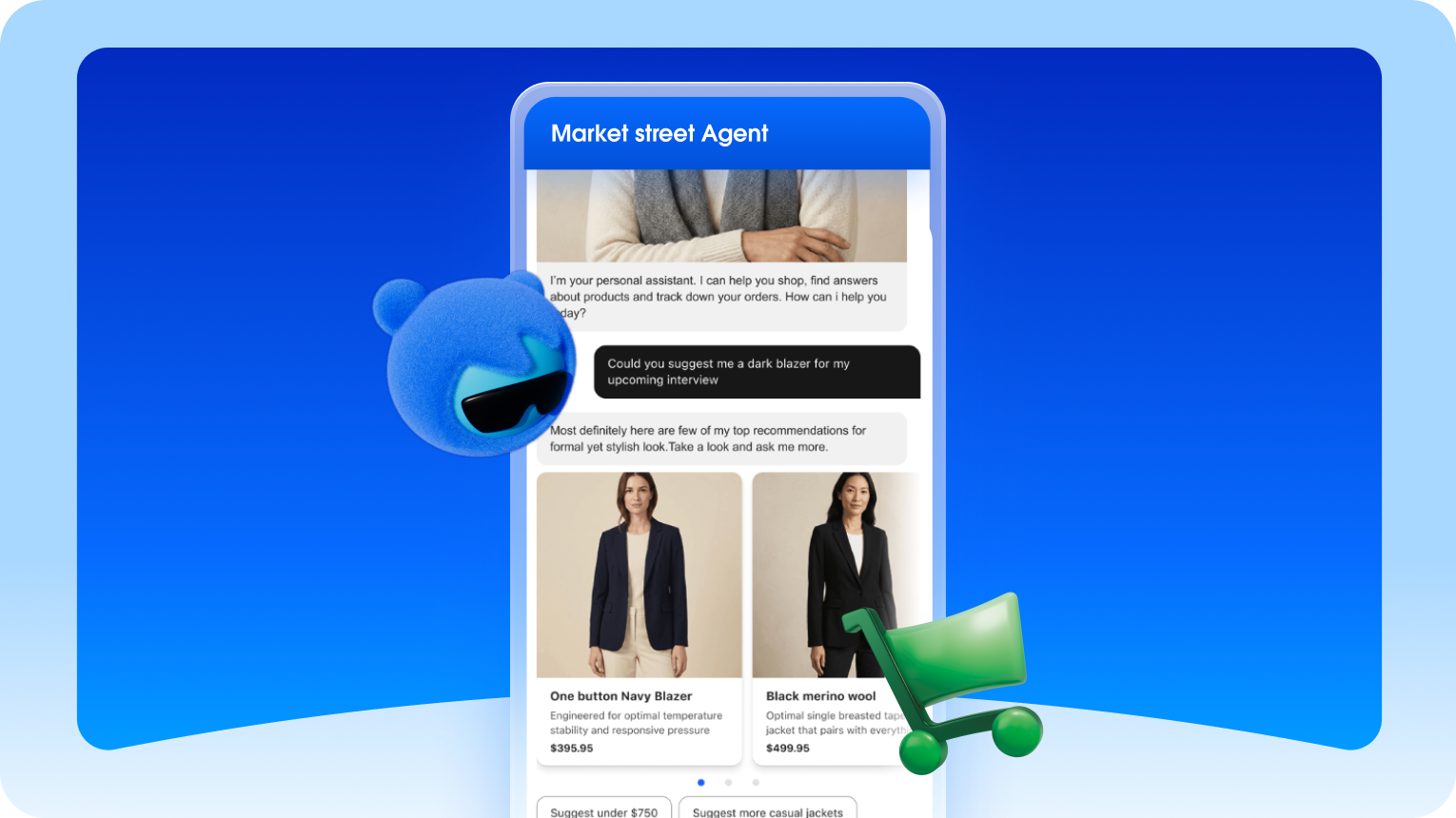
We read the urgency as genuine rather than manufactured. The Shopper Agent is designed to carry a single conversation from discovery through checkout and into post-purchase service, speaking in the retailer's own voice on the retailer's own storefront. The Merchant Agent works the back office, where Salesforce claims up to an 88 percent reduction in time spent on manual merchandising tasks. The framing matters: this is less about adding a chatbot and more about deciding who owns the moment of purchase intent before someone else does.
The Numbers Salesforce Wants CIOs to Remember
The headline statistic is that retailers running their own shopper agents grew sales 59 percent faster than retailers still on the sidelines. Salesforce pairs that with a market-sizing claim that AI influenced roughly 20 percent of global online sales last holiday season, worth about 262 billion dollars. Early adopters, the company says, are reporting double-digit improvements in both conversion and add-to-cart rates. Taken together, these figures are meant to convert agentic commerce from a 2025 talking point into a 2026 line item.
We treat vendor-sourced performance figures with the usual caution, because a 59 percent growth gap almost certainly reflects which retailers were sophisticated enough to deploy early as much as it reflects the agent itself. Correlation is doing real work here. Still, even discounted, the direction is hard to dismiss. When AI-referred traffic converts at a meaningfully higher rate than social, the cost of waiting compounds quarter over quarter, and that is precisely the dynamic Salesforce is selling against.
Why The ChatGPT and Google Integrations Are The Real Story
Buried under the GA news is the more consequential detail: Salesforce is wiring Agentforce Commerce into ChatGPT and Google Search, with the integrations arriving this summer. That changes the calculus. A Shopper Agent confined to a brand's own site is a better website search bar. A Shopper Agent that can transact inside the assistants where consumers now begin their journeys is a distribution channel. The distinction is everything for an executive deciding where to spend the next infrastructure dollar.
This is also where the tension lives. By plugging into ChatGPT and Google, Salesforce is helping retailers meet customers on third-party surfaces while simultaneously arguing they must own the agent on their own storefront. Both can be true, but they pull in opposite directions. Every transaction completed inside a general-purpose assistant is a transaction where the retailer learns a little less about its own customer. The owned-agent pitch is partly a hedge against exactly that erosion of first-party relationship.
The Merchant Agent Is The Quiet Workhorse
Consumer-facing agents get the attention, but the Merchant Agent may be the more defensible investment. Merchandising, catalog enrichment, promotion setup and content generation are the unglamorous tasks that absorb headcount and slow time-to-market. An 88 percent reduction in manual effort, if it holds at scale, is the kind of operating-leverage story that survives a CFO review even when the consumer agent is still being debated. It also happens to be lower risk, since it touches internal workflows rather than live customer money.
We would advise enterprise buyers to sequence accordingly. The Merchant Agent can prove the platform internally, build governance muscle and generate the structured product data that any customer-facing agent depends on to avoid hallucinating prices or availability. A Shopper Agent is only as trustworthy as the catalog behind it. Retailers that rush the consumer agent without fixing data quality first will discover that an agent confidently quoting wrong inventory is worse than no agent at all.
What This Means For Enterprise Buyers
For CIOs and CTOs, the Agentforce Commerce release crystallizes a decision that has been looming all year: build, buy or rent the shopping agent. Salesforce is betting that incumbents would rather extend an existing commerce cloud than stand up agentic infrastructure from scratch, and for shops already deep in the Salesforce stack, that bet is reasonable. The composable licensing that brings the Shopper Agent and agentic search to all customers lowers the barrier to a pilot, which is how most of these programs will actually start.
Our read is that the season-by-season urgency is the part to take seriously, even if the specific percentages are not. Agentic commerce is moving from recommendation to execution, and the surfaces where purchases complete are consolidating around a few large assistants. Retailers that treat their owned agent as a 2027 project risk arriving after their customers have already formed the habit of buying somewhere else. The technology is now the easy part. The governance, the data hygiene and the org design are where this gets hard.