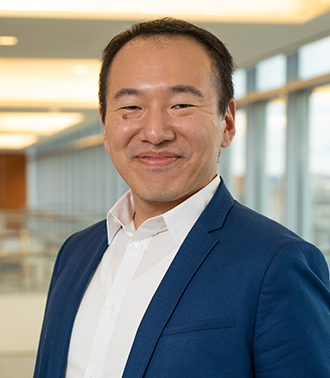
Orange elevates AI to a group office
On July 15, Orange named Usman Javaid as Group Chief AI Officer, a role he takes up on September 1, 2026. The announcement places artificial intelligence at the group level of one of Europe's largest telecom operators, a company that serves customers across France, the rest of Europe, Africa, and the Middle East. Javaid will report to Bruno Zerbib, Orange's group chief technology and innovation officer, which puts AI strategy directly inside the technology organization rather than off to the side in a standalone innovation unit. For a carrier of Orange's scale, that placement signals a clear intent to run AI as core infrastructure.
Javaid framed the mission in plain terms. "Building on Orange's exceptional technological foundations, our ambition is clear: to embed AI at the heart of everything we do," he said. The language is deliberately operational. Telecom operators sit on enormous volumes of network, customer, and usage data, and they run cost structures where small efficiency gains compound quickly across millions of subscribers. An AI office at the group level exists to translate that data advantage into network optimization, customer service automation, and internal productivity. Orange is telling the market that it wants these gains coordinated centrally rather than pursued country by country in isolation across its footprint.
From Orange Business product chief to group AI
Javaid arrives from inside the company. Most recently he served as chief product and marketing officer at Orange Business, the group's enterprise services arm, where he oversaw product strategy, development, marketing, and the data and AI transformation of the unit. That role gave him direct experience turning AI capability into commercial product for enterprise buyers, which is the exact translation problem the group now wants solved at scale. Before Orange, he held leadership positions at Amazon Web Services and Vodafone, giving him exposure to both hyperscale cloud economics and a competing carrier's operating model. His career began in research and innovation at France Telecom, the predecessor to today's Orange.
His academic and technical background reinforces the appointment. Javaid holds a master's degree in networks and telecommunications and a PhD from the University of Bordeaux focused on mobile technologies and the internet of things, and he is a named holder of several patents. That combination of deep technical grounding and enterprise commercial leadership is rare, and it addresses a common failure mode in carrier AI programs, where research talent and business ownership sit in separate camps that never quite meet. Orange is betting that a leader fluent in both the science and the profit and loss statement can move AI from demonstration into deployed, revenue-relevant systems considerably faster.
Succeeding the executive who built the AI strategy
Javaid succeeds Steve Jarrett, who established Orange's AI strategy during his tenure. That succession detail matters, because it means the group is starting from an existing foundation rather than a blank page. Jarrett built the initial framework and direction, and Javaid inherits a program with tooling, priorities, and internal relationships already in place. Leadership transitions in AI functions often stall when a new chief arrives with a mandate to reinvent everything, discarding momentum in the process. Orange has structured this handoff to preserve continuity, promoting an internal executive who already understands the group's data assets, its regulatory environment, and the specific constraints of operating across multiple national markets.
The continuity theme runs through the whole appointment. Orange chose a leader who has spent years inside its enterprise business and its research lineage. That choice reflects a maturing view of what these roles require. Early chief AI officer hires across large enterprises often prioritized external visibility and public thought leadership. The current wave, including this one, leans toward operators who can navigate an incumbent's complexity and ship inside it. For a regulated European carrier with obligations under the EU AI Act and national data rules, institutional knowledge is a governance asset, and Orange is treating it as exactly that when it fills the seat.
Why a carrier centralizes AI under one office
Telecom operators have unusually strong incentives to centralize AI. Their networks generate continuous streams of performance data, their customer bases run into the hundreds of millions, and their margins reward automation in service and operations. Left decentralized, AI efforts fragment into country-level pilots that duplicate spending and never reach shared scale. A group chief AI officer exists to impose coherence, setting common platforms, data standards, and governance so that a model proven in one market can deploy across others. Orange operates in a diverse set of geographies with different regulators, which makes that coordination both harder and more valuable than it would be for a single-market carrier.
There is a defensive logic as well. Carriers face structural pressure as their traditional connectivity revenue matures, and AI-driven efficiency is one of the few levers that can protect margins without raising prices. Network optimization, predictive maintenance, fraud detection, and automated customer support all sit squarely in the domain where machine learning already pays for itself. By naming a group AI officer who reports into the technology organization, Orange is positioning AI as a cost and reliability discipline first, with commercial upside layered on top. That sequencing is sober, and it fits a company that has to answer to investors on capital efficiency every single quarter.
The reporting line tells the strategy
The most instructive detail is where Javaid sits. He reports to the group chief technology and innovation officer, which embeds AI inside the function that owns networks and platforms. Companies reveal their real intentions through reporting lines. Placing AI under technology, rather than under a chief marketing officer or a standalone digital unit, says Orange views AI primarily as engineering and infrastructure. That structure gives Javaid proximity to the systems where AI has to run in production, and it aligns his mandate with the people who keep the network operational. It also reduces the friction that appears when an AI office has to negotiate for engineering resources it does not directly control.
Contrast this with the many enterprises that housed early AI leadership in innovation labs or communications functions, where the work stayed visible but disconnected from delivery. Orange has chosen the delivery-adjacent path. For technology leaders designing their own AI organization, the lesson is worth noting. The reporting line determines whether an AI officer can actually ship, because it decides who owns the platforms, the data pipelines, and the budgets. Orange has given its new AI chief a structural position that favors execution over showmanship, and that is the clearest evidence we have of how seriously the group intends to pursue the mandate.
What we are watching
The September 1 start gives Javaid a clear runway, and the first signals to watch are structural. We will look for how his office coordinates with Orange's country operations, whether it sets group-wide platforms and data standards, and how it divides responsibility with the enterprise unit he is leaving behind. The measure of success for a group AI officer is deployed systems that move network performance, service cost, and customer metrics across markets. Given Orange's scale, even modest efficiency gains would be material, which is exactly why the group chose to concentrate accountability under one senior leader rather than spread it thin.
For the broader market, the appointment adds to a clear pattern in senior technology hiring this year. Large incumbents are increasingly choosing internal operators with deep domain and technical grounding for their top AI roles, favoring continuity and delivery over external star power. Orange promoting a PhD-credentialed enterprise product leader who reports into technology fits that pattern precisely. If Javaid converts Orange's data scale into repeatable, cross-market AI systems, the model will be studied by every carrier facing the same margin pressure. The telecom sector has the data and the incentive, and Orange has now named someone to prove the thesis in production.