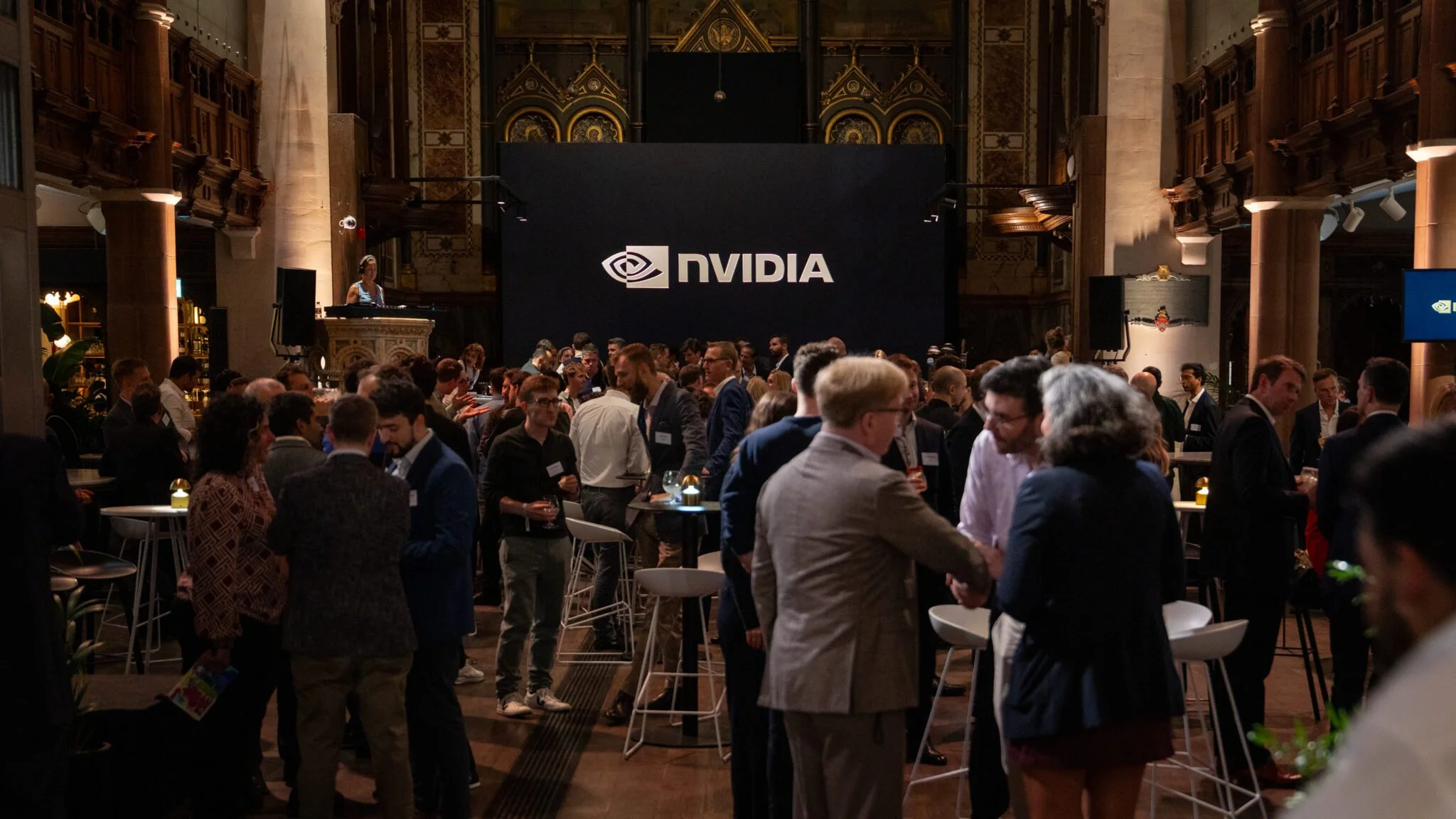
What actually launched
NVIDIA's Deep Learning Institute opened a new courseware hub offering hands-on materials on accelerated computing and deep learning, openly licensed, free, and requiring no enrollment, fees or deadline. The materials are deliberately modular, letting educators adapt them for university courses, supercomputing-centre training programs or developer events without needing NVIDIA's direct involvement in each deployment, which is the kind of distribution design that scales far faster than any instructor-led program ever could.
The release is NVIDIA's contribution to the European Commission's AI in Science Enablers Initiative, launched at the AI in Science Summit in Dublin on October 15 and linked to RAISE, the Resource for AI Science in Europe. Rod Evans, NVIDIA's EMEA Vice President for Supercomputing and AI Cloud Infrastructure, described the goal as lowering the practical barriers so more teams can test good ideas, rather than gating experimentation behind cost or specialized training that only a handful of institutions can currently afford to provide.
The startup access play across three countries
NVIDIA is working with national AI factories across Europe to widen compute access for startups and SMEs through its Inception program, which provides technical support alongside compute itself. In France, the AI2F facility has worked with Inception for four months already, though no performance data has been published yet on outcomes. In Spain, the BSC AI Factory is moving from a pilot phase into its first full accelerator program, with other European AI factories reportedly interested in adopting the same model in 2027.
Sweden's approach goes furthest: Sweden AI Factory will make its infrastructure and expertise available to Inception startups and smaller businesses targeting life sciences, materials science, autonomous systems and gaming specifically. That sits alongside the newly launched Sferical One supercomputer, built on NVIDIA systems for Nordic researchers to customize and deploy Nemotron models securely, backed by a consortium anchored by AstraZeneca, Ericsson, Saab, SEB and Wallenberg Investments, with SKF as a strategic partner.
The scale of the open resource library
NVIDIA's cumulative open resource library now spans more than 250 open models, 250 open datasets and over 1,400 open-source software projects, covering healthcare, robotics, climate science and broader research applications through families like Nemotron, the BioNeMo Agent Toolkit, PhysicsNeMo, Earth-2 and ALCHEMI NIM microservices. The company says 35 supercomputers using its technology are currently in development across Europe, and that more than 3 million researchers are projected to gain access to new infrastructure as these deployments come online.
That last figure is a projection of anticipated reach, not a current usage number, and should be read as NVIDIA's own ambition for the program rather than a verified outcome. European supercomputing centres including CINECA and JSC already provide free access to NVIDIA GPU infrastructure, and NVIDIA is layering office hours, bootcamps and hackathons on top of that existing access, including a European AI hackathon this month tied to the Pharos-CY project with partners such as the Cyprus Institute.
Why free courseware is a market strategy, not charity
Every researcher trained on NVIDIA's accelerated computing stack through free courseware becomes a future customer, collaborator or advocate for NVIDIA hardware when their institution or startup eventually needs to buy compute at scale. Europe is actively building sovereign AI capacity right now, with public money flowing into national AI factories and supercomputers, and NVIDIA giving away the training layer for free is the cheapest possible way to make sure that sovereign capacity gets built on its hardware and software stack rather than a competitor's.
Jensen Huang made the underlying positioning explicit in public remarks tied to this announcement, arguing in Stockholm that AI needs domain expertise and that general intelligence alone is not sufficient for work like manufacturing. That framing supports NVIDIA's pitch as a training and domain-expertise partner on top of being a chip vendor, a positioning that matters enormously when European governments decide which vendor's infrastructure to standardize on for publicly funded AI science initiatives over the next several years.
The agent safety thread running underneath
This courseware and compute push follows NVIDIA's earlier commitment of computing access valued at $250 million over five years for UK research into AI agent safety and security, and the two initiatives connect directly. King's College London's London Institute for Healthcare Engineering recently hosted an AI Safety and Security Research Forum examining how secure individual agents can become insecure once combined into larger systems, a problem Huang addressed directly by describing OpenShell, NVIDIA's approach to running agents in a controlled environment with limited permissions.
Huang's framing to a London audience was blunt: whatever task you give an agent, give it minimum rights and minimum privileges by default, and build the controlled environment around it before you ever let it run against production systems. That governance message, paired with free training materials and compute access, positions NVIDIA as shaping both the technical default and the safety culture for how European institutions deploy AI agents, well before any binding EU regulation forces a particular approach on the market or on the vendors competing in it.
What European research and training leaders should do
Treat this courseware as a genuinely useful, no-cost starting point for building internal AI training programs, while staying clear-eyed that every hour of staff time invested in NVIDIA-specific tooling is an hour not invested in a vendor-neutral curriculum that would transfer cleanly if your institution later switches cloud or hardware providers. The modularity NVIDIA is advertising cuts both ways: it makes adoption easy, and it also makes the resulting skills and workflows easy to lock into one ecosystem without anyone making that trade-off consciously.
Institutions negotiating national AI factory participation or Inception access should ask now what happens to training materials, deployed tools and staff skills if public funding later shifts toward a different vendor's infrastructure, since Europe's AI sovereignty debate is far from settled and today's free access could look very different once procurement decisions get made at the EU level rather than the national one. Write that contingency into the partnership agreement now, while NVIDIA is motivated to say yes, rather than discovering the gap later when leverage has shifted to whichever side needs the relationship less.