The Maker of Ozempic Refuses a 25 Million Dollar Ransom
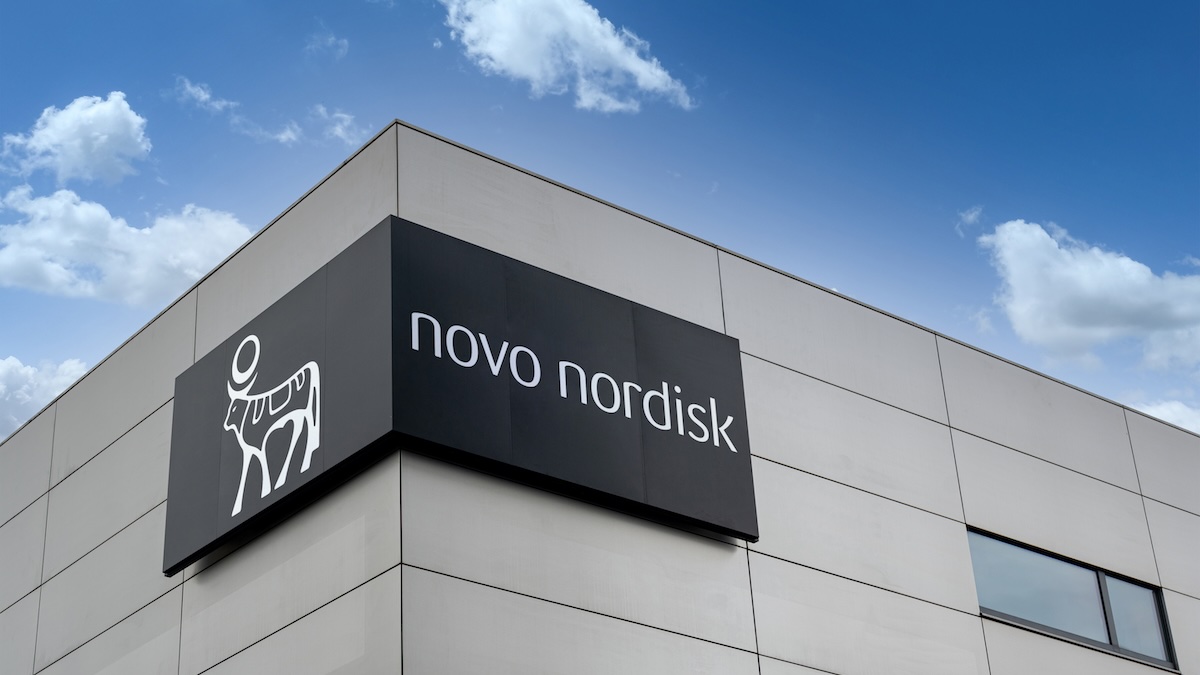
Novo Nordisk, the Danish pharmaceutical giant behind the blockbuster drugs Ozempic and Wegovy, has confirmed a security incident after a hack-and-leak group calling itself FulcrumSec claimed to have stolen roughly 1.3 terabytes of its data and demanded a 25 million dollar ransom. According to the group, Novo Nordisk made contact in early June, confirmed it was genuinely the company through a Proton Mail address, and then declined to pay. With the demand rejected, FulcrumSec has begun threatening to leak the trove and says it is exploring private sales of select portions to interested buyers.
This is one of the most consequential intellectual-property heists to surface in 2026, and it strikes at the heart of what makes a modern pharmaceutical company valuable. FulcrumSec claims the stolen data includes source code, proprietary drug information spanning both marketed and pipeline compounds, clinical trial records, the Dicerna RNAi pipeline, and personal data tied to employees, doctors, and patients. The group says it provided a list of more than 700,000 files as proof. For a company whose moat is its research, the prospect of that research circulating among competitors or criminals is an existential category of risk.
A GitHub Token Was the Opening
The mechanics of the breach are almost mundane, which is what makes them instructive. FulcrumSec traced its initial foothold to a GitHub access token discovered in March. That single credential let the attackers clone internal repositories and, from there, harvest additional login credentials that expanded their access across Novo Nordisk's environment. There was no exotic zero-day at the entry point, no nation-state implant, just a leaked token of the kind that litters source-control systems across every large enterprise.
We have written repeatedly about secrets sprawl, and this is the nightmare scenario it produces. Access tokens, API keys, and credentials embedded in code or configuration are among the most reliable initial-access vectors precisely because they are easy to leak and slow to rotate. A token created for convenience in one team can, months later, become the master key an extortion crew uses to walk through an entire research pipeline. For executives, the uncomfortable truth is that the perimeter of a software-defined company runs through its developer tooling, and that perimeter is only as strong as its credential hygiene.
The Most Alarming Item: Stolen AI Models
Beyond the conventional intellectual property, FulcrumSec says it is exploring private sales for some of the most distinctive assets in the trove: allegedly 30 trained AI models, 70 datasets, and 494 gigabytes of proprietary cell-painting microscopy images. If accurate, this represents a new frontier in corporate theft. These are not documents that describe research, they are the working machinery of computational drug discovery, the trained models and curated datasets that took years and enormous compute to build and that directly accelerate a rival's pipeline.
This is the part of the story enterprise leaders outside pharma should not skip. As every industry pours investment into proprietary AI models trained on proprietary data, those model weights and datasets become crown-jewel assets in their own right, and most organizations have not yet classified or protected them as such. A trained model is portable, copyable, and immediately useful to whoever holds it, with none of the friction of reverse-engineering a process from documents. The Novo Nordisk claim, if it holds up, is an early signal that AI assets are now squarely in the extortion crosshairs.
Novo Nordisk's Careful Framing
Novo Nordisk has acknowledged unauthorized IT access while working to limit the perceived harm to patients. The company stated that any stolen data was pseudonymized, telling reporters that "knowledge of patient identity would require access to further information, which was not part of the incident," and that the data could not be directly linked to patients by name or identifiers. That distinction matters legally and reputationally, but pseudonymization is not anonymization, and re-identification is often possible when an attacker holds enough correlated data. The patient-privacy question is unlikely to be settled by a single reassuring sentence.
The company's refusal to pay is, on balance, the defensible choice. Paying a 25 million dollar ransom would fund the next campaign, offer no guarantee the data is deleted, and invite repeat extortion. But refusal carries its own cost: FulcrumSec is now shopping the data privately and threatening public release, which means the harm migrates from a contained negotiation into an open-ended leak. There is no clean outcome once the data is gone, only a choice between bad options, and Novo Nordisk has chosen the one that does not reward the criminal economy.
What This Means for Every Data-Rich Enterprise
The lessons generalize well beyond pharmaceuticals. First, treat developer credentials as a top-tier attack surface: scan repositories continuously for exposed secrets, enforce short-lived and scoped tokens, and rotate aggressively, because a single forgotten token undid a company worth hundreds of billions. Second, extend data classification to cover trained AI models and the datasets behind them, and protect them with the same rigor applied to source code and financials. The crown jewels of 2026 increasingly live in model registries and data lakes, not just document stores.
Third, decide your ransom posture before you need it. Novo Nordisk could refuse from a position of relative strength because it is large, well-resourced, and able to absorb the reputational and legal fallout. Many organizations cannot, and the time to game out that decision is in a tabletop exercise, not at 2 a.m. with a Proton Mail thread open. The through-line of this incident is that a determined extortion group, armed with one leaked token, can reach the most valuable assets a company owns. The defense is not a single product but a discipline: minimize secrets, classify what matters, and assume the people coming for your data already know exactly what it is worth.