The Second Rejection
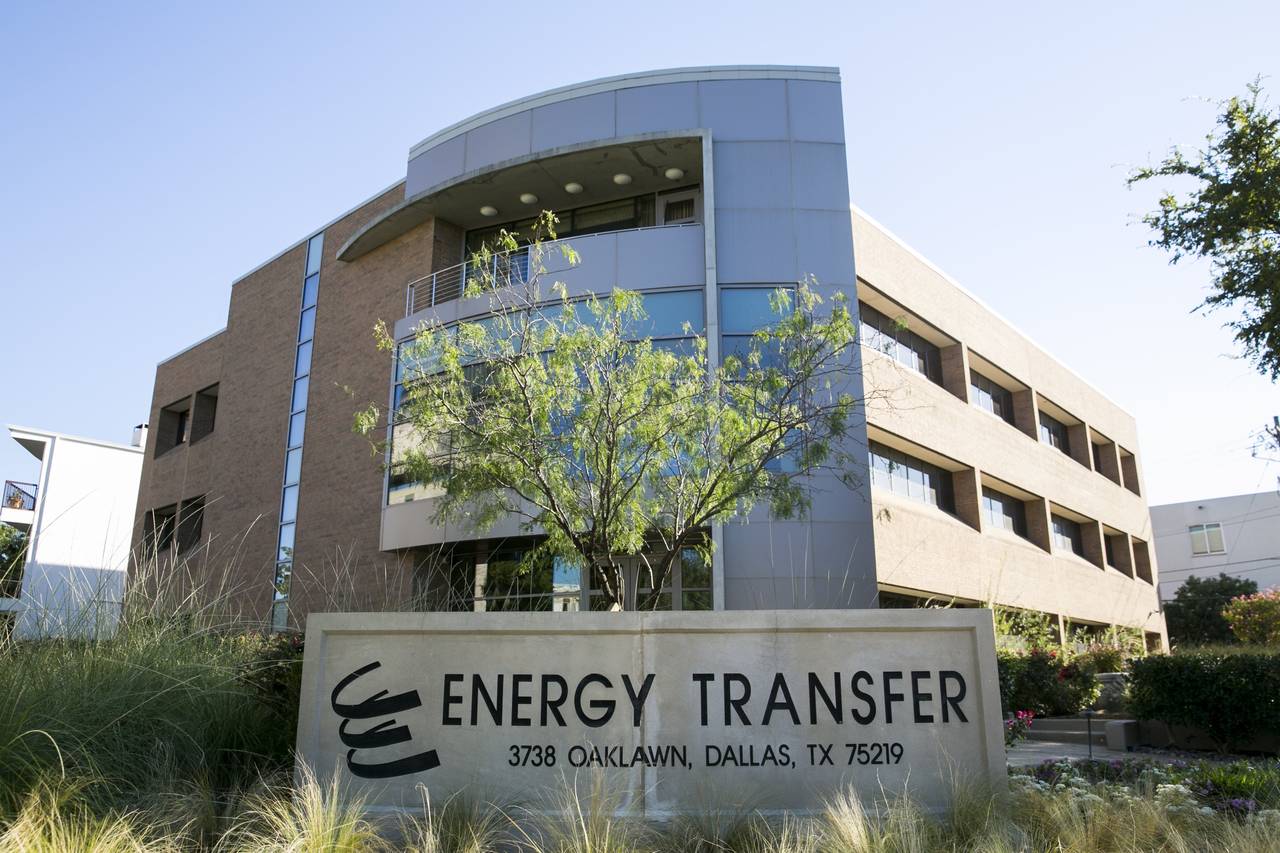
New Mexico Public Lands Commissioner Stephanie Garcia Richard has denied Energy Transfer's application to build a natural gas pipeline serving Oracle's Project Jupiter data center campus, marking the second time state officials have blocked the route. The pipeline, dubbed the Green Chile Project, spans 17 miles in total, with a 0.6-mile portion crossing state lands where the developer sought two rights-of-way and a business lease. The reconsideration denial arrived in mid-July and became widely reported on July 20.
Garcia Richard was direct about her reasoning. "I am once again rejecting Energy Transfer's request because the proposed natural gas pipeline appears to offer very little benefit to the State Land Office's beneficiary institutions, the local community or New Mexico as a whole," she wrote. She added that "the burden that the project will impose on New Mexico's water and other natural resources, and on the surrounding community, is extreme."
What the Pipeline Was Meant to Feed
The Green Chile Project pipeline was engineered to deliver up to 400 million cubic feet of natural gas per day to Project Jupiter, enough to run 2.5 GW of Bloom Energy fuel cells installed on the campus. The site in Doña Ana County spans 1,400 acres and is planned around four data center buildings, which Oracle would occupy to host AI infrastructure for OpenAI once construction completes. That fuel-cell design put the entire power supply for a gigawatt-class campus on a single gas artery.
That architecture concentrates risk. When 2.5 GW of on-site generation depends on one 17-mile pipeline, a single permitting decision can strand the whole facility. Behind-the-meter fuel cells solve the grid-queue problem that plagues large AI campuses, and they create a new dependency on fuel delivery infrastructure that must clear its own state and federal approvals. Project Jupiter is now the clearest illustration of that tradeoff playing out in real time.
The August Deadline Slips Away
Oracle had asked federal regulators to expedite the pipeline review to meet an August 15 in-service target, warning that delays would trigger substantially higher expenses. Following the second state rejection, meeting that timeline now appears extremely unlikely, and the setback could push construction into next year. If the developer cannot secure approval for the current route, it may have to redirect the pipeline through other land, requiring fresh agreements with private landowners and adding further delay.
Oracle, for its part, holds its public line. A company spokesperson said Project Jupiter "remains on schedule" and that it continues to work with state officials and its partners, pointing to "4,000 construction jobs, with more than 440 New Mexican residents already working on site today, 1,500 ongoing project-supported jobs and hundreds of millions of dollars of investment in the community." The gap between that confidence and a blocked pipeline is the tension we would watch.
Why the State Said No
State officials cited large-scale water use, increased CO2 emissions, and a lack of state revenue generation as the major factors behind the denial. In an arid region, water consumption by a gigawatt-class campus carries real political and ecological weight, and Garcia Richard framed the project's resource burden as extreme. The commissioner's emphasis on benefit to state beneficiary institutions signals that economic terms, not just environmental review, shaped the outcome.
The offsets Oracle has offered, including roughly $50 million for Doña Ana County water system improvements and its stated target of 100 percent carbon-free electricity coverage by 2035, were insufficient to move the decision. For operators planning campuses in water-stressed states, the message is that community and resource math now enters the permitting equation as heavily as construction jobs and capital spend. Local benefit has become a gating criterion rather than a talking point.
The Read for Infrastructure Leaders
Project Jupiter reframes the central risk in gigawatt-scale AI infrastructure. The capital is available, the fuel cells are ordered, and the tenant demand from OpenAI is real. The binding constraint is a state land commissioner's judgment on water, emissions, and local benefit. For anyone modeling capacity availability, permitting and resource approvals now belong at the top of the risk register, ahead of financing and equipment supply.
The practical lesson is to stress-test single points of failure in power delivery. A campus whose entire supply rides on one pipeline or one interconnection is exposed to exactly this kind of reversal. We would press developers on route redundancy, on the status of every required approval, and on contingency generation before treating any advertised in-service date as firm. Project Jupiter shows how quickly a mid-August target can become a next-year question.
A Pattern of Blocked Capacity
Project Jupiter is one instance of a wider phenomenon in 2026: communities and regulators are halting large data center projects even as lease demand sets records. Industry tallies put roughly $130 billion in US data center projects blocked or delayed this year, running alongside lease commitments that have surged past $850 billion. That split defines the moment. Demand and capital are abundant, and the ability to actually energize and host that capacity is where the bottleneck now sits.
For infrastructure leaders, the takeaway is to weight political and permitting durability when choosing where to place or procure capacity. A gigawatt of committed capacity delivers nothing without a grid connection to feed it and a community willing to host it. We would favor developers and regions with demonstrated approval track records, and we would treat resource-stressed jurisdictions as elevated risk regardless of how attractive the land, power, or incentives look on paper.